
>> Continued From the Previous Page <<
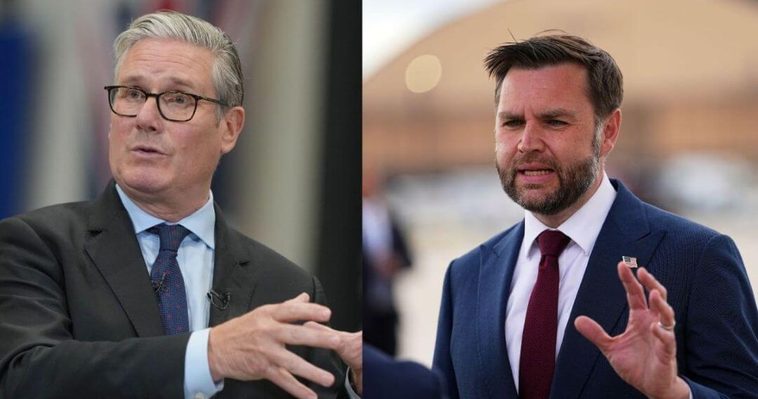
The case has now escalated into an international political dispute following comments from U.S. Senator JD Vance, who reacted strongly after bodycam footage of Nowak’s final moments became public.
Vance wrote that Nowak “died the same way a civilization dies: abandoned, handcuffed by authorities who neither trusted nor cared for him, and accused of hate crimes he did not commit.”

He went further, attributing broader causes, stating the situation reflected “the politics of self-hatred and the mass invasion of migrants, many of whom despise the West and the people who love it.”
Vance also described righteous anger as the “only response.”
The U.S. State Department also weighed in, calling the incident a “glaring symptom of civilizational decline” rooted in “ideological conditioning and two-tiered policing.”
The remarks were widely interpreted as the Trump-aligned administration speaking in a unified tone on the issue of immigration, policing, and cultural tensions in Western Europe.
British Prime Minister Keir Starmer responded sharply through his spokesman, accusing Washington of attempting to “interfere in our democracy” and “stir up division on our streets.”
Deputy Prime Minister David Lammy also pushed back during an interview with Sky News, stating he did not recognize “this caricature of Britain having a two-tier criminal justice system.”
Meanwhile, Liberal Democrat leader Ed Davey escalated the diplomatic tension further, demanding that Starmer formally summon the American ambassador over the remarks.
But for critics, the political outrage has done little to address what they see as the central issue: a young man dying in police custody after pleading that he had been stabbed and could not breathe, while officers allegedly dismissed his condition and accepted the attacker’s prior claims at face value.
Digwa’s murder conviction has only intensified scrutiny of how the initial response was handled, with many questioning whether Nowak might have survived if his injuries had been taken seriously earlier.
The controversy has also reopened broader political wounds in the U.K. regarding policing standards and past failures.
Supporters of Vance’s comments have pointed to historic scandals such as the Rotherham and Rochdale grooming gang cases, where systemic failures allegedly allowed the prolonged exploitation of vulnerable girls by groups of mostly Pakistani men. Those investigations, critics argue, exposed a culture in which officials feared being labeled racist more than they feared failing victims.
At the time of those scandals, Starmer served as Director of Public Prosecutions, a detail now frequently cited by political opponents drawing parallels between past institutional failures and present-day policing controversies.
Adding further political complexity, critics have also highlighted Starmer’s past public support for the American Black Lives Matter movement in 2020, when he took a knee in solidarity following the death of George Floyd in Minneapolis. Opponents argue this underscores what they see as inconsistency in condemning foreign political influence while previously embracing international activist movements.
The debate has since expanded beyond a single case, evolving into a wider argument over policing philosophy, immigration policy, and the influence of ideology on law enforcement decisions.
U.S. officials have also pointed to claims that British political advisers have previously engaged in U.S. election-related activities, citing travel by senior Labour figures to assist Democratic campaigns—an issue once raised in a complaint filed by Donald Trump’s team alleging foreign interference.
For many observers, however, the most haunting element remains the same: the final moments of Henry Nowak, an 18-year-old Polish-British student who reportedly died on a residential street while insisting he had been stabbed, as officers struggled to determine what was happening around him.
Whether viewed as a tragic breakdown in police judgment or a symptom of deeper systemic issues, the case has become a flashpoint in an increasingly tense transatlantic debate over law enforcement, migration, and political accountability.

