
>> Continued From the Previous Page <<
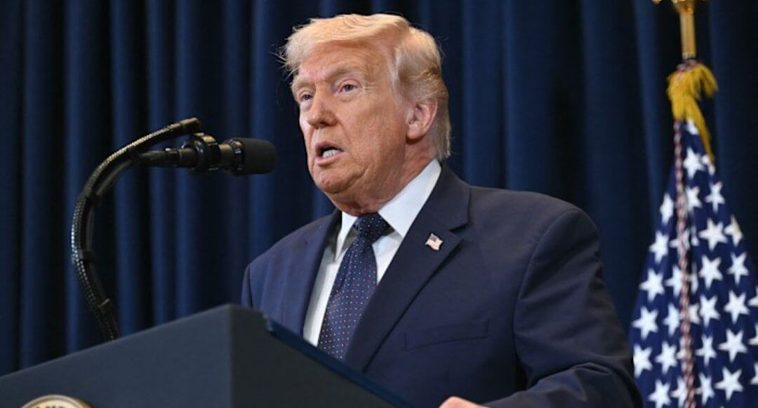
President Trump responded by calling for an immediate halt to the violence, pressing both sides to stop escalating the situation further. His intervention came as fears grew that continued retaliation could ignite a broader regional war stretching across Lebanon, Iran, and Israel.
By Monday, reports from Reuters indicated that Israel had decided to pause its strikes on Iran after Tehran signaled it would also stop its attacks. The move was widely viewed as a temporary de-escalation rather than a formal peace agreement.

At the same time, Israeli media reports suggested that while operations against Iran were being paused, Israel intended to continue its military campaign against Hezbollah targets in southern Lebanon in the days ahead, signaling that the broader conflict landscape remains active and highly unstable.
The shift marked a notable moment for President Trump, who has been publicly pushing for restraint and attempting to prevent the conflict from spiraling into a full-scale regional war.
Iran’s military leadership also announced a halt in its own operations shortly after Trump’s call for de-escalation. The Khatam al-Anbiya military headquarters declared Monday that it would suspend hostilities against Israel, though the announcement was paired with a firm warning that the pause was not unconditional.
Iran made clear that any continued Israeli action would trigger renewed and intensified retaliation.
“Following the aggressions and evils of the brutal Zionist regime in South Lebanon and the Dahiya region, which took place with the support of the criminal America, the powerful armed forces of the Islamic Republic of Iran gave a painful response to this regime in order to support the oppressed people of Lebanon,” the military wrote in a statement.
“On this basis, the cessation of armed forces operations is announced; But it is emphasized that if the aggressions and evils continue, including in the south of Lebanon, much more severe and crushing measures will be on the way,” it continued.
The messaging underscored that while a pause in direct exchanges may be underway, both sides continue to frame the situation as unresolved and subject to rapid escalation if conditions change.
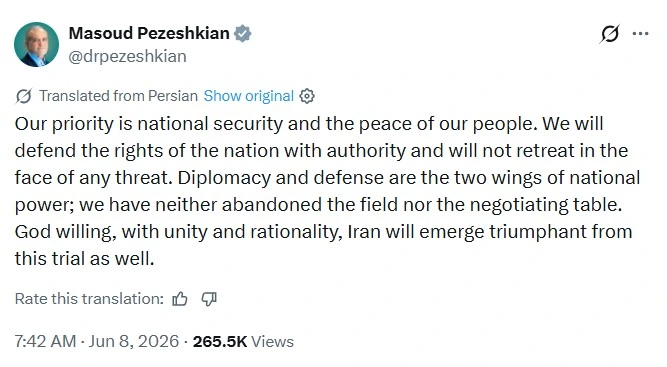
Iranian President Masoud Pezeshkian also weighed in on Monday, reinforcing that Tehran had not abandoned diplomatic pathways despite the weekend’s military exchanges. He emphasized that Iran’s long-term objective remains stability and what he described as national strength in the face of external pressure.
“Our priority is national security and the peace of our people. We will defend the rights of the nation with authority and will not retreat in the face of any threat. Diplomacy and defense are the two wings of national power; we have neither abandoned the field nor the negotiating table. God willing, with unity and rationality, Iran will emerge triumphant from this trial as well,” Pezeshkian wrote in a post on X.
Even as diplomatic messaging continued, the situation on the ground remained tense. Israeli forces reportedly conducted additional airstrikes in southern Lebanon shortly after Iran announced its halt in attacks, prompting renewed air raid sirens in northern Israel.
The overlap of military activity and ceasefire declarations highlighted just how fragile the situation remains, with competing narratives of restraint and retaliation unfolding simultaneously.
Adding another layer of complexity, reports emerged of ongoing student-led demonstrations inside Iran, with critics of the regime attempting to organize amid the chaos. Cameron Khansarinia, chief of staff to Reza Pahlavi, told “Fox & Friends” that many Iranians are pushing back against the current leadership and require greater access to communications tools to sustain their organizing efforts.
Khansarinia argued that the Iranian population continues to face severe pressure under the country’s hardline leadership while still seeking pathways toward greater freedom and political change.
For President Trump, the latest developments represent both a diplomatic test and a potential opening. The rapid escalation threatened to derail any ceasefire momentum, while Israel’s counterstrikes and Iran’s missile response risked pulling the region deeper into sustained conflict.
Still, the reported pause in Israeli strikes on Iran suggests that at least a temporary off-ramp has been found—one that followed direct calls for de-escalation from Washington.
However, with Israel continuing operations against Hezbollah and Iran warning of renewed “severe and crushing” retaliation if conditions are violated, the situation remains highly unstable.
For now, the guns between Israel and Iran may be quieter—but the underlying conflict, and the risks tied to it, are far from resolved.

