
>> Continued From the Previous Page <<
Hospitals relying on affected systems were forced to delay procedures and reorganize patient care schedules as technical teams scrambled to restore operations. The incident highlighted how cyberattacks can rapidly move from digital inconvenience to real-world disruption.
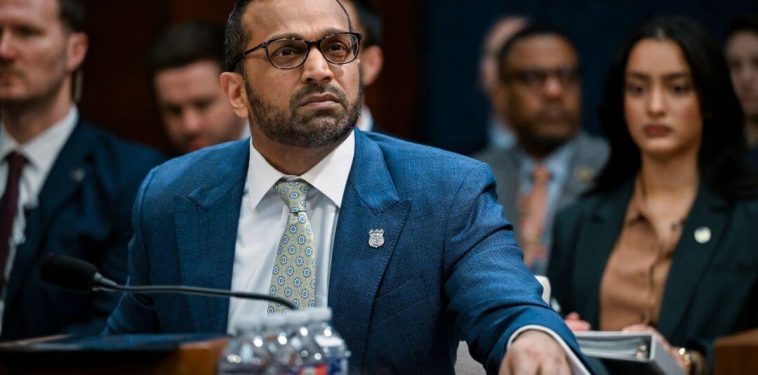
The group later gained even greater notoriety after allegedly compromising the personal email account of FBI Director Kash Patel.

Following the breach, hundreds of private messages and personal photographs were reportedly published online. The incident quickly became one of the most embarrassing cybersecurity episodes involving a senior U.S. law enforcement official in recent memory.
Federal authorities acknowledged the breach and responded aggressively.
Patel publicly vowed to pursue those responsible, while the Department of Justice moved to seize multiple internet domains allegedly connected to Handala’s operations. Federal officials also announced a reward of up to $10 million for information leading to members of the organization.
“We took down four of their operation’s pillars and we’re not done,” Patel said.
World Cup Security Now in the Spotlight
Rather than retreating, Handala appears to be escalating.
According to intelligence monitoring organization SITE Intelligence Group, the hackers recently claimed they had infiltrated FBI-operated first-person-view drones used in security and surveillance operations.
The group further alleged that it had been monitoring video feeds collected during counterterrorism missions and had access to advanced surveillance technology capable of facial recognition and license plate identification.
Most troubling was a message directed toward teams participating in World Cup events hosted on American soil.
The hackers suggested that security drones could potentially be weaponized, warning that “You never know when one might end up right in your team’s bus.”
The statement immediately raised concerns among security experts already focused on drone-related threats surrounding major international events.
Questions Remain About the Evidence
Not every claim made by Handala has been independently verified.
SITE Intelligence Group noted that at least one video released by the hackers as supposed proof of their access did not appear to show FBI surveillance activity at all. Investigators determined the footage was actually recorded during a police response to tornado damage in late 2024.
Still, cybersecurity analysts caution against dismissing the threat entirely.
A fabricated piece of evidence does not automatically invalidate the possibility of a larger breach. Handala’s previous attacks have demonstrated technical sophistication, and federal authorities continue treating the organization as a serious national security concern.
The FBI’s Growing Focus on Drone Warfare
Federal officials have spent years warning that unmanned aerial systems represent one of the fastest-growing security challenges facing the United States.
Under Patel’s leadership, the FBI has expanded preparations ahead of the World Cup and the 2028 Olympic Games. One of the agency’s most significant initiatives has been the creation of a National Counter-UAS Training Center at Redstone Arsenal.
The program has already trained dozens of law enforcement personnel from host cities expected to handle major international sporting events.
Particular attention has been given to emerging threats such as fiber-optic-controlled drones, which are significantly harder to disrupt using traditional electronic countermeasures.
Homeland Security Secretary Markwayne Mullin has publicly identified drones as one of his top security concerns for the tournament, acknowledging that the United States has been working to close gaps in its defensive capabilities.
As a result, federal agencies are deploying surveillance drones to monitor airspace around venues while simultaneously preparing specialized teams capable of neutralizing unauthorized aircraft.
A New Front in the Conflict
For many observers, Handala’s latest rhetoric reflects a broader strategy.
Rather than engaging the United States through traditional military means, adversaries increasingly seek to create disruption through cyberattacks, information warfare, and attacks on critical infrastructure.
By targeting hospitals, breaching high-profile officials, and now attempting to inject fear into World Cup security planning, the group appears focused on undermining public confidence as much as causing direct damage.
Federal officials insist they are prepared.
The FBI’s ongoing investigations, the multimillion-dollar bounty, and recent infrastructure investments demonstrate that authorities are taking the threat seriously.
Whether Handala’s latest claims prove genuine or exaggerated, the message is clear: America’s largest international sporting events are becoming the latest battleground in a rapidly evolving cyber conflict.
And federal authorities appear determined to ensure those threats never move from online propaganda to real-world chaos.

