
>> Continued From the Previous Page <<
Shipping sources reported that Iranian gunboats engaged at least one tanker attempting to transit the strait. Other vessels, faced with uncertainty and rising risk, were seen turning around rather than continuing through the chokepoint. The message from Tehran was unmistakable: access would now come with conditions.
Iran’s joint military command made that stance explicit, declaring the strait under full operational control of its armed forces. While not entirely closed, passage is no longer guaranteed, with officials warning that continued access depends on shifting geopolitical conditions.

The Strait of Hormuz remains one of the most vital arteries in the global economy, responsible for moving roughly 20 percent of the world’s oil supply. Any disruption, even temporary, carries immediate consequences for fuel prices, supply chains, and financial markets worldwide.
What makes the reversal even more striking is how sharply it contrasts with statements made just a day earlier.
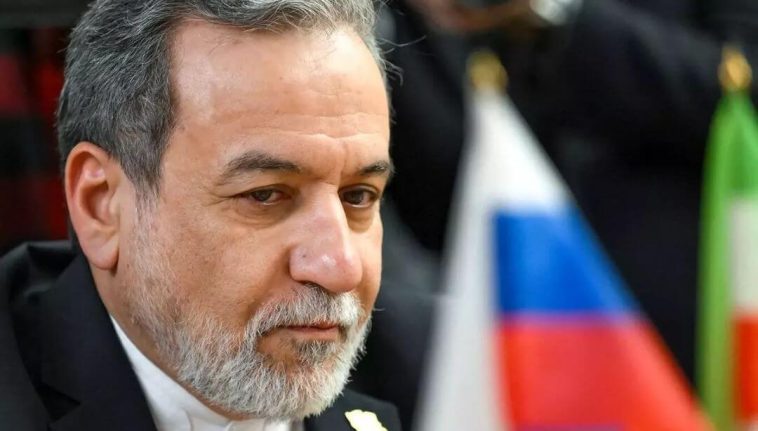
On Friday, Iranian Foreign Minister Abbas Araghchi publicly declared the strait “completely open” to commercial shipping during the ceasefire period. That announcement had been interpreted as a potential breakthrough tied to a 10-day truce involving Israel and Hezbollah.
The optimistic tone was echoed by Donald Trump, who welcomed the development and suggested negotiations were progressing at an unusually fast pace.
Trump told reporters that talks were advancing smoothly, stating that “most of the points” had already been settled and that there were “no sticking points at all.” He even floated the possibility of a near-term diplomatic meeting, potentially taking place in Islamabad, and hinted that a full agreement could be finalized within days.
In one of the more surprising claims, Trump said Iran had agreed to transfer roughly 450 kilograms of uranium enriched to 60 percent purity to the United States. He described the material as “nuclear dust” and suggested it would be handed over without compensation.
But Tehran pushed back hard.
Iranian officials swiftly denied that any such agreement existed. Foreign Ministry spokesman Esmaeil Baqaei rejected the claim outright, insisting that Iran’s nuclear material would remain under its control and had never been part of the negotiations.
Senior leadership reinforced that position. Parliamentary Speaker Mohammad Bagher Ghalibaf dismissed portions of Trump’s remarks as inaccurate and reiterated that any easing of restrictions in the strait was always conditional.
From Iran’s perspective, the continued U.S. naval presence and blockade activity represented a breach of trust. Officials framed it as a violation of the ceasefire framework and a form of maritime interference, justifying their decision to tighten control over the waterway once again.
Despite the rising tensions, Trump maintained a measured tone when addressing the latest developments. He acknowledged the shift but downplayed its long-term significance, saying Iran had “got a little cute” while emphasizing that negotiations were still “working out really well.”
At the same time, he made clear that pressure would remain.
Trump reiterated that the U.S. blockade would stay in place until a comprehensive deal is signed, signaling that Washington has no intention of easing its posture prematurely. He also warned that time is limited, noting that the current ceasefire is set to expire midweek.
If no agreement is reached, the situation could deteriorate quickly.
Trump indicated that military options remain on the table and suggested that the ceasefire may not be extended without meaningful progress. With both sides holding firm on key demands, the path forward appears increasingly uncertain.
For now, the Strait of Hormuz sits at the center of a high-stakes standoff once again — a narrow stretch of water carrying enormous global consequences.

