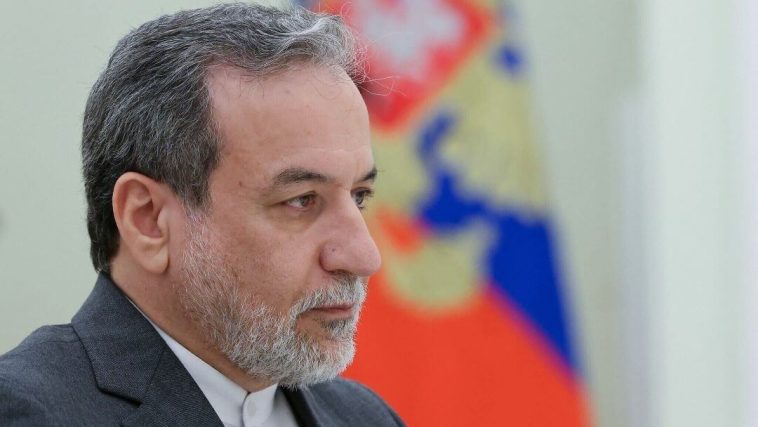
This is the first time a senior Iranian official has publicly confirmed the devastating blow dealt by U.S. forces. The revelation aligns closely with a June Pentagon assessment that claimed Iran’s nuclear ambitions had been set back by at least two years following a precision assault on strategic nuclear sites across the country.
The coordinated strikes reportedly hit key locations including Natanz, Isfahan, and Fordow. The Fordow facility, buried deep beneath mountains and fortified against most conventional weapons, was allegedly disabled by U.S. bunker buster munitions—a critical move after Israel requested U.S. involvement due to lack of necessary strike capabilities.
What’s more, Araghchi openly admitted that Iran doesn’t yet know whether any of its enriched uranium stockpile survived the strikes.
“As I said, our automechanical organization is responsible for that. They are now trying to evaluate what has exactly happened to our nuclear material,” he added.
Despite admitting that enrichment activities have halted, Araghchi doubled down on Iran’s long-standing defiance, framing the enrichment program as a matter of national identity and scientific pride.
“It is stopped because, yes, damages are serious and severe. But obviously we cannot give up of enrichment because it is an achievement of our own scientists. And now, more than that, it is a question of national pride.”
This statement flies in the face of President Donald Trump’s position that Iran must fully abandon uranium enrichment in exchange for any future diplomatic agreements. The Trump administration has repeatedly accused Tehran of using the pretense of “peaceful purposes” to mask nuclear weapons ambitions—a claim supported by American intelligence and echoed by multiple allied nations.
Still, the Iranian foreign minister left a crack in the door open for diplomacy. When asked whether direct negotiations with the U.S. could resume, Araghchi suggested a possible return to the table—though not under current conditions.
“My message to the United States is, that let’s go for a negotiated solution for Iran’s nuclear program.”
“And we did that, in the past in 2015 after two and a half years of negotiations in which I was a negotiator myself. We came to that solution, that was called JCPOA, or Joint Comprehensive Plan of Action. Maybe the current administration doesn’t like that, but we can come to a similar deal, a better deal than that.”
That’s a far cry from Iran’s previous posture, which mocked the effectiveness of Western military action. But even now, Araghchi insisted Iran could rebuild if necessary—and claimed that technology, not facilities, was the true heart of their program.
“I think this has proved that there is no military option to destroy our nuclear program. Yes, facilities have been destroyed, they are severely destroyed. But the technology is there. Our nuclear program, our enrichment program, is not something that has been imported from outside that can be destroyed by bombings.”
“But I tell you, there is a negotiated solution for our nuclear program. We have done it once in the past, we are ready to do it once again.”
The implications are enormous. Araghchi’s admission doesn’t just confirm the success of the U.S. military operation—it signals a potential turning point in U.S.-Iran relations. With enrichment paused, facilities shattered, and international pressure mounting, Tehran may find itself with fewer options and less leverage than it’s had in years.
As always, President Trump holds firm: No uranium enrichment. No deal. And for now, it looks like the pressure campaign is working.