
>> Continued From the Previous Page <<
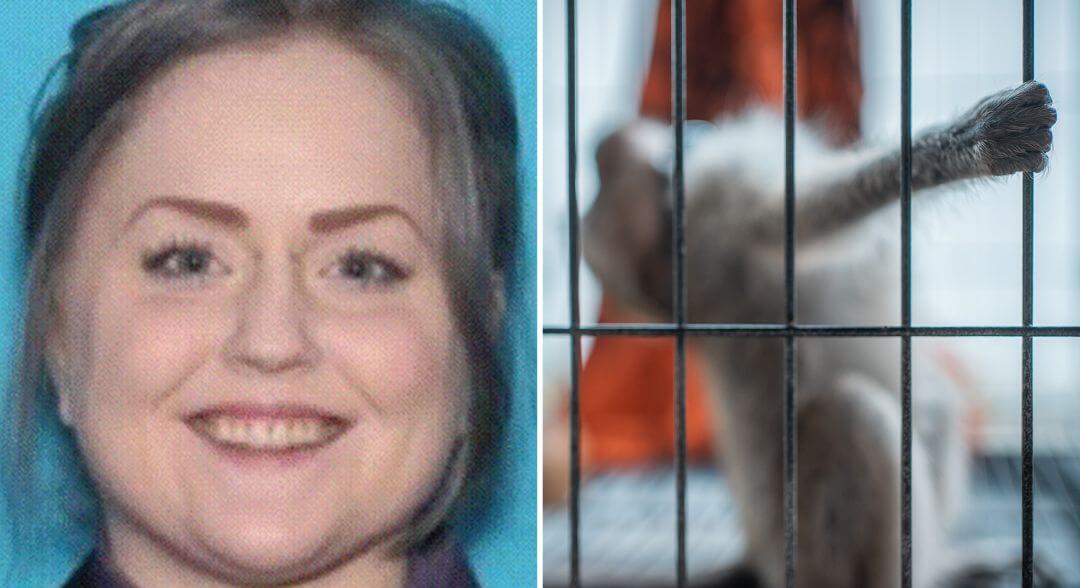
Her guilty plea confirms what prosecutors have been arguing for months: these were not isolated acts, but part of a coordinated system built around demand, payment, and supply of illegal content.
Multi-State Network Operating in Encrypted Spaces
Court documents and federal filings describe a broader network that stretched across multiple states and operated through encrypted messaging platforms and invite-only groups.

Members allegedly used these channels to commission, trade, and sell videos depicting extreme cruelty toward monkeys, with content produced to order for paying participants.
Fourez is just one of several individuals tied to the case. Joseph Garrett Buckland of Mount Pleasant, Pennsylvania previously pleaded guilty in connection with the same broader conspiracy.
Meanwhile, prosecutors have also brought indictments against additional alleged participants, including Katrina D. Favret of Tennessee and Robert M. Craig of North Carolina, both accused of helping facilitate similar operations involving the production and distribution of abusive material.
Federal officials describe the structure as an organized criminal enterprise spanning multiple states, with financial transactions and content requests flowing through encrypted platforms designed to evade detection.
Legal Background and Federal Response
The prosecution of these cases has a complex legal history. In 2010, the U.S. Supreme Court struck down a prior federal law banning animal cruelty videos, ruling it was overly broad in its original form.
Congress quickly responded by passing the Animal Crush Video Prohibition Act of 2010, tightening the language and making it easier to prosecute those who create or distribute such material.
Later, during the Trump administration, further expansion came with the Preventing Animal Cruelty and Torture (PACT) Act, signed in 2019.
At the signing, President Donald Trump stated: “It is important that we combat these heinous and sadistic acts of cruelty, which are totally unacceptable in a civilized society.”
That legislation strengthened federal authority by criminalizing not just the distribution of such videos, but also the underlying acts of cruelty themselves.
Earlier enforcement cases include convictions out of Houston, where Ashley Richards received a 10-year state prison sentence, and Brent Justice was sentenced to 57 months in federal prison for operating a similar video-for-profit cruelty operation.
Expanding Investigations and Federal Agencies Involved
The Fourez investigation was led by Homeland Security Investigations (HSI) out of New Orleans, working alongside the FBI. Officials say the probe is ongoing and continues to uncover additional participants tied to similar networks.
Acting Special Agent in Charge Matt Wright has indicated that enforcement efforts are not slowing down, suggesting more arrests and indictments may follow as investigators trace financial and digital footprints.
Judges Signal Tougher Sentencing Approach
Fourez now faces up to five years in prison on the conspiracy charge and up to seven years on distribution-related offenses, along with potential fines reaching $500,000. Sentencing will ultimately be determined by a federal judge.
However, recent courtroom trends suggest harsher outcomes may be likely. In a separate Ohio case, United States v. Dryden, a federal judge rejected a plea agreement involving similar conduct, stating the proposed sentence did not adequately reflect the seriousness of the crime.
That decision reflects a broader shift among federal judges who appear increasingly unwilling to treat these cases as low-level offenses.
Organized Networks Under Increasing Scrutiny
Law enforcement officials now describe these groups not as isolated individuals, but as structured digital networks with financial systems, content production requests, and cross-state membership bases.
Investigators say participants were not only aware of the nature of the material but actively paid for increasingly extreme content.
Technology Platforms Under the Spotlight
Officials have also pointed to the role of encrypted messaging services and digital payment systems in enabling the trade. Critics argue that major tech platforms have created environments where illicit networks can operate with limited visibility or oversight.
Law enforcement sources suggest that while arrests are increasing, the infrastructure that allows these groups to exist remains a major unresolved issue.
Closing Message From Investigators
Authorities involved in the case say enforcement efforts will continue expanding as more suspects are identified.
The message from federal investigators is increasingly direct: these networks are being mapped, traced, and dismantled piece by piece.
As one investigator summarized the ongoing operation, the arrests already made are only part of a larger effort that is still unfolding.
For those still participating in these encrypted communities, federal authorities say the outcome is becoming harder to avoid as the investigative net continues to tighten.

