
>> Continued From the Previous Page <<
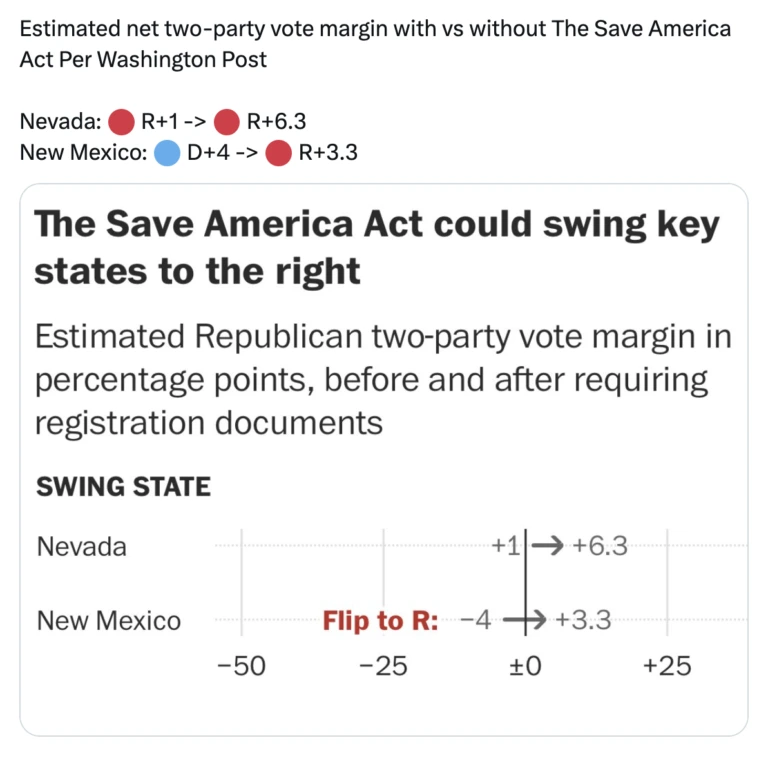
Attention on Nevada and New Mexico is no accident. While neither state carries the electoral weight of larger battlegrounds, both are consistently competitive. That makes them highly sensitive to even minor changes in voter participation. In elections decided by slim margins, small shifts in registration or turnout could ultimately determine the outcome and influence national political control.
Backers of the SAVE America Act maintain that the proposal is a straightforward and necessary step to ensure that only eligible citizens are casting ballots in federal elections. They argue that requiring proof of citizenship and valid identification is a reasonable standard that aligns with public expectations for secure elections.

Opponents, however, warn that the real-world consequences may be far more complicated. Critics argue that the new requirements could disproportionately impact legitimate voters who may not have easy access to the necessary documentation. In their view, the legislation risks creating additional hurdles that could discourage or prevent eligible Americans from participating, effectively turning election administration into a gatekeeping mechanism.
The broader push extends beyond Capitol Hill. The U.S. Department of Justice has reportedly been seeking expanded access to detailed, unredacted voter rolls from states. At the same time, federal officials are exploring ways to cross-reference that information with citizenship data using the Department of Homeland Security’s SAVE verification system. These efforts have sparked concern among state leaders, who are questioning both the transparency of the initiative and the scope of federal involvement in state-run elections.
Taken together, these developments suggest a coordinated approach heading into the 2026 election cycle. The SAVE America Act represents the legislative front, while federal data initiatives reflect an administrative track aimed at strengthening eligibility verification. Both efforts emphasize stricter registration standards and heightened scrutiny of voter qualifications, positioning election security as a central issue in upcoming campaigns.
Looking ahead, two major factors could shape how this unfolds. First, Senate Republicans may attempt to revive the legislation despite its recent setback. Second, federal agencies could succeed in expanding their access to voter data, further advancing their enforcement capabilities.
If either of these paths gains traction, Nevada and New Mexico could quickly become testing grounds for how new election rules influence outcomes. The results in these states may offer an early glimpse into a broader national shift—one where the structure of voting itself, not just campaign messaging, plays a decisive role in shaping America’s political future.

