
>> Continued From the Previous Page <<
The CMS administrator went on to describe the president as someone highly detail-oriented and deeply engaged with his own health metrics. According to Oz, this level of attention is not unusual for someone with Trump’s personality and work habits.
“He’s a very meticulous person in so many ways that are often under appreciated. But for him to want to know all the numbers and keep on top of him, it’s the same reason he calls people at you know, odd hours because something’s on his mind. He wants to deal with it.”

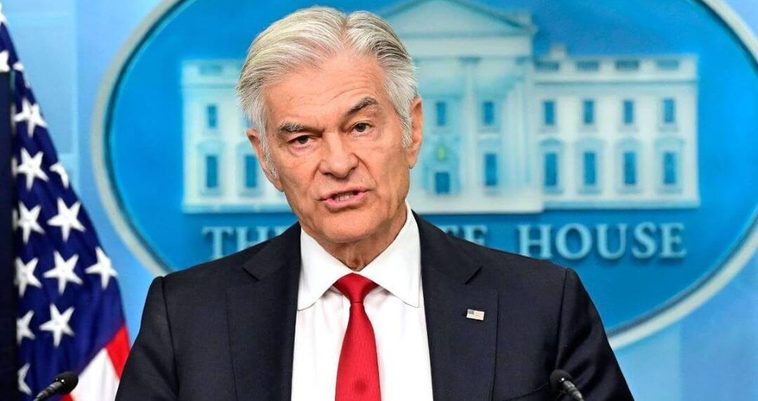
Dr. Oz’s remarks painted a picture of a president who is actively involved in understanding and tracking his health data rather than passively receiving updates. The comments also reinforced the idea that frequent medical evaluations are part of a broader habit of precision and oversight.
Meanwhile, the White House has already released formal documentation summarizing the most recent physical examination conducted on the president earlier this year at Walter Reed National Military Medical Center. The report was issued on May 30 and provides a detailed snapshot of the president’s current medical condition.
The memorandum, prepared by White House physician Navy Captain Sean Barbabella, concluded that the 79-year-old president “remains in excellent health, demonstrating strong cardiac, pulmonary, neurological, and overall physical function.”
One of the most closely examined sections of the report focused on cardiovascular health. According to the findings, an AI-assisted electrocardiogram analysis estimated the president’s cardiac age to be significantly younger than his actual age—by roughly 14 years—placing his heart function closer to that of a 65-year-old individual.
Medical professionals often describe “cardiac age” as a measure of cardiovascular vitality derived from electrocardiogram data, offering insight into how efficiently the heart is functioning compared to typical age-based expectations.
Additional testing supported the overall positive assessment. A coronary CT angiography reportedly showed no signs of arterial blockage or structural abnormalities in the heart or major blood vessels. An echocardiogram further confirmed normal heart chamber size and valve function, along with a preserved ejection fraction, indicating efficient pumping performance.
The examination also documented a regular heart rate and rhythm, with normal heart sounds and stable circulation to the extremities. These indicators are commonly used by physicians to evaluate overall cardiovascular stability and performance under both rest and stress conditions.
Beyond cardiac health, laboratory results and vital statistics were also described as normal. The report noted a blood pressure reading of 105/71 mmHg, a resting heart rate of 73 beats per minute, and a pulse oximetry level of 98 percent—figures typically associated with strong general health in adults.
This latest examination is not an isolated event. It follows previous evaluations conducted during the president’s current term, including an annual physical in April 2025 and a follow-up assessment in October 2025. Such routine monitoring is widely regarded as standard practice for individuals serving in the presidency, given the intense physical and mental demands of the office.
The White House has consistently maintained transparency by releasing summarized versions of these medical evaluations, aiming to keep the public informed about the president’s fitness for duty without disclosing unnecessary private medical details.
Taken together, the latest briefing remarks from Dr. Oz and the official medical memorandum present a consistent narrative: a president who undergoes frequent, structured health assessments and is reported by medical professionals to be in strong overall condition, with cardiovascular indicators that appear notably favorable for his age.

