
>> Continued From the Previous Page <<
Investigators say officers attempted to detain Hollis, but he refused commands and tried to flee. During the pursuit, Sgt. Mario Leon moved in to physically restrain Hollis while Sgt. Kristian Schultz deployed a Taser in an effort to end the confrontation without deadly force.
Instead of surrendering, the suspect allegedly fought back.

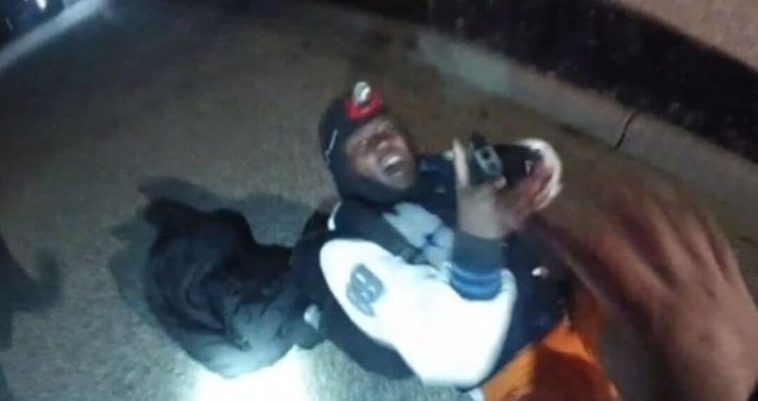
A violent struggle broke out on the ground as officers attempted to gain control. During the melee, police say Hollis suddenly produced a firearm and shot Sgt. Leon in the hand at close range.
Faced with an armed suspect in the middle of a physical fight, both Sgt. Leon and Sgt. Schultz returned fire.
Hollis was killed at the scene.
Despite the seriousness of the allegations against Hollis and the fact that an officer had been shot, the suspect’s family and their representatives immediately began accusing law enforcement of concealing details about the incident.
Days after the shooting, relatives of Hollis publicly demanded the release of body camera recordings, dashcam footage, and emergency dispatch audio, suggesting police were crafting a misleading version of events.
“To just say a weapon was brandished and gunfire was exchanged leaves a lot to question,” said Nikki Holiday, a legal liaison for Hollis’ family.
“A life was lost. Let’s get to the facts before we just put these narratives out there and start smearing the victim,” she added.
The family doubled down over the weekend, announcing they had retained a national civil rights law firm in preparation for potential legal action against the City of Richfield and the Minnesota Bureau of Criminal Apprehension.
But the narrative shifted dramatically Monday after Richfield police released the bodycam footage in full.
The video reportedly shows officers attempting to stop Hollis before the confrontation turned violent. It also appears to confirm investigators’ original account that Hollis pulled a firearm during the struggle and shot Sgt. Leon before officers responded with deadly force.
Rather than quieting the controversy, the footage release triggered fresh outrage from Hollis’ relatives and their attorneys, who criticized police for making the recordings public.
Critics of the family’s response were quick to point out the irony. After spending days demanding transparency and accusing officers of hiding evidence, the same activists and legal representatives appeared furious once the evidence backed up the officers’ claims.
The incident has once again ignited debate nationwide over law enforcement use of force, media narratives, and the rush by activists and attorneys to accuse police of misconduct before all the facts are available.
Supporters of the officers say the bodycam footage underscores the impossible split-second decisions police are often forced to make when confronting armed suspects. In this case, officers first attempted less-lethal tactics before the confrontation escalated into gunfire after one of their own was wounded.
Meanwhile, many residents and law enforcement advocates are praising the Richfield Police Department for releasing the footage quickly and allowing the public to see the incident unfold firsthand rather than relying on speculation or politically charged accusations.
As investigations continue, one fact now appears difficult to dispute: the video evidence strongly supports the officers’ account that this deadly confrontation began when Hollis allegedly pulled a gun and fired first.

