
>> Continued From the Previous Page <<
“The most fighters, the most bombers, the most strikes. Intelligence more refined and better than ever. So that’s on one hand. On the other hand, the last 24 hours have seen Iran fire the lowest number of missiles they’ve been capable of firing yet.”
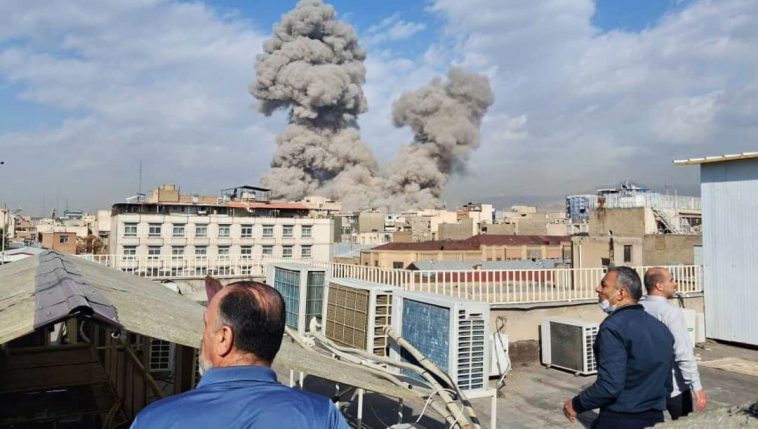
Officials say the current campaign is part of a broader operation known as Operation Epic Fury, which has now reached its tenth day. According to military leadership, the mission’s core objective remains straightforward: dismantle Iran’s missile infrastructure and severely degrade the regime’s military capabilities.

“On Day 10 of Operation Epic Fury, we are winning with an overwhelming and unrelenting focus on our objectives,” Hegseth said.
U.S. military planners are targeting Iran’s missile stockpiles, launch platforms, and production facilities tied to the Islamic Revolutionary Guard Corps. These assets are considered the backbone of Tehran’s ability to threaten both regional allies and international shipping routes.
Hegseth emphasized that the campaign also seeks to dismantle Iran’s naval power structure in the Persian Gulf while permanently eliminating the regime’s ability to develop nuclear weapons.

The defense secretary expressed confidence that American forces currently hold the upper hand on the battlefield.
A confident Hegseth said the U.S. was “crushing the enemy in an overwhelming display of technical skill and military force.”
Military officials say the campaign has been marked by coordinated air power, advanced targeting systems, and persistent intelligence gathering designed to neutralize Iran’s strategic capabilities piece by piece.
“We will not relent until the enemy is totally and decisively defeated,” Hegseth continued. “But we do so on our timeline and at our choosing.”
The Pentagon leader also addressed concerns raised by critics who worry the conflict could spiral into another long-term Middle Eastern entanglement similar to previous U.S. wars in the region.
Hegseth attempted to draw a clear distinction between the current operation and the wars that dominated U.S. foreign policy in the early 2000s.
“This is not 2003,” he said, referencing the Iraq War.
“This is not endless nation-building. This is not the type of quagmires we saw under Bush or Obama. Not even close,” he said.
According to Hegseth, the administration’s strategy focuses strictly on military objectives rather than prolonged occupation or political reconstruction.
“Our generation of soldier will not let that happen again, and nor will this president, who very clearly ran against those kinds of never ending, nebulously scoped missions.
“Those days are dead.”
Another key development highlighted by the defense secretary is what he described as the United States achieving uncontested control of the skies.
Hegseth also added the U.S. has achieved “total air dominance.”
That advantage, officials say, has allowed American forces to strike Iranian military targets with increasing precision while limiting Iran’s ability to respond effectively.
At the same time, Washington believes Tehran’s broader regional network is weakening rapidly.
Hegseth pointed to shifting geopolitical dynamics in the Middle East, saying Iran’s traditional support structure is beginning to collapse.
The country’s “neighbors, and in some cases, former allies in the Gulf, have abandoned them,” Hegseth said.
“And their proxies, Hezbollah, the Houthis and Hamas, are either broken, ineffective or on the sidelines.”
With Iran increasingly isolated and U.S. forces intensifying their campaign, military leaders say the coming days could prove pivotal in determining whether Tehran’s military capabilities can be decisively crippled.
For now, the Pentagon is signaling that the conflict is far from over. If Hegseth’s warning is any indication, the next phase of the operation could bring the most devastating blows yet against Iran’s military infrastructure.

