
>> Continued From the Previous Page <<
The Dodd-Frank law, while intended to stabilize the financial system, quickly became a lightning rod for criticism. Smaller and regional banks felt the weight of compliance requirements, with many arguing the law disproportionately burdened them while giving larger institutions room to adapt. Over time, some of those regulations were scaled back as policymakers acknowledged unintended consequences.
In a twist that raised eyebrows across the political spectrum, Frank later joined the board of Signature Bank, a financial institution that ultimately collapsed in 2023. The bank’s downfall came amid a wave of panic-driven withdrawals, part of a broader chain reaction of instability in the banking sector. The irony of a key architect of post-crisis banking rules being tied to a failed institution was not lost on critics.

According to a report from Politico, Frank has entered hospice care while also preparing to release a new book that challenges the direction of his own party. Even in his final chapter, the former congressman appears determined to make his voice heard.
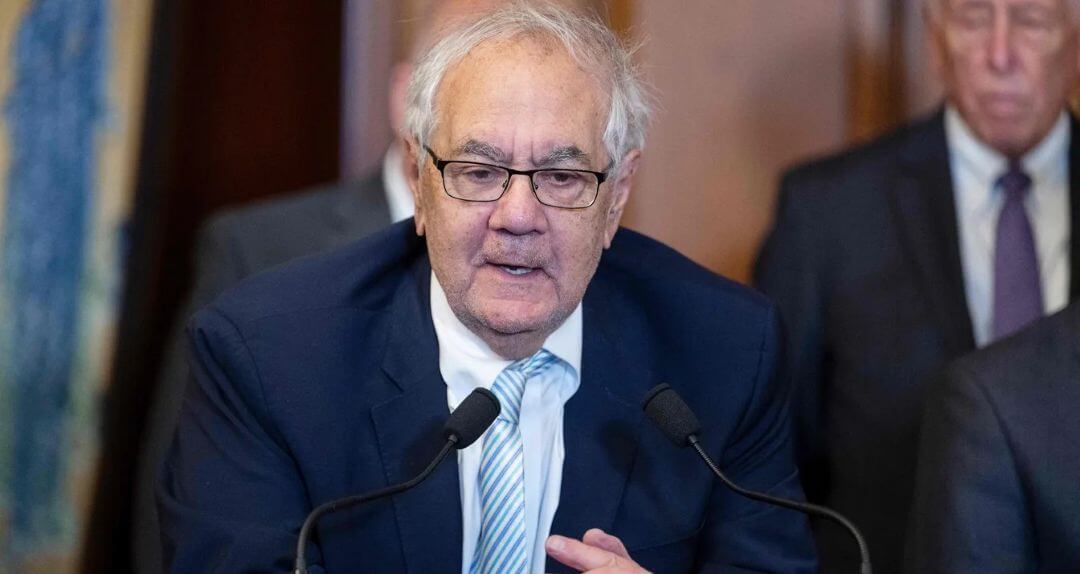
Former Rep. Barney Frank, a liberal icon who was a key architect of the landmark Wall Street regulations Democrats enacted in the wake of the 2008 financial crisis, has entered hospice care at his home in Maine. And as one of his last acts, he is preparing to release a book repudiating his party’s left flank.
Throughout his 32 years in Congress, Frank was a reliable champion of progressive causes. However, in recent remarks, he has openly criticized the modern trajectory of the Democratic Party, suggesting it has drifted too far to the left for mainstream voters.
A champion of liberal causes during his 32 years representing Massachusetts in the House, Frank says progressive Democrats have “embraced an agenda that goes beyond what’s politically acceptable.”
“Until we separate ourselves from that agenda, we don’t win,” he said in an interview Tuesday.
Frank, who served in the House from 1981 to 2013, said he feels “very good — no pain, no discomfort,” but has entered hospice care as he deals with congestive heart failure. He is remaining in his home in Ogunquit, Maine, where he moved with his husband after retiring from Congress.
“At 86, I’ve made it longer than I thought,” Frank said. “At some point, my heart’s just going to give out, and it’s reaching that stage. So I’m taking it easy at home and dealing with it by relaxing.”
As Frank faces the reality of his condition, his final public statements reflect both candor and conviction. Even as his health declines, he continues weighing in on the political battles shaping the country—offering a parting critique of the movement he helped define.

