
>> Continued From the Previous Page <<
According to a press release from the team:
“A peer-reviewed paper in the prestigious journal Near Eastern Archaeology reports the first-ever discoveries of ancient Assyrian military camps. Created circa 700 BC during military conquests across the Middle East, they mark the expansion of the Assyrian Empire, which became the prototype for the subsequent Persian, Greek, and Roman empires.”
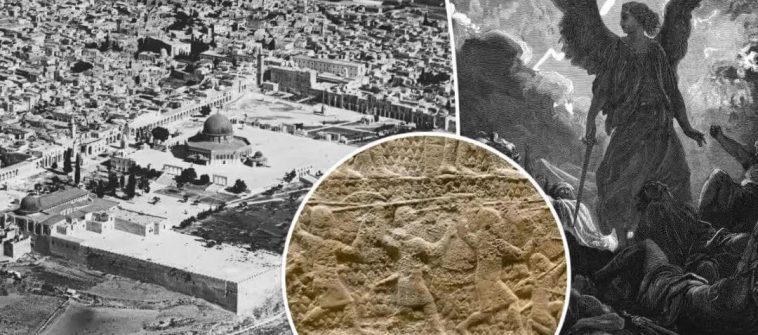
These discoveries stem from detailed analyses of bas-reliefs in Assyrian King Sennacherib’s palace, which depict his conquests. By aligning these images with early aerial photographs and current landscapes, Compton crafted a virtual map leading to the supposed location of Sennacherib’s camp near Lachish, south of Jerusalem.

Excavations at the site revealed a camp layout consistent with the artistic depictions in Sennacherib’s palace. The area showed signs of brief occupation, evidenced by pottery dating back to the time of the Assyrian siege, and had not been inhabited for 2,600 years before or after the event, underscoring the transient nature of a military encampment.
Further lending credibility to this finding, the ancient name of the site, Khirbet al Mudawwara—translating to “The Ruins of the Camp of the Invading Ruler”—mirrors historical accounts of the Assyrian presence.
The Assyrians, a dominant force in the Near East from what is now northern Iraq and southeastern Turkey, are historically noted for their military prowess and expansive empire, as documented in sources like Britannica. The reign of King Sennacherib, from 705 BC until his demise in 681 BC, was marked by both conquest and the dramatic biblical reversal at Jerusalem.
Reveal the Biblical Wealth Protection Secret—Take Action Now to Secure Your Money!
The biblical passages in Isaiah 37:36-38, 2 Kings 19:35, and 2 Chronicles 32:21, vividly recount the divine slaughter of the Assyrian troops at Jerusalem’s doorstep:
“Then the angel of the Lord went out and put to death a hundred and eighty-five thousand in the Assyrian camp. When the people got up the next morning—there were all the dead siens. So Sennacherib king of Assyria broke camp and withdrew. He returned to Nineveh and stayed there.”
This archaeological endeavor not only illuminates a mysterious chapter of biblical and historical saga but also reinforces the intricate layers of human history, inviting further exploration into the realms where faith and facts converge. The discovery of Sennacherib’s camps by Stephen C. Compton and his team offers a tangible link to a story once only held in the pages of scripture, now vividly coming to life through the sands of time.


