
>> Continued From the Previous Page <<
Democratic Field and Early Polling Signals
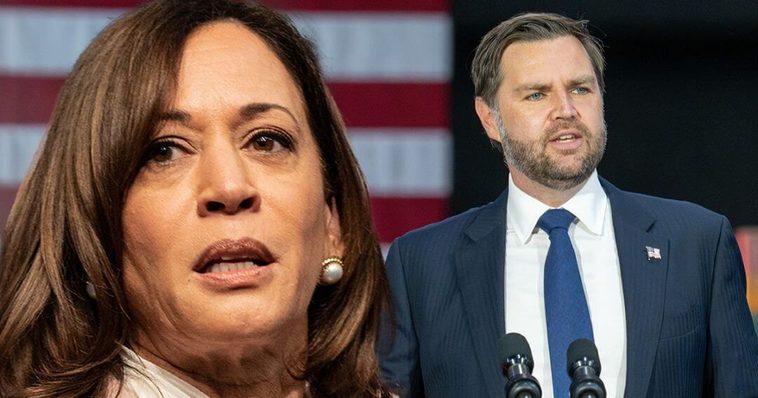
On the Democratic side, early polling data used in the simulation places Kamala Harris at the top of the field with 32 percent support. She is followed by California Governor Gavin Newsom at 23.8 percent. Former Transportation Secretary Pete Buttigieg trails in third place with just under 10 percent, while Rep. Alexandria Ocasio-Cortez and Pennsylvania Governor Josh Shapiro remain within the broader mix of potential contenders.
Despite her loss in the 2024 presidential election, Harris appears to be maintaining political relevance in early-stage speculation. The host of the video observed that “many people did write Kamala Harris off following her 2024 election defeat.”

However, more recent polling trends suggest a rebound in her standing among Democratic voters. Betting markets have also begun to reflect renewed interest in her potential candidacy, with odds shifting significantly in recent months. Market indicators now suggest a 56 percent likelihood that she will seek the Democratic nomination in 2028, up sharply from just 11.2 percent only a few months earlier.
The video adds, “Today, it is more likely than not that she is going to run again,” reflecting the growing perception among some observers that Harris remains a central figure in the party’s future.
Republican Primary Outlook Favors Vance
On the Republican side, Vice President JD Vance leads early polling with 49.2 percent support, placing him well ahead of other potential contenders. Donald Trump Jr. trails significantly, while Senator Marco Rubio holds 12.5 percent and Florida Governor Ron DeSantis sits at 9.2 percent.
The simulation assigns Vance a 46 percent probability of securing the GOP nomination, positioning him as the clear frontrunner in this early hypothetical field. Rubio follows with an 18 percent chance, while others lag behind.
The video commentary underscores this trajectory, stating: “If nothing big changes, he will very likely become the party’s nominee in the next presidential race.”
Electoral Map Breakdown Shows Republican Advantage
The AI-generated electoral map divides states into “solid” and “likely” categories based on projected victory margins. States with margins exceeding 15 points are classified as solid.
For Vance, this solid Republican column includes a large swath of conservative-leaning states such as Utah, Idaho, Montana, Wyoming, the Dakotas, Nebraska, Kansas, Oklahoma, Missouri, Arkansas, Louisiana, Mississippi, Alabama, Tennessee, Kentucky, West Virginia, Indiana, South Carolina, and Ohio.
Ohio’s inclusion stands out, reflecting its continued rightward shift in recent cycles. The host noted: “It is not difficult to see that he will carry the Buckeye State by a solid 15-point margin,” especially following strong Republican performance there in 2024.
On the Democratic side, Harris retains a stable but narrower coalition of reliably blue states, including California, Washington, Hawaii, Oregon, Vermont, Massachusetts, Connecticut, Delaware, Maryland, and Washington, D.C., along with Maine’s 1st Congressional District. The model also predicts Connecticut and Delaware returning to stronger Democratic margins after closer contests in previous elections.
Closing Electoral Outlook
After accounting for both solid and likely states, the simulation gives Vance a substantial early lead of 246 electoral votes before the remaining swing states are fully allocated. From there, additional projected wins in key battlegrounds—including Florida, Texas, North Carolina, Arizona, Iowa, Alaska, and Maine’s 2nd District—push him well past the required threshold.
In the final projection, Vance reaches 312 electoral votes compared to Harris’ 212, completing a decisive simulated victory in this AI-driven forecast.
WATCH:
While the exercise remains entirely speculative and dependent on assumed conditions, it highlights how artificial intelligence tools are increasingly being used to model political futures—and how those projections are already generating conversation years ahead of the next presidential election.

