
>> Continued From the Previous Page <<
In his remarks, Adams praised Homan’s commitment to targeting violent offenders, indicating that both leaders share the same goal of ensuring public safety. “From what I heard from the incoming head of ICE is that we have the same desire to go after those who are committing violent acts, repeated violent acts among innocent New Yorkers and among migration asylum seekers. That’s what I heard from him. And I was pleased to hear that because we share the same desire.”
WATCH:

Adams, often seen as a moderate voice within the Democratic Party, has faced criticism from progressives for his firm stance on law enforcement and immigration issues. Yet his remarks left no ambiguity about his position: New York City’s priority is the safety of its residents, not shielding those who repeatedly break the law.
WATCH:
Perhaps the most alarming part of Adams’ address was his revelation about the staggering number of unaccounted-for migrant children. “We have 500,000 children who had sponsors in this country that we can’t find. We can’t find them. We don’t know if they’re doing child labor. We don’t know if they’re doing sex crimes. We don’t know if they’re being exploited – 500,000 children. There’s a level of hypocrisy…” Adams said, calling attention to a humanitarian crisis that seems to have slipped under the radar.

The mayor’s statement painted a grim picture of the consequences of failing to track vulnerable children who arrive in the United States under sponsorship programs. He pointed to systemic gaps that allow exploitation and abuse to flourish unchecked, leaving reporters and citizens alike grappling with the implications.
WATCH:
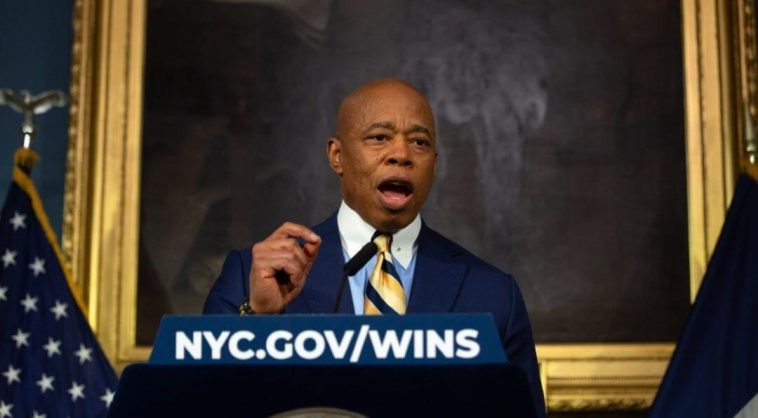
Adams didn’t hold back when addressing the room of reporters, many of whom he accused of having preconceived narratives about his policies and intentions. “I’m going to answer a few questions and then I am leaving because it’s not going to matter what I respond to anyway, you have your preconceived thoughts already,” Adams declared before wrapping up the presser.
This blunt dismissal of the media’s role in framing his policies is characteristic of Adams’ growing frustration with how his initiatives are covered. By directly challenging reporters, Adams once again positioned himself as a leader willing to take on not just crime and immigration issues but also the narratives that influence public perception.
What are the best concealed carry holsters for ultimate security?
Adams’ meeting with Homan and his subsequent statements highlight the growing complexity of immigration enforcement and urban governance. While progressives may criticize his alignment with tougher immigration policies, Adams is clearly signaling that public safety and accountability are non-negotiable.
As New York City grapples with an influx of migrants and ongoing concerns about public safety, Adams’ leadership will undoubtedly face continued scrutiny. But his willingness to tackle difficult topics head-on, even in the face of media criticism, demonstrates his resolve to protect the city and its most vulnerable residents.

