
>> Continued From the Previous Page <<
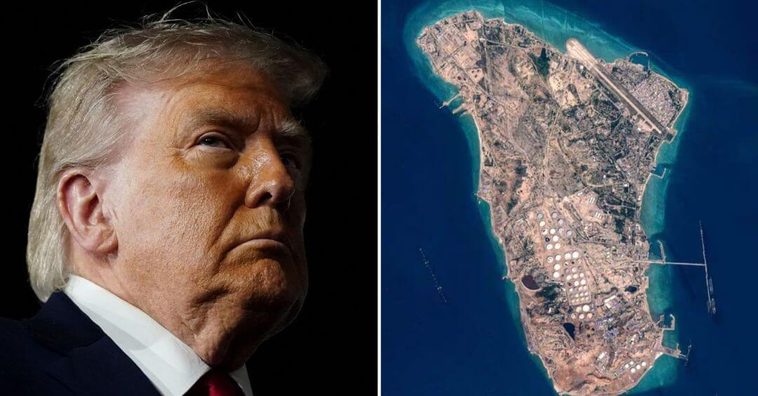
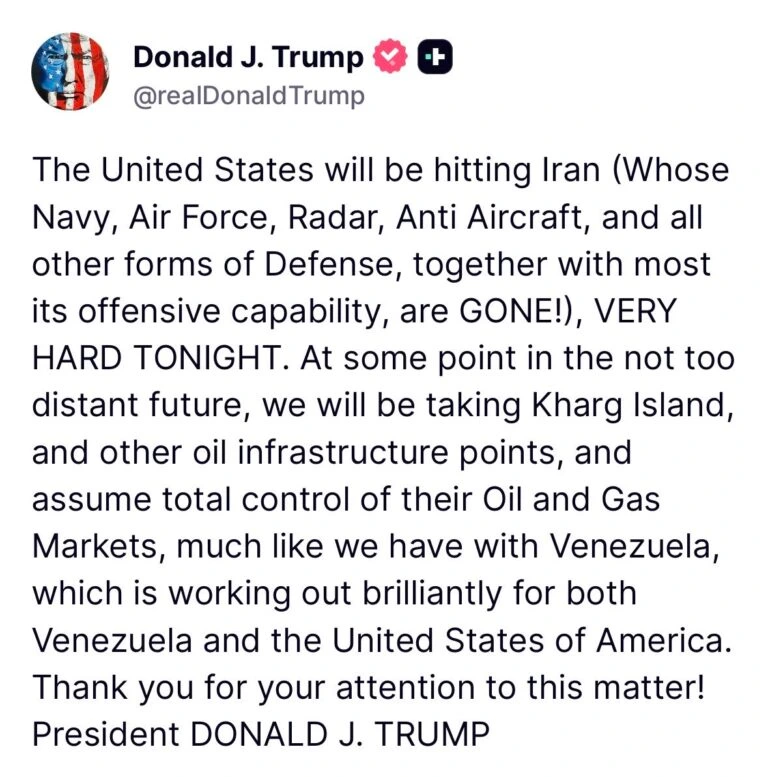
Beyond immediate strikes, Trump also introduced a more sweeping and controversial vision involving Iran’s energy infrastructure. He specifically pointed to Kharg Island, a critical hub for Iranian oil exports, as a potential future objective for U.S. control. The island plays a major role in Iran’s economy and global energy shipments, making it a strategic focal point in any broader conflict.
Trump stated:

“At some point in the not too distant future, we will be taking Kharg Island, and other oil infrastructure points, and assume total control of their Oil and Gas Markets, much like we have with Venezuela, which is working out brilliantly for both Venezuela and the United States of America,”
The suggestion of asserting control over foreign energy infrastructure marks a significant escalation in rhetoric, signaling that the administration is considering not only targeted strikes but also broader strategic dominance over critical economic assets.
Kharg Island itself has long been viewed as one of Iran’s most vital export points, responsible for the majority of its crude oil shipments. While it has faced damage in past conflicts and remains a known strategic vulnerability, any sustained military action or control effort would represent a major expansion of U.S. operational involvement in the region.
Later on Thursday morning, Trump expanded further on the planned military activity during a Fox News appearance, indicating that additional bombing runs were already in motion and warning that the scale of operations would increase. He said:
“There will be more bombing tonight. It will be bigger – bigger, more powerful,”
His comments reinforced the message that the U.S. campaign is not winding down but instead entering a more aggressive phase. Trump also suggested that while he has considered more ambitious strategic moves, including control of key infrastructure like Kharg Island, he remains aware of domestic political considerations and public support for prolonged military engagement.
Despite the heightened military posture, Trump noted that diplomatic discussions with Tehran have not been entirely shut down. According to his remarks, U.S. officials are still maintaining contact with Iranian representatives, even as strikes continue and tensions rise. The dual-track approach suggests that the administration is pursuing pressure tactics while keeping negotiation channels technically open.
In addition to outlining military developments, the president criticized how the conflict has been portrayed in parts of the media. He argued that favorable coverage of Iranian leadership has influenced perceptions internationally and claimed that regime officials themselves have expressed surprise at how positively they have been depicted in Western reporting.
Shortly after announcing the latest round of strikes, Trump also used his Fox News appearance to praise the network’s chief foreign correspondent Trey Yingst for his on-the-ground reporting from the region, highlighting the importance of real-time coverage in shaping public understanding of the conflict.
The latest escalation follows several days of reciprocal strikes and growing military exchanges between Washington and Tehran. Analysts warn that the situation remains highly unstable, with fears that continued escalation could broaden into a wider regional conflict involving multiple actors across the Middle East.
As developments continue to unfold, the global community is watching closely to see whether the combination of military pressure and limited diplomatic engagement will stabilize the situation—or push it into an even more dangerous phase.

