
>> Continued From the Previous Page <<
Those hopes were short-lived.
The remains were actually discovered by local YouTuber AJ Wysopal, who had been conducting his own search in the area. After noticing what appeared to be a human bone exposed by the desert terrain, he contacted authorities, who quickly arrived to investigate.

What began as a potentially significant lead soon evolved into a completely different story.
Experts examining the site determined the remains had no connection whatsoever to Guthrie’s disappearance.
Instead, investigators concluded they had stumbled upon something far older.
According to University of Arizona anthropologist James T. Watson, the discovery involved an entire skeleton, not merely a single bone as some early reports suggested.
After studying the site and the evidence surrounding the remains, Watson estimated the burial likely occurred hundreds of years ago and possibly as far back as a millennium.
“Whether it is a thousand years old or 50 years old, these are human remains,” Watson said, adding that anyone who finds human remains should always treat them with dignity.
Researchers relied heavily on the location’s archaeological context to determine the likely age and origin of the remains.
The burial site sits near a known archaeological area that has previously yielded evidence of ancient habitation. Fragments of pottery and other artifacts discovered nearby provided important clues that helped experts identify who the individual may have been.
Watson explained that ceramic pieces recovered from the area matched examples that have long been associated with Native American communities in the region.
“All of that contextual evidence allowed me to be pretty sure that this individual was in fact Native American,” he said. “The ceramics really sort of drove home that point.”
As a result, the remains were transferred to the Tohono O’odham Nation for handling according to tribal customs and cultural traditions.
Watson indicated that no additional scientific examination is expected at this time. Instead, the remains will be cared for in accordance with tribal protocols.
The discovery also highlighted a reality many Americans may not realize about the Arizona desert.
Beneath its harsh and often unforgiving landscape lies centuries of history waiting to be uncovered.
Extreme weather conditions, erosion, construction activity, and shifting terrain regularly expose artifacts and human remains that have been hidden for generations.
“The desert there is a pretty harsh environment, and obviously it’s been settled for hundreds, thousands of years,” he said.
The region presents additional challenges because of its proximity to the southern border.
Watson noted that over the years he has responded to numerous cases involving migrants who perished while attempting dangerous crossings through remote desert terrain.
“There are literally probably hundreds of bodies that are discovered every year out in the desert,” he said.
The vastness of the landscape makes searches extraordinarily difficult. Miles of isolated canyons, rocky terrain, and remote wilderness create countless places where someone could become lost or where evidence could remain hidden for years.
“So there [are] a lot of places that an individual could get lost or pass away, or hide a body,” he said.
Watson believes additional discoveries are likely as more people explore remote sections of the desert that rarely receive human traffic.
“I think…as people start to poke into some of these crevices that don’t normally get poked into across the desert, they’re likely to find more individuals,” he said.
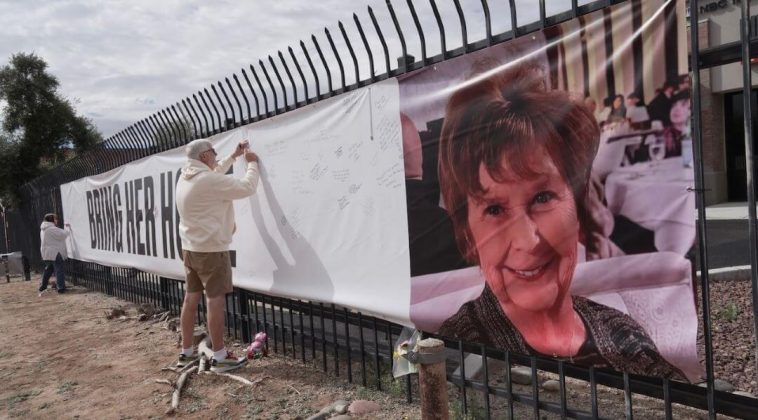
Meanwhile, the search for Nancy Guthrie continues.
Despite months of investigation, authorities have not located the missing woman, and her family remains desperate for answers.
A reward exceeding $1.2 million remains available for information leading investigators to Guthrie or revealing what happened to her.
Federal authorities and local law enforcement continue to urge anyone with information, no matter how small it may seem, to come forward.
For now, one mystery has been solved, but the far more urgent one remains unanswered.

