
>> Continued From the Previous Page <<
But that was only the beginning.
Investigators also arrested key members of the company’s management team.

Plant manager Christophe Ramey and human resources coordinator Sandy Willis were indicted by a South Carolina State Grand Jury on multiple charges, including criminal conspiracy, identity fraud, and forgery.
The arrests sent a clear message that authorities were no longer focusing solely on unauthorized workers but also on those accused of facilitating illegal hiring practices.
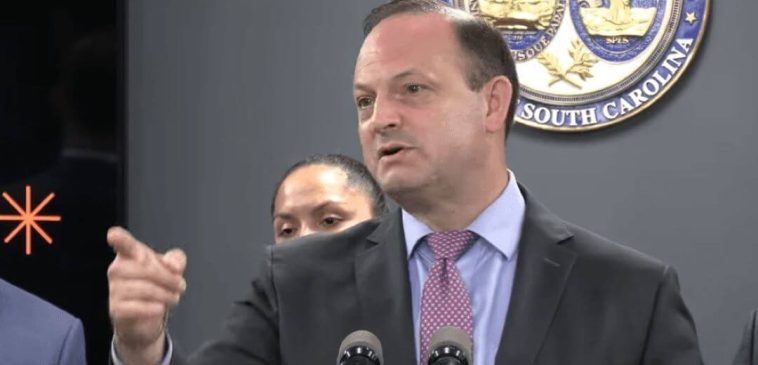
South Carolina Attorney General Alan Wilson announced the charges alongside Eighth Circuit Solicitor David Stumbo during a press conference Thursday.
According to investigators, the case uncovered what officials described as a much larger network operating behind the scenes.
Authorities allege that forged identification documents were being supplied through a criminal pipeline that extended well beyond the manufacturing plant itself.
Four additional suspects were charged as alleged document suppliers. Prosecutors claim these individuals produced and distributed counterfeit driver’s licenses, Social Security cards, and other identification documents using the identities of actual American citizens.
The allegations paint a picture of an organized operation designed to help unauthorized workers obtain employment while concealing their true identities.
State officials argue that the consequences extended far beyond immigration violations.
Wilson’s office said Ramey and Willis “violated their legal obligations to verify the legitimacy of IDs before hiring employees, and facilitated the use of forged identity documents by illegal immigrants at the business.”
Investigators emphasized that identity theft was a major component of the case.
Deputy Attorney General Creighton Waters explained that prosecutors intentionally approached the investigation by targeting every level of the operation, from workers to document providers and ultimately to the employers allegedly benefiting from the scheme.
“The crimes uncovered in Operation Ghost Story are not victimless,” Waters said. “When illegal aliens use stolen identities and forged documents, they steal real Americans’ identities.”
Officials revealed that several of the detained individuals had previous encounters with immigration authorities. Some reportedly had existing deportation orders but remained employed at the facility.
According to state investigators, concerns about widespread document fraud first emerged in late 2024.
Local law enforcement agencies reportedly observed a growing black market for fraudulent identification documents throughout South Carolina. Investigators believed the problem was expanding while enforcement efforts remained limited.
Following Trump’s return to office, federal agencies joined forces with state authorities, creating the task force that eventually launched Operation Ghost Story.
The result was one of the most significant workplace enforcement actions seen in recent years.
Supporters of the operation argue that the case demonstrates a fundamentally different approach to immigration enforcement.
Rather than concentrating exclusively on unauthorized workers, authorities are increasingly examining the businesses, hiring managers, and document suppliers who make such employment arrangements possible.
Federal officials have already reported record levels of worksite enforcement activity during the early months of 2025. Investigators have served subpoenas on hundreds of companies and pursued substantial penalties against employers suspected of violating immigration laws.
The South Carolina case, however, raises the stakes even further.
For many observers, the criminal indictments against company officials represent a major escalation that could alter hiring practices across the country.
The message appears straightforward: individuals responsible for hiring decisions may now face personal legal consequences if they knowingly participate in fraudulent employment schemes.
Meanwhile, authorities say the investigation remains active.
Prosecutors indicated that sealed portions of the case remain under review, leaving open the possibility of additional arrests and charges in the weeks ahead.
What began as an immigration enforcement operation has evolved into a far-reaching criminal investigation involving alleged identity theft, document fraud, illegal employment practices, and organized criminal activity.
As the defendants await bond hearings and the investigation continues to unfold, businesses across the country are paying close attention.
For supporters of stronger immigration enforcement, Operation Ghost Story may represent a glimpse into a new era—one where the spotlight no longer falls solely on unauthorized workers, but also on those accused of creating the system that enabled them to be hired in the first place.


It is about time they started enforcing the laws that the companies that are hiring illegals illegally are being charged and we can hope also fined to the max for their practices. Many hire the illegals for the cheep labor and not having to pay taxes, they do this in Washington state also by the droves.
It is about time they started enforcing the laws that the companies that are hiring illegals illegally are being charged and we can hope also fined to the max for their practices. Many hire the illegals for the cheep labor and not having to pay taxes, they do this in Washington state also by the droves.