
>> Continued From the Previous Page <<
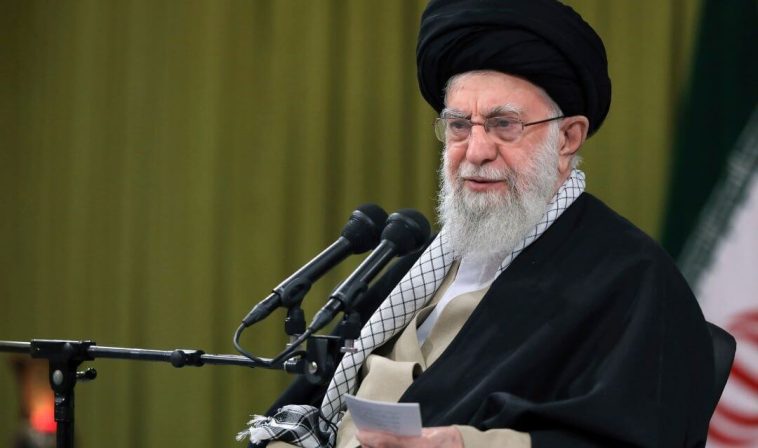
Iranian Supreme Leader Ayatollah Mojtaba Khamenei used a message connected to the annual Hajj pilgrimage to argue that U.S. influence across the Middle East is weakening and that America’s military presence may soon face greater risks.
In a pointed statement, Khamenei suggested that regional nations would no longer tolerate serving as a protective buffer for American interests.

“What is certain in this regard is that the hands of time will not turn back, and the nations and lands of the region will no longer serve as shields for U.S. bases,” he wrote.
He continued by predicting a long-term decline in American influence.
“The United States not only will no longer have a safe haven for its mischief and for establishing military bases in the region but day by day, it is growing more distant from its former status,” Khamenei added.
The comments come at a particularly sensitive moment.
Negotiators from both nations have spent weeks attempting to build momentum toward a ceasefire arrangement that could eventually evolve into a broader framework for regional stability. Publicly, officials on both sides have signaled cautious optimism that progress is being made.
Yet the statements emerging from Tehran suggest that many within Iran’s leadership remain deeply suspicious of any agreement with the United States.
That skepticism was reinforced Friday by Iranian Parliament Speaker Mohammad Bagher Ghalibaf, who delivered an unmistakably hardline message regarding Iran’s negotiating strategy.
Rather than portraying diplomacy as the primary path forward, Ghalibaf argued that military power remains Tehran’s most effective tool for extracting concessions.
“We seize concessions not through dialogue, but with missiles; in negotiations, we merely make them understand,” Ghalibaf wrote in a post on X.
His comments underscored a view held by many Iranian hardliners that strength at the negotiating table comes from battlefield leverage rather than diplomatic goodwill.
Ghalibaf also made clear that Iran has little interest in extending trust to its longtime adversary.
“We have no trust in guarantees or words — only actions are the measure. No action will be taken before the other side acts,” he continued.
Perhaps most striking was his final warning regarding any future agreement.
“The winner of any agreement is the one who is better prepared for war from the day after.”
Those remarks highlight the enormous challenge facing negotiators.
Even as diplomats attempt to craft a lasting settlement, Iran’s leadership continues to frame every discussion through the lens of military readiness, deterrence, and strategic competition.
For American officials, the path forward remains complicated. Progress at the negotiating table may be real, but Tehran’s latest statements serve as a reminder that deep distrust still exists beneath the surface.
As ceasefire talks continue, both sides appear determined to keep one hand extended toward diplomacy while keeping the other firmly positioned near the instruments of war.
For now, the peace process remains alive. But the latest exchange of messages between Tehran and Washington suggests that the road ahead may be far more turbulent than either side is publicly willing to admit.

