

>> Continued From the Previous Page <<
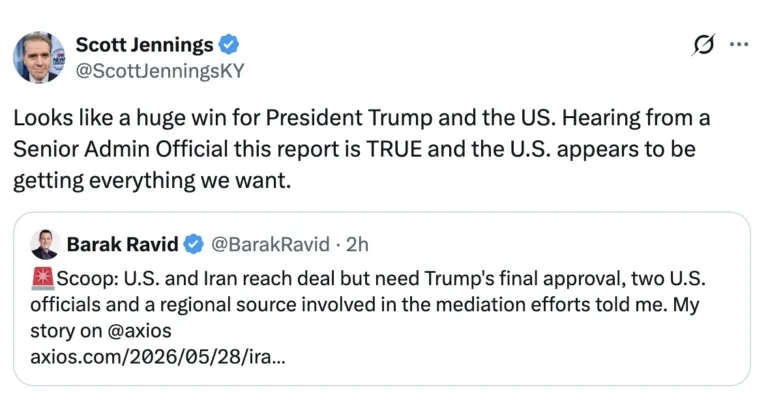
That single update was enough to send Trump allies and supporters into a flurry of online analysis, with many interpreting the comment as a sign that a 60-day extension of the current ceasefire could be taking shape while broader nuclear and security negotiations continue behind closed doors.
Earlier in the day, initial reports suggested that U.S. and Iranian negotiators had reached the outline of a temporary framework designed to prevent a renewed escalation of tensions in the Middle East. While not yet finalized, the structure of the agreement appears aimed at stabilizing a volatile situation that has repeatedly threatened to spiral into open conflict.

According to those early details, the proposed arrangement would require Iran to reopen unrestricted shipping lanes through the Strait of Hormuz, along with the removal of naval mines in the region within approximately 30 days. The Strait of Hormuz remains one of the most strategically important waterways in the world, making any changes to its security arrangements a matter of global economic significance.
In exchange for these steps, the Trump administration would reportedly consider beginning discussions on limited sanctions relief, as well as the potential release of certain frozen Iranian financial assets. While officials have not confirmed the specifics publicly, the outline suggests a transactional framework built around de-escalation in exchange for incremental economic easing.
At this stage, the White House has not formally announced any finalized deal. However, Jennings’ remarks appeared to signal growing confidence within the administration that the diplomatic process is moving in Washington’s direction, even if final approval has not yet been secured.
President Donald Trump himself offered insight into the administration’s posture during Wednesday’s Cabinet meeting, emphasizing both pressure and opportunity in the ongoing negotiations.
“Iran is very much intent, they want very much to make a deal – so far they haven’t gotten there,” Trump said.
The president made clear that patience is not unlimited, underscoring a firm stance should talks fail to produce results.
“We’re not satisfied with it: Either that or we’ll have to just finish the job.”
Trump also described Iran’s strategic position as significantly weakened following sustained conflict and pressure, suggesting that negotiations are occurring from a position of reduced capability on Tehran’s side.
“Their Navy has gone, as I’ve said a thousand times, and Navy is gone, their air force is gone, everything’s gone, and they’re negotiating on fumes,” Trump added. “Maybe we have to go back and finish it. Maybe we don’t.”
Those remarks further reinforced the administration’s dual-track message: openness to diplomacy paired with a willingness to escalate if necessary.
If finalized, the emerging agreement would represent a major foreign policy milestone for Trump’s second term, potentially reshaping the strategic landscape of the Middle East. For months, tensions surrounding maritime security, regional proxy conflicts, and repeated incidents involving Iranian-backed groups have kept the region on edge, with global markets closely watching developments tied to the Strait of Hormuz.
Despite the optimism expressed by some Trump allies, significant obstacles reportedly remain. Iran would still need to formally sign off on the framework, while the final decision to approve any U.S. participation ultimately rests with the president himself.
Even so, the tone from Jennings’ update and the administration’s public remarks has fueled growing speculation that Tehran may be edging closer to accepting core American demands after prolonged economic sanctions and sustained geopolitical pressure.
For now, the situation remains fluid. But Thursday’s developments suggest negotiations are no longer stalled—and may instead be accelerating toward what could become one of the most closely watched diplomatic outcomes of the year.

