
>> Continued From the Previous Page <<
“His children are better off without him,” she said. “They need to learn to not be like their dad. And enjoy the blood money, kids.”
The statements immediately triggered backlash online and from members of the press corps who demanded answers from City Hall about how the women received official credentials in the first place.

Questions quickly shifted from the women themselves to Mayor Mamdani and his administration.
Why were individuals openly praising a murder granted credentials associated with New York City media access?
And why did the mayor appear unwilling to take decisive action once the comments became public?

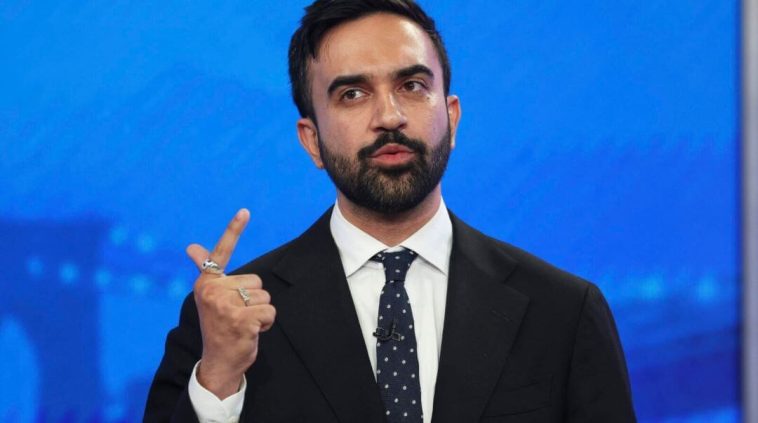
During a separate appearance in Queens, Mamdani was confronted by reporters over whether the press passes would be revoked.
Instead of announcing disciplinary action, the mayor suggested the situation raised broader philosophical questions about media access and credentialing standards.
“We will initiate our own process to review these, and what I will say is there is a good-natured debate to be had about where a press pass should extend and where it shouldn’t,” Mamdani said.
That answer poured gasoline on an already raging controversy.
Conservatives blasted the mayor for treating the issue like an academic discussion rather than condemning behavior many viewed as openly celebrating violence against a murdered father.
The political fallout intensified because critics argue the controversy did not emerge in a vacuum.
For years, progressive politicians have increasingly described insurance companies and healthcare executives using rhetoric centered around “violence,” exploitation, and systemic harm. While many Democrats publicly condemned Thompson’s killing, critics say repeated claims that insurance executives are responsible for suffering created a moral framework where extremists feel justified cheering violence against corporate figures.
That accusation is now being directed squarely at the activist culture surrounding Mangione.
The women outside the courthouse were not fringe internet trolls hiding behind anonymous accounts. They appeared publicly, in person, wearing city-issued credentials while mocking a dead man and insulting his teenage children.
To many observers, the larger issue is not simply what was said, but the perception that New York City leadership responded with hesitation instead of moral clarity.
Opponents say Mamdani’s refusal to immediately revoke the credentials sends a message that ideological allies will receive softer treatment from City Hall, even after crossing lines most Americans would consider indefensible.
The controversy also opened the door to accusations of hypocrisy.
Democrats have repeatedly argued in recent years that silence in the face of inflammatory rhetoric amounts to complicity. House Minority Leader Hakeem Jeffries recently used similar language while criticizing political opponents over unrelated disputes.
But critics argue Mamdani’s case goes beyond silence.
The mayor was directly asked whether he would act.
And instead of delivering a firm rebuke, he framed the matter as part of an evolving conversation about journalism and modern media standards.
For conservatives, the episode represents something larger than one courthouse controversy.
They argue it reflects a growing political culture where radical activism increasingly overlaps with institutional legitimacy, especially in deep-blue cities run by progressive leadership.
To supporters of Mamdani, the issue may center around free expression and credentialing policies in a rapidly changing media landscape.
But to his critics, the image is already burned into public memory: three women laughing off a father’s murder while wearing official New York City press credentials.
And now the mayor who approved the system behind those credentials is facing mounting pressure to explain exactly where he draws the line.

