
>> Continued From the Previous Page <<
The caption immediately triggered backlash online.
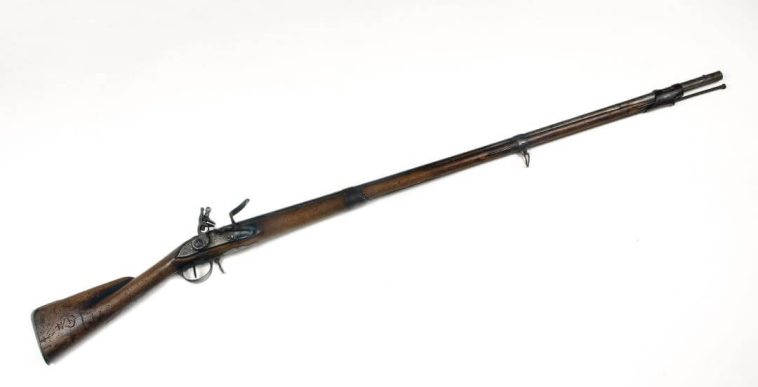
“A musket from 1776 can fire a lead ball at a velocity of around 1,000 feet per second. Imagine what that can do to a human body. Yet under federal and most state laws, it’s exempt from gun regulations. Many antique or replica guns aren’t considered firearms and even convicted felons can own them.”

That wording stunned many Americans who saw the report as an obvious attempt to create fear around one of the most iconic symbols of the nation’s founding.
The weapon at the center of the controversy is the Brown Bess flintlock musket, the same style of firearm carried by colonial troops during the American Revolution against the British Empire.
For generations, the Brown Bess has been viewed not merely as a weapon, but as a symbol of American independence and resistance to tyranny.
Now, critics say, the AP is trying to recast it as a public safety threat.
Ironically, the outlet’s own interview subjects appeared to undermine the alarmist framing.
Firearms historian Ashley Hlebinsky acknowledged during the segment that antique muskets are not considered firearms under federal law because they fall into the antique weapon category.
She explained that federal statutes specifically exempt weapons using “flintlock” or similar ignition systems manufactured before 1898.
Another reenactor interviewed in the report openly mocked the idea that muskets pose a major danger in modern society.
“It seems silly to put restriction on something that would be such a terrible weapon if you wanted to kill people. You can kill more people quickly with a car than you can with a musket.”
That comment quickly spread across social media as critics accused the AP of intentionally burying the most common-sense part of the discussion.
What makes the report even more remarkable is that Congress already settled this issue nearly sixty years ago.
When lawmakers debated the Gun Control Act of 1968, they deliberately carved out protections for antique firearms, collector pieces, and historical weapons.
Former Republican Senator John Tower argued during congressional debate that antique firearms had “little, if any, practical use as a firearm in the modern connotation.”
The exemption was designed to protect museums, historians, collectors, and historical enthusiasts from unnecessary federal regulation.
Congress overwhelmingly agreed.
Federal law has since maintained that antique firearms using matchlock, flintlock, percussion cap, or similar systems manufactured before 1898 are exempt from standard firearm classifications.
Most states later adopted nearly identical definitions into their own laws.
In other words, this was not some accidental loophole discovered by investigative reporters.
It was a conscious legislative decision that has stood for decades without serious legal challenge.
That reality has only intensified accusations that the AP’s report was politically motivated.
For years, anti-gun activists repeatedly argued that the Second Amendment should not apply to modern rifles because the Founders only had access to muskets.
The line became one of the most repeated talking points in left-wing media, cable news debates, courtroom arguments, and late-night comedy monologues.
But now the same media ecosystem suddenly appears eager to portray muskets themselves as dangerously powerful weapons requiring greater scrutiny.
Critics say the contradiction is impossible to ignore.
Either muskets are harmless relics with limited capability, or they are powerful enough to justify modern regulation.
The media cannot logically argue both at the same time.
Many conservatives also noted the timing of the AP report.
America is preparing for a massive patriotic celebration marking 250 years since the signing of the Declaration of Independence. Communities nationwide are planning Revolutionary War reenactments, historical exhibits, musket demonstrations, and educational events honoring the nation’s founding generation.
To many Americans, the Brown Bess musket is inseparable from that history.
And that is why critics believe the AP story struck such a nerve.
The report did not simply target an antique firearm.
It targeted one of the most recognizable symbols of America’s fight for independence.
Gun rights advocates wasted little time responding.
The Firearms Policy Coalition summed up conservative frustration with a blunt post on X.
“Muskets are too deadly. Seriously go f— yourselves.”
That reaction captured the mood of many Americans who see the story as yet another example of legacy media outlets pushing political narratives instead of reporting reality.
At a moment when the nation should be preparing to celebrate the courage and sacrifice that created the United States, critics say the AP instead chose to attack the very weapon that helped secure America’s freedom in the first place.

