
>> Continued From the Previous Page <<
Additional details published online have only intensified the reaction. The park’s own materials instruct guests to adhere to Islamic etiquette throughout the event. Attendees are encouraged to modify their behavior in accordance with religious expectations that may be unfamiliar—or even objectionable—to many Americans.
“Please follow the event’s modest dress code, and practice ḥayāʾ (modesty) through respectful behavior,” the event states.

The guidance doesn’t stop there. Guests are also told to “uphold Islamic etiquette” by “lowering the gaze,” a directive rooted in religious teachings about modesty and interaction between genders. While the event does not separate men and women physically, the behavioral expectations appear to be heavily influenced by Islamic norms.
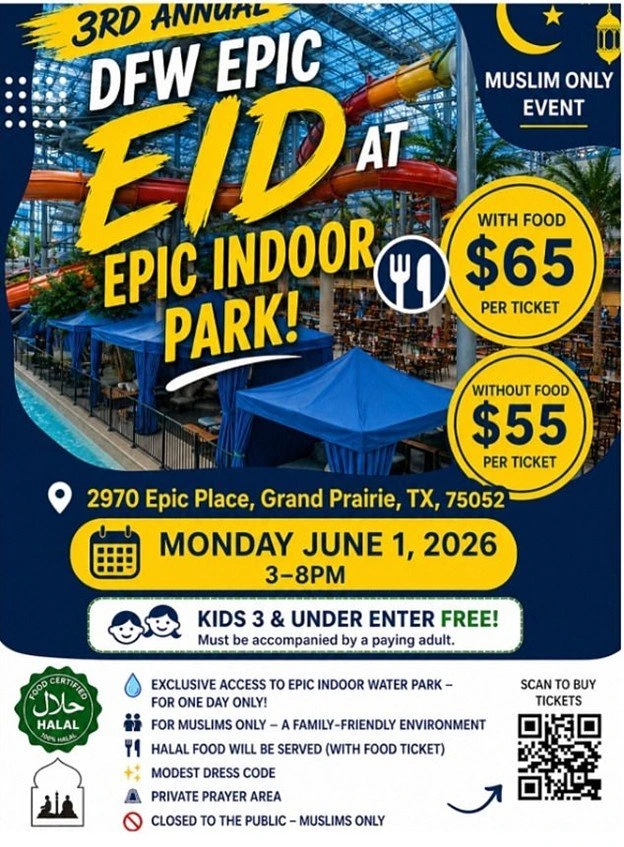
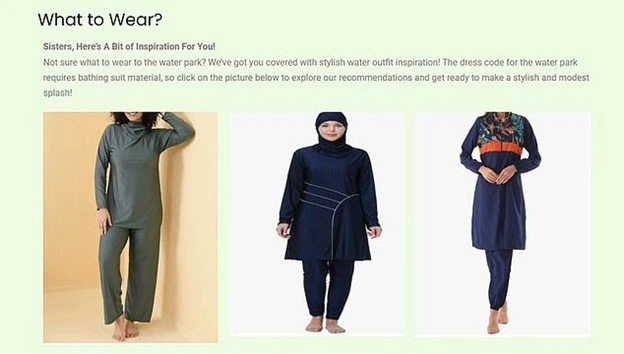
Even more controversial is the requirement that “all attendees are ‘expected to dress in accordance with Islamic values’.” That includes swimwear restrictions that must meet Muslim guidelines—raising serious concerns about whether individuals are being compelled to conform to religious standards in a public space.
Promotional materials for the event also highlight the availability of a private prayer area, further reinforcing the religious nature of the gathering. While accommodations for religious practice are not uncommon, critics argue that this goes far beyond neutrality and into endorsement.
Images circulating online of the event flyer—and particularly of the required dress standards for women—have fueled outrage across social media. Many users questioned how such policies could be implemented in a publicly funded facility without triggering legal scrutiny.
Leading the charge against the event are prominent conservative voices like Sara Gonzales and Dana Loesch, who have both slammed the park for what they describe as discriminatory and demeaning policies.
Their criticism reflects a broader sentiment among many Americans who see a glaring double standard at play. The question being asked across platforms is simple but powerful: would this be tolerated if the roles were reversed?
As one critic put it, imagine the nationwide uproar if a Christian organization hosted an event at a public venue that explicitly excluded Muslims or required attendees to follow Christian doctrine. The backlash, many argue, would be immediate and overwhelming.
This unfolding controversy taps into a deeper national debate over religious freedom, public funding, and cultural accommodation. While America has long prided itself on being a melting pot of beliefs and traditions, critics say that principle must be balanced with a firm commitment to equal treatment under the law.
At the heart of the issue is whether a government-supported entity can impose religious-based rules—explicitly or implicitly—without violating the rights of those who do not share those beliefs.
For now, the debate surrounding Epic Waters continues to grow, with many calling for accountability and clarification from city officials in Grand Prairie. Whether this incident fades away or becomes a flashpoint in the broader culture war remains to be seen—but one thing is certain: Americans are paying attention.

