
>> Continued From the Previous Page <<
“Producers are currently facing some of the toughest times in farm economy since the 1980s farm crisis,” House Agriculture Chair G.T. Thompson (R-Pa.) said earlier this week. “And the simple fact is that the 2018 policies are no match for 2026 challenges.”
To secure passage, Republicans leaned on support from a bloc of moderate and rural Democrats—an alliance that proved essential in pushing the bill over the finish line ahead of a heated midterm election cycle.

“Although it’s not perfect, it’s something I plan to support,” Rep. Gabe Vasquez (D-N.M.) said in an interview prior to the vote. “Overall, I think it’s a good bill. Clearly, we need to revisit some very serious concerns that many of us have, including myself, as it pertains to cutting some food assistance that we’ll be able to revise once we’re in the majority here in the House.”
However, the path forward quickly became more complicated after Republican leaders introduced a controversial proposal tied to E15 ethanol fuel, which would allow year-round sales. The move drew swift backlash from senators representing oil-producing states, exposing a fracture within the broader GOP coalition.
In response to the pushback, House leaders opted to split the issue from the main farm bill. A separate vote on the E15 provision is now scheduled for May 13, effectively delaying the farm bill’s transmission to the Senate until that matter is resolved.
Meanwhile, the Senate has yet to formally unveil its own version of the legislation or provide a clear timeline for action. That uncertainty has raised concerns that partisan gridlock could once again bog down progress on a critical piece of agricultural policy.
Senate Agriculture Committee Chairman John Boozman (R-Ark.) has indicated he may strip out some of the more contentious provisions included in the House version in order to secure the 60 votes needed to pass the upper chamber. According to Boozman, the goal is to move quickly, telling reporters he hopes to finalize the bill in “weeks, not months.”
Historically, farm bill negotiations have required bipartisan cooperation, but recent talks have hit repeated roadblocks. Disputes over climate-focused farming initiatives and the scope of nutrition assistance programs have proven particularly difficult to resolve.
Adding fuel to the fire, Republicans’ broader legislative push—dubbed the “One Big Beautiful Bill Act”—included significant cuts to federal spending. The package reduced funding by $187 billion for the nation’s largest food assistance program and slashed another $65 billion from agricultural support programs.
Those reductions sparked fierce criticism from Democrats, who argue the cuts could harm vulnerable Americans. At the same time, Republicans maintain the changes were necessary to craft a fiscally responsible, budget-neutral farm bill in the current economic climate.
As lawmakers wrestle with agricultural policy, another high-stakes battle is unfolding in Washington. House Republican leadership is also attempting to pass a funding measure for the Department of Homeland Security that excludes immigration enforcement agencies.
If approved, the bill could bring an end to a 76-day partial shutdown within the department—a situation that has added pressure on lawmakers already navigating a crowded legislative agenda.
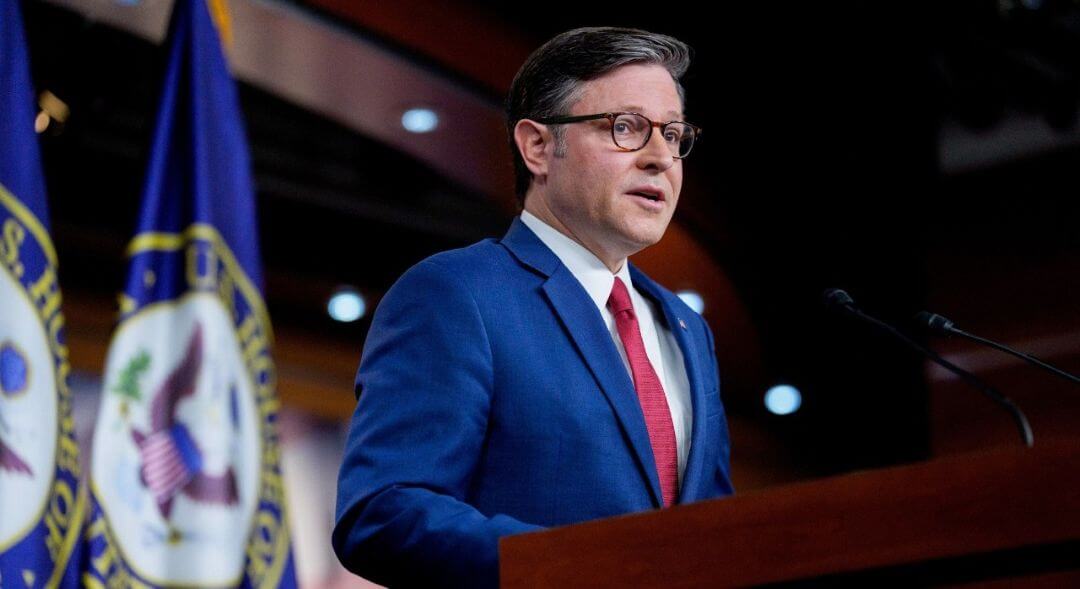
House Speaker Mike Johnson (R-La.) is currently in discussions with members of his conference, some of whom are reluctant to move forward until a separate funding package for agencies like Immigration and Customs Enforcement and Customs and Border Protection is secured.
Although the Senate passed a partial DHS funding bill back in March, House Republicans have delayed sending it to the desk of Donald Trump for more than a month, largely due to internal disagreements.
Now, with a congressional recess looming, pressure is mounting from both the White House and GOP lawmakers to act swiftly. While there has been talk of canceling the upcoming break to finalize the legislation, most observers believe lawmakers are unlikely to alter their schedule.
For now, Republicans are touting the farm bill’s passage as a hard-fought win—but the real test lies ahead in the Senate, where the battle over America’s agricultural future is far from over.

