
>> Continued From the Previous Page <<
According to Pentagon data, more than 120 Iranian naval vessels were either destroyed or rendered unusable. The country’s missile operations took a massive hit, with ballistic missile launches dropping by 90 percent compared to the opening phase of the conflict. Drone attacks also plummeted by 83 percent, while key weapons production facilities were reportedly wiped out.
Backing up those claims, Dan Caine confirmed that U.S. forces successfully struck every major objective identified at the outset of the campaign.

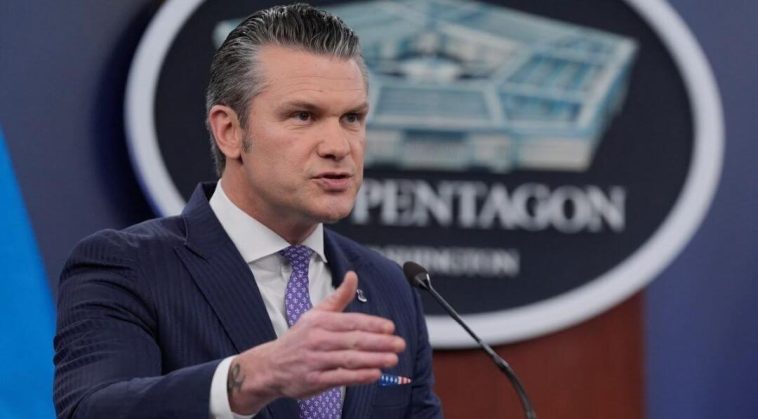
“By any measure, Epic Fury decimated Iran’s military and rendered it combat ineffective for years to come,” Hegseth said.
Even as officials highlighted the scale of the victory, they paused to honor the 13 American service members who lost their lives during the operation. Their sacrifice, military leaders emphasized, remains central to the mission’s legacy.
Strait of Hormuz Reopens After High-Stakes Pressure
One of the most critical outcomes of the ceasefire agreement is the reopening of the Strait of Hormuz, a narrow but vital corridor responsible for transporting roughly one-fifth of the world’s daily oil supply.
The agreement, brokered through Pakistan, required Iran to restore safe passage for commercial shipping. Iranian officials have since indicated that vessels can once again move through the region under coordination with their forces.
Hegseth made it clear that Iran’s decision was not voluntary—it was driven by overwhelming pressure.
“President Trump had the power to cripple Iran’s entire economy in minutes, but he chose mercy,” he said.
“He ultimately said, ‘We can take it all from you,'” Hegseth explained. “That type of threat is what brought them to the place where they effectively say, ‘Okay, we wanna cut this deal.'”
Markets Surge as Oil Prices Collapse
Global markets wasted no time reacting to the sudden shift in geopolitical tensions. Major indexes across Asia and Europe saw sharp gains, reflecting investor optimism that a broader regional conflict may have been avoided.
Energy markets responded even more dramatically. Oil prices dropped by roughly 16 percent, signaling immediate relief for consumers and industries worldwide that depend on stable fuel costs.
Former President Donald Trump celebrated the development publicly, declaring it a turning point.
“A big day for world peace. Iran wants it to happen. They’ve had enough.”
Nuclear Standoff Now Front and Center
With active combat paused, attention is now shifting toward negotiations—and one issue towers above all others: Iran’s nuclear program.
Hegseth made the administration’s position unmistakably clear.
“There will be no Iranian nuclear weapons. Period, full stop.”
According to officials, the United States is pushing for a complete halt to uranium enrichment and the removal of existing highly enriched material inside Iran. The Pentagon is reportedly tracking these stockpiles closely and has not ruled out further action if Tehran refuses to comply.
The memory of earlier strikes on nuclear infrastructure still looms large, reinforcing the seriousness of the current demands.
Talks Begin as Tensions Simmer Beneath the Surface
Diplomatic efforts are already underway, with key figures—including JD Vance—heading to Pakistan for high-level negotiations aimed at securing a longer-term agreement.
Despite the ceasefire, U.S. forces remain in position, prepared to respond immediately if conditions deteriorate.
“We’ll be hanging around. We’re not going anywhere,” Hegseth told reporters.
The message from Washington is clear: the pause in fighting is not a retreat—it is a strategic window.
A Fragile Peace With High Stakes
While the ceasefire has temporarily eased tensions, uncertainty still hangs over the region. Allies, adversaries, and global markets alike are watching closely to see whether this moment leads to lasting stability—or another flashpoint.
For now, the administration is projecting strength, insisting that Iran’s weakened position has fundamentally shifted the balance.
“We control their fate,” Hegseth said, “not the other way around.”
Negotiations are set. The stakes could not be higher. And the next move may determine whether this fragile calm holds—or collapses under pressure.

