
>> Continued From the Previous Page <<
Left-leaning voting groups had argued the law was vague and suppressed free speech, but the appeals court dismissed these claims. Judge Jones noted that the statute “has a common-sense core of meaning” that any reasonable person can understand — paid operatives cannot personally collect or influence mail-in ballots.
The panel also found that the law satisfies constitutional requirements under the Anderson/Burdick test, which assesses election regulations affecting First Amendment rights. Texas has a compelling interest in protecting voters from fraud and coercion, especially in the context of mail-in ballots.

“Fraud is a real risk that accompanies mail-in voting,” Jones wrote, citing the U.S. Supreme Court’s 2021 decision in Brnovich v. Democratic National Committee. “Texas has a compelling interest in preventing the pressure and intimidation common in third-party ballot collection.”
Importantly, the court clarified that the law targets paid operations and does not restrict volunteer get-out-the-vote efforts. The ruling emphasizes that banning compensation prevents partisan operatives from profiting off voter influence or ballot collection.
Judge Jones also criticized the lower court for leaning on “vague hypotheticals” and “speculative scenarios,” such as volunteers being offered water or snacks, to argue the law was unclear. “Ordinary citizens serving on a jury should be capable of understanding this statute’s common-sense core of meaning,” she wrote.
The opinion went further, taking aim at reports that the district court judge used artificial intelligence to assist in deliberating election law cases. “AI must not be a substitute for legal judgment,” Jones stated, referencing comments from Senator Chuck Grassley.
The appeals court underscored that Texas’s ban on paid ballot harvesting withstands even the strictest constitutional scrutiny. “This statute serves multiple compelling state interests,” Jones wrote. “A state has a compelling interest in protecting voters from confusion and undue influence and in ensuring that an individual’s right to vote is not undermined by fraud.”
Additionally, the court found that the lower court had violated sovereign immunity by enjoining officials such as the Texas attorney general and secretary of state. Federal law protects state officials from lawsuits unless they are directly enforcing a statute.
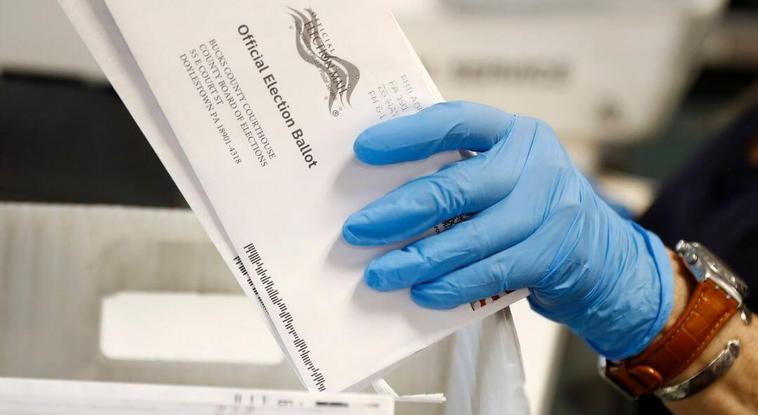
Republican officials and party organizations, including the Republican National Committee, praised the decision as a win for fair elections. The ruling highlights that states retain broad authority to regulate elections and safeguard the integrity of mail-in voting.
“It should go without saying that a state may take action to prevent election fraud,” the opinion stated. With the district court’s injunction lifted, Texas can now fully enforce its ballot harvesting restrictions, which carry criminal penalties for paid operatives who collect or handle voters’ mail-in ballots.

