

>> Continued From the Previous Page <<
“I am deeply concerned that this House is not living up to the founders’ goals. I urge my colleagues on both sides of the aisle to examine their consciences, renew their courage and carry out the responsibilities that the First Article of the Constitution demands,” Hoyer said.
Hoyer’s departure adds to a growing list of senior Democrats choosing to step aside rather than face another election cycle. Former House Speaker Nancy Pelosi has already confirmed she will not run again, leaving Jim Clyburn as the lone remaining member of the party’s once-dominant 2021 leadership trio who has not publicly announced retirement plans.

The timing is notable. With control of Congress perpetually hanging in the balance, Democrats are losing some of their most recognizable figures just as Republicans are preparing to make aggressive plays in the upcoming midterm elections.
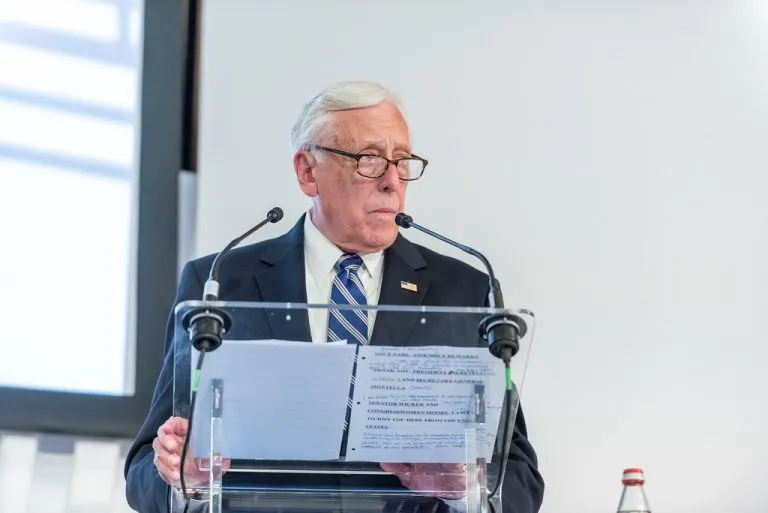
Hoyer’s political résumé stretches back more than half a century. He began his career in the Maryland State Senate in the 1960s, served in state education leadership roles, and won his first congressional race in 1980. By the time he arrived in Washington in 1981, he quickly established himself as a reliable party operative with a talent for counting votes and enforcing discipline.
Over the years, Hoyer climbed the leadership ladder, serving as Democratic whip and later as majority leader during multiple sessions. According to his official biography, he holds the distinction of being the longest-serving House member in Maryland history, logging 45 years in Congress.
Reflecting on his early days in Washington, Hoyer contrasted the past with the present, painting a picture of a Congress that once functioned with more cooperation and civility.
“The Congress I entered in 1981 was somewhat different,” Hoyer said. “Most Republicans and Democrats worked together in a collegial, productive way. The leaders of the House, Tip O’Neill and Bob Michael, fostered that environment. It was, of course, not a Congress without conflict.”
He went on to issue a bleak assessment of the country’s current direction.
“I fear that America is heading not toward greatness, but toward smallness, pettiness, divisiveness, loneliness,” he added.
Hoyer closed his remarks by thanking his colleagues, honoring his late wife, and expressing gratitude to his children. The emotional ending underscored the finality of the moment and the end of a political career that spanned generations.
For Democrats, Hoyer’s exit is more than a personal milestone. It is another sign that the party’s old guard is fading just as voters are increasingly questioning Washington’s effectiveness. For Republicans, it represents yet another opening to argue that entrenched leadership has failed the country—and that real change requires a new direction.

