
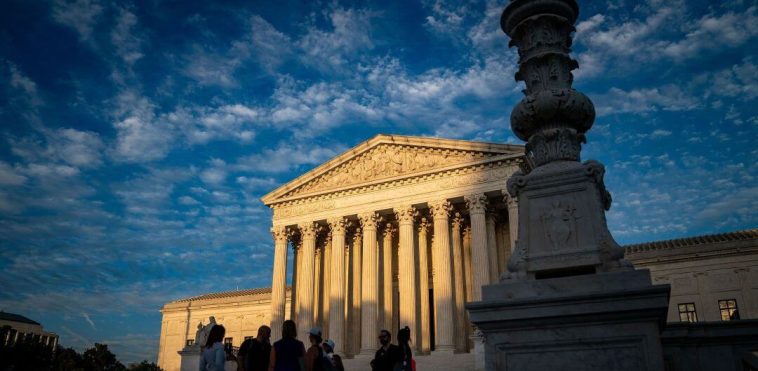
The Supreme Court is gearing up to weigh in on one of the most consequential election cases in years—one that could redefine how congressional districts are drawn nationwide. At the center of the legal firestorm: the role of race in shaping voting maps. The stakes? Nothing short of the future of minority-majority districts across America and potentially the balance of power in Congress for years to come.
In a bold move, the Court recently decided to expand the scope of a Louisiana redistricting case already on its docket, signaling its willingness to revisit long-standing interpretations of the 1965 Voting Rights Act. That law has for decades been used to justify creating districts where minority populations—specifically Black and Hispanic voters—make up the majority, supposedly to prevent voter suppression. But the Court is now asking a bigger question: does that rationale still hold in modern America?
If the Court rules that race can no longer be a primary factor in drawing districts, the effects would be seismic. Political maps from coast to coast—especially in states with large minority populations—could be redrawn. That would ripple through federal, state, and local elections. According to Bloomberg, “the outcome could not only reshape dozens of congressional maps, but also reverberate through state and local legislative boundaries.”

>> Click Here To Continue Reading <<

