
>> Continued From the Previous Page <<
Six Republicans sided with Democrats to advance the bill: Reps. Don Bacon, Maria Salazar, Carlos Gimenez, Brian Fitzpatrick, Mike Lawler, and Nicole Malliotakis.
They were also joined by Kevin Kiley, who recently departed the Republican Party but still caucuses alongside Republican lawmakers.

For many grassroots conservatives, the vote was seen as another example of establishment Republicans undermining the America First agenda championed by President Trump.
TPS was originally created as a temporary humanitarian safeguard allowing foreign nationals from troubled countries to remain legally in the United States if returning home would place them in danger due to war, natural disasters, or similar crises.
However, critics have long argued the program has drifted far beyond its intended purpose, with many designations repeatedly renewed year after year.
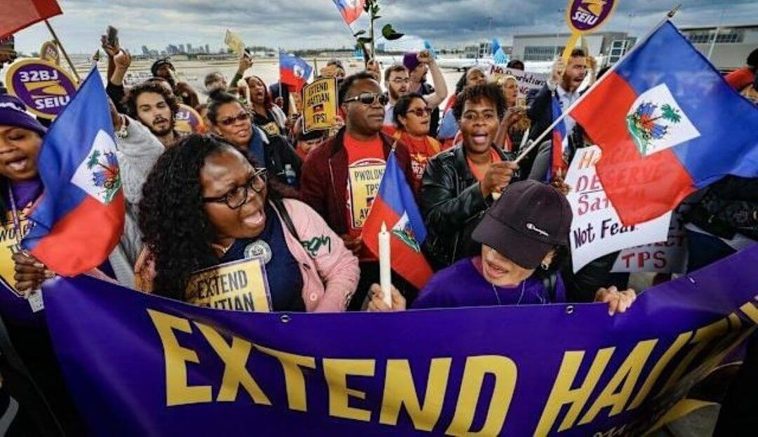
The Pressley bill would specifically grant Haitian nationals another three years of legal work authorization and deportation protection.
Supporters insisted the extension was necessary because Haiti remains plagued by gang violence, kidnappings, and political instability.
Pressley argued conditions in the country are too dangerous for deportations or mass returns.
But opponents countered that continuing TPS expansions sends the wrong message at a time when millions of Americans are demanding secure borders and an end to endless temporary amnesty programs.
The Trump administration has repeatedly sought to rein in TPS, arguing it was never meant to become a semi-permanent immigration loophole.
Administration officials have maintained that the law should be used only for short-term emergencies and not as a long-running substitute for congressional immigration reform.
Wednesday’s vote highlighted the growing divide inside Republican ranks over how aggressively to confront immigration issues.
While party leadership has generally aligned with Trump’s enforcement-first stance, several Republicans from swing districts or heavily immigrant areas have shown a willingness to cross the aisle when politically convenient.
The use of the discharge petition made the moment even more striking.
That tool is rarely used successfully because it requires lawmakers to openly challenge their own leadership. In this case, enough Republicans joined Democrats to force action anyway.
Even with the procedural victory, the bill still faces an uphill battle.
A final House vote is expected soon, but even if it clears the chamber, the Senate remains a major obstacle. Most legislation requires 60 votes to move forward, meaning supporters would need significant bipartisan backing.
At this stage, that path appears difficult.
The issue is also tangled in ongoing legal battles surrounding TPS authority.
The Supreme Court is expected to weigh disputes connected to the Trump administration’s efforts to end TPS protections for several countries, including Haiti. Lower courts previously slowed or blocked some of those actions over procedural concerns.
For the Republicans who crossed party lines, the vote may have been an attempt to balance constituent pressures with party loyalty.
For Democrats, it offered another chance to spotlight humanitarian messaging while advancing broader immigration goals.
For conservative voters, however, the bigger takeaway may be simple: yet again, a handful of Republicans sided with Democrats on immigration.
With the House preparing for a final vote and the Senate unlikely to embrace the measure easily, the bill’s future remains uncertain.
But one thing is clear — several Republicans now appear increasingly willing to defy their base and help advance policies many voters see as soft on immigration.

