
>> Continued From the Previous Page <<
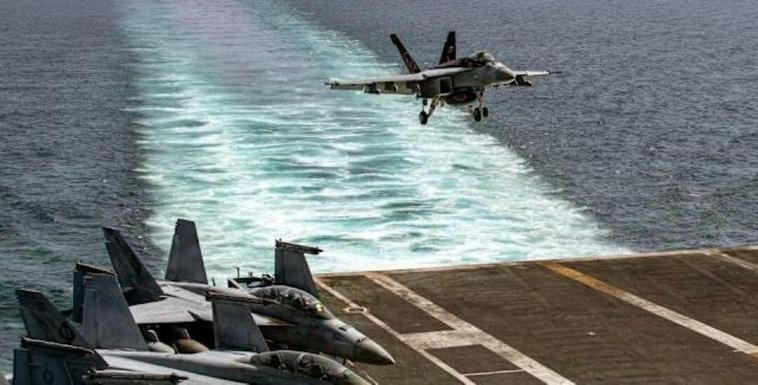
“More than 50,000 troops, 200 fighters, two aircraft carriers, and bombers from the United States are participating in this operation—and more capabilities are on the way.”
Officials at Central Command say the buildup represents the largest concentration of American military power in the Middle East in a generation. The size and speed of the deployment have stunned many observers who say the operation is moving at an extraordinary pace.

Cooper compared the opening phase of the campaign to the well-known “Shock and Awe” bombardment that launched the 2003 Iraq War. However, he revealed that the scale of the new operation may be even larger than that historic moment.
According to CENTCOM, the first 24 hours of Operation Epic Fury delivered nearly twice the number of strikes that marked the opening day of the Iraq campaign more than two decades ago.
And the pace of operations has not slowed.
American and Israeli forces are now conducting round-the-clock attacks on Iranian military targets across multiple domains. These operations span land, sea, air, cyber warfare, and even space-based capabilities, demonstrating the full technological reach of modern military power.
Less than 100 hours after the first strikes, the early results are already dramatic.
According to Central Command reports:
• Nearly 2,000 Iranian targets have been struck
• More than 2,000 precision-guided weapons have been used
• Hundreds of ballistic missiles, launchers, and drones have been destroyed
• Iranian air defense systems have suffered severe damage
Cooper summarized the strategy with a blunt assessment.
“In simple terms, we’re focused on shooting all the things that can shoot at us.”
America’s long-range bomber fleet has played a critical role in the campaign. CENTCOM confirmed that stealth Northrop B-2 Spirit aircraft and Rockwell B-1 Lancer bombers have carried out deep-penetration missions inside Iranian territory. These strikes targeted missile factories, launch facilities, and other strategic military sites.
In addition, a strike group of Boeing B-52 Stratofortress bombers recently launched attacks on Iranian missile command-and-control centers.
Military planners say these coordinated strikes are part of a broader effort to dismantle Iran’s extensive missile network and remove its ability to threaten U.S. troops or regional partners.
According to Cooper, American forces have also dealt major blows to Iran’s naval capabilities.
So far, U.S. forces have destroyed 17 Iranian naval vessels, including what officials described as Iran’s most operational submarine. The submarine reportedly suffered catastrophic damage during the attack.
For decades, Iranian forces have harassed international shipping and threatened global energy supplies moving through the Strait of Hormuz, one of the world’s most critical maritime choke points.
But according to Central Command, that threat has now been largely neutralized.
“Today there’s not a single Iranian ship underway in the Arabian Gulf, Strait of Hormuz, or Gulf of Oman,” Cooper said.
Iran has attempted to retaliate with significant force. CENTCOM reports the Iranian regime has already launched more than 500 ballistic missiles and over 2,000 drones since the fighting began.
Many of those weapons, Cooper said, have been aimed at civilian population centers.
“Iran is indiscriminately targeting civilians,” Cooper said. “The evidence is crystal clear and overwhelming.”
Despite those attacks, U.S. officials say Iran’s ability to strike back is weakening rapidly as American and allied forces dismantle the regime’s missile infrastructure.
“Iran’s ability to hit us and our partners is declining, while our combat power is building.”
CENTCOM also revealed that the skies over Iran are now effectively dominated by two of the most advanced air forces on the planet: the United States and Israel.
Meanwhile, the United States Army made history by deploying Precision Strike Missile weapons in combat for the first time. These advanced missiles were used to deliver deep strikes on high-value Iranian targets far behind the front lines.
Another unexpected development in the campaign involves a special drone unit known as Task Force Scorpion Strike.
The task force has deployed large numbers of one-way attack drones that have inflicted heavy damage on Iranian military assets.
In a twist that highlights the innovation behind the mission, many of the drones were originally inspired by Iranian designs.
“We took them back to America, made them better, and fired them right back at Iran,” Cooper said.
Admiral Cooper ended the briefing with a powerful message about the momentum of the operation. He said American forces are fighting with what he described as “relentless lethality” and unwavering determination.
According to the admiral, the mission to dismantle Iran’s ability to threaten Americans is already progressing faster than anticipated.
But the campaign is far from over.
As Cooper made clear in his final remarks: “We’ve just begun.”
God Speed to our warriors. 🇺🇸
WATCH:

