
>> Continued From the Previous Page <<
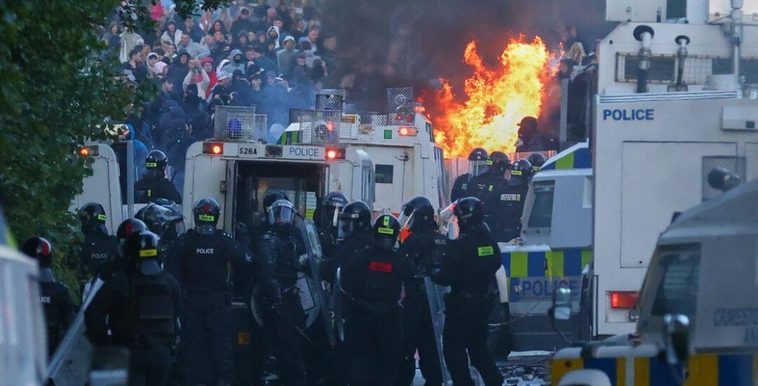
In the aftermath, protests broke out, with some demonstrations escalating into riots and property damage. Local communities expressed anger and fear, while political leaders faced renewed pressure to address public safety concerns tied to migration, policing, and integration policy. The incident quickly became part of a larger European conversation about whether existing systems are equipped to handle the current pace and composition of migration.
Beyond the immediate violence, a separate but related debate has been gaining traction online. On Thursday, a video circulated on the social media platform X, allegedly showing a conversation between an Irish woman and an Afghan man. While the authenticity, timing, and exact location of the exchange cannot be independently confirmed, the discussion struck a chord with many viewers because of the questions being raised.

At the heart of the exchange is a concern frequently voiced by critics of European migration policy: the noticeable demographic imbalance among arrivals. In the video, the woman asks a direct question:
“Why is it only all men that’s coming, no families?”
The man responds, “Because it’s too difficult to bring a family,” though parts of his explanation are difficult to hear clearly in the recording.
The woman challenges the explanation, suggesting it does not fully align with claims that many migrants are fleeing immediate danger. She responds, “If you were fleeing a war, wouldn’t you bring your family with you and whatever possessions you have?”
The man replies, “With the women and children, it’s so difficult,” before the exchange continues briefly.
Pressing further, the woman asks, “Why would you flee a war for your safety if your safety is in danger,” at which point the conversation appears to end as the man walks away.
While the clip has spread widely, it is important to note that it lacks verified context, including confirmed identities, location, and the circumstances under which it was recorded. Even so, the questions raised in the exchange have resonated across social media, particularly among those who believe European leaders have failed to adequately explain or justify current migration patterns.
There are generally two interpretations offered by analysts and commentators attempting to explain why a large proportion of migrants arriving in Europe are single men. One view is that many are indeed fleeing dangerous conditions, but face logistical, financial, or bureaucratic obstacles that make it extremely difficult to transport entire families safely. Under this explanation, separation is a tragic consequence of circumstance rather than intent.
A second interpretation, more skeptical in nature, is that some claims of immediate danger may be overstated or inconsistent with observed behavior, raising questions about the true mix of economic migration versus asylum-seeking. Supporters of tighter immigration controls argue that these uncertainties are not being properly addressed by policymakers.
Neither explanation is politically comfortable. If family separation is truly driven by hardship and logistical barriers, it highlights the scale of human suffering and the complexity of modern displacement. If, on the other hand, claims of emergency flight are sometimes exaggerated, it raises serious concerns about asylum systems being misused or overwhelmed.
What is clear, regardless of interpretation, is that European governments face mounting pressure over how migration is managed, processed, and integrated into society. Critics argue that officials have been slow to acknowledge public concern, while supporters of current policy warn against broad generalizations that could stigmatize entire groups.
As incidents of violence, protests, and viral online disputes continue to shape public perception, one reality is becoming increasingly difficult to ignore: citizens across Europe are demanding clearer answers, greater transparency, and more effective control over how migration is handled.
For many observers, the stakes are no longer theoretical. They are immediate, visible, and increasingly central to the political future of Europe itself.

