
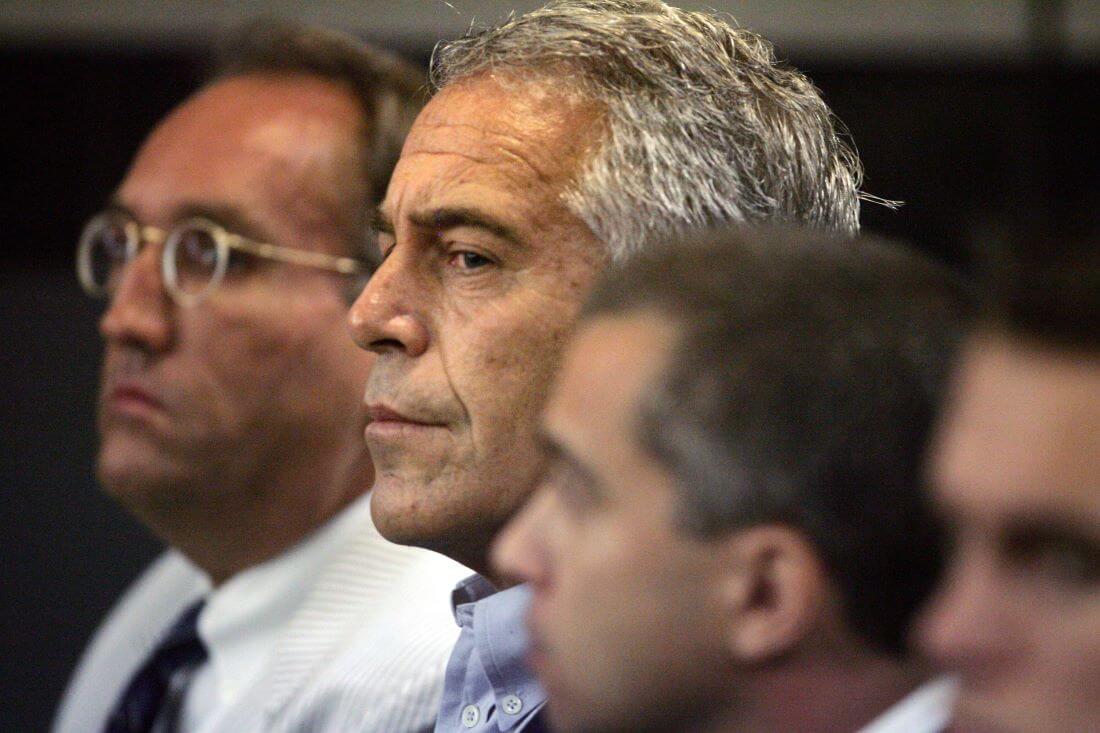
Just before he passed away, Jeffrey Epstein was trying to block out the sound of a continually running toilet in a detention cell in Manhattan.
Epstein’s struggle to adjust to the harsh realities of life behind bars was evident, with his once luxurious lifestyle replaced by a stark, impenetrable concrete prison, as evidenced by newly obtained records from jail officials, which show that Epstein was restless and unable to sleep, expressing agitation and referring to himself as a “coward.” All of this came after his July 2019 federal sex trafficking and conspiracy arrest.

The deceased prisoner told a jail officer the night before he passed away that he planned to phone a girlfriend who had been dead for 15 years.
The financier, who had attempted suicide just days earlier, was being mentally monitored at the time. Epstein insisted he wasn’t suicidal despite having a 31-hour suicide watch and a history of suicidal conduct. In fact, he told the prison psychologist that it would be “crazy” for him to stop his “wonderful life” because it was so good.
2019-08-10: Epstein passed away.
Nearly four years after the incident, the AP has acquired more than 4,000 pages of Epstein’s death-related paperwork under the Freedom of Information Act. These documents include a thorough psychological study of the events leading up to Epstein’s suicide, as well as information about his medical history, internal agency evaluations, emails, reports, and other relevant information.
Epstein’s incarceration and death, as well as the tumultuous events that followed, are now better understood thanks to the records that the Associated Press was able to get on Thursday. These records demonstrate the serious flaws at the Bureau of Prisons and successfully contradict many conspiracy theories surrounding his suicide. Epstein’s tragic passing was caused by understaffing and careless employee behavior.
The recently made public information clarifies how the federal prison system handled the situation in which Epstein was found unconscious in his cell at the now-defunct Metropolitan Correctional Center in New York.
In an email, the prosecutor in Epstein’s criminal case raised worry about the Bureau of Prisons’ lack of communication in the hours following Epstein’s passing. He found it unacceptable that the agency made public pronouncements before giving his legal counsel the information they required to inform his family.
Breaking: Tinnitus Wipes 1% Of Your Memories Every Month
In an email, a top Bureau of Prisons official alleged that news outlets might be paying jail guards to reveal information about Epstein’s passing. The reliability of journalists as well as the agency’s own employees was called into question by this unfounded charge.
The newly made public documents provide additional light on Epstein’s behavior during his 36 days in jail, including his covert attempt to get in touch with Larry Nassar, a notorious sexual offender and the former team doctor for the United States gymnastics team.
After Epstein’s death, the unread, return-to-sender-marked letters he had sent to Nassar were found in the jail’s mailroom.
“It appeared he mailed it out and it was returned back to him,” the investigator who found the letter told a prison official by email. “I am not sure if I should open it or should we hand it over to anyone?”
The letter was not included in the AP’s document library.
Epstein left a meeting with his lawyers the evening before he passed away to speak with his relatives. According to records from a department head, Epstein told a worker at the prison facility that he was calling his mother, who had been dead for 15 years.
The Metropolitan Correctional Center will close in 2021 as a result of increased monitoring of the Bureau of Prisons following Epstein’s death. As a result, a notable AP investigation has revealed previously unreported issues within the institution, which is the largest in the Justice Department with over 30,000 employees, 158,000 prisoners, and a $8 billion budget annually.
Following Epstein’s death, an internal document attributed the jail’s problems to “severely limited personnel, insufficient training, and inadequate oversight.”
According to the email, the Bureau of Prisons has taken corrective action to address vulnerabilities brought to light by Epstein’s suicide. To guarantee that cell check rules are strictly followed, obligatory supervisor evaluation of surveillance footage is part of this.
Martin Weinberg, Epstein’s attorney, claims that those who were detained at the prison endured appalling circumstances of confinement that are unacceptable for any American defendant.
“It’s sad, it’s tragic, that it took this kind of event to finally cause the Bureau of Prisons to close this regrettable institution,” Weinberg stated in a phone interview on Thursday.
Tova Noel and Michael Thomas, the guards in charge of keeping an eye on Epstein the night before he passed away, are accused of fabricating prison records to make it appear as though they had performed the necessary inspections before his lifeless body was discovered.
When Epstein’s former roommate did not come back after a court hearing the previous day, prison officials failed to assign him with a new cellmate. Epstein was consequently abandoned, which raised concerns for his welfare and safety.
Despite being close to Epstein’s cell, the prosecutors claim that they chose not to perform the mandatory rounds every 30 minutes in favor of shopping online for furniture and motorcycles. They disregarded their obligation by loitering in the communal area.
Noel and Thomas were both asleep for two hours, according to their accusation. They admitted to altering the log entries, but because to a deal with federal prosecutors, they were spared jail time.
On Thursday, specific logs with redacted signatures of the involved guards were made public.
An additional inquiry is being aggressively carried out by the inspector general of the Justice Department.
Epstein was taken to the Metropolitan Correctional Center on July 6, 2019. He spent 22 hours with the other inmates before being moved to the special living area. Given the extensive media coverage and the high level of awareness of his reputation among the other prisoners, this was done to secure his safety. The psychological reconstruction of his demise revealed these facts.
Epstein said that he didn’t like the orange jumpsuit that special housing unit convicts were required to wear because it made him feel like a “bad guy” despite his good behavior while he was in custody. Therefore, he asked that when he went to see his lawyers on a regular basis, he wear a brown outfit.
The 66-year-old admitted to having over 10 female sexual partners in the previous five years at the initial health examination.
The patient was identified in the patient’s medical records as having prediabetes, constipation, hypertension, lower back pain, and sleep apnea. The fact that the person had previously had chlamydia therapy was also noted.
Records show that Epstein made an effort to adapt to his prison environment. Through his attorney, he asked for permission to exercise outside and for Kosher meals.
Epstein spent $73.85 on an AM/FM radio and headphones in the jail commissary in the days before he died. He had a $566 remaining balance in his account at the time of his death.
The situation for Epstein substantially deteriorated on July 18, 2019, when the judge granted Epstein bail. This eliminated any chance of his being released before to his trial, and if found guilty, he might serve up to 45 years in prison.
Jeffrey Epstein was discovered on the floor of his cell four days after his arrest, wearing a bedsheet strip around his neck.
Epstein has survived, but because to his slight injuries, he was not given a hospital stay. He is currently being monitored for suicidal thoughts and is also being seen by a psychiatrist.
His head was leaning against the wall as he sat at the edge of his bed, lost in meditation, according to the jail authorities’ logs.
Sleepless nights brought on by the bustling jail environment hampered Jeffrey Epstein’s stay at the Metropolitan Correctional Center. Epstein’s lack of access to his sleep apnea breathing device during his first few weeks there added to his misery. Epstein was frustrated by these obstacles because his case required him to be focused and get enough sleep.
Then, the bathroom in his cell began to malfunction.
“He was still left in the same cell with a broken toilet,” the jail’s chief psychologist wrote in a email the next day. “Please move him to the cell next door when he returns from legal as the toilet still does not work.”
Prison officials noted that Epstein’s once-impressive reputation had been damaged by the day-before-his-death unsealing of 2,000 pages of records in a lawsuit accusing him of sexual abuse.
Officials believe that Mr. Epstein’s lack of deep interpersonal connections and the prospect of a life sentence in jail contributed to his suicide.

