
>> Continued From the Previous Page <<
But the gamble didn’t end there.
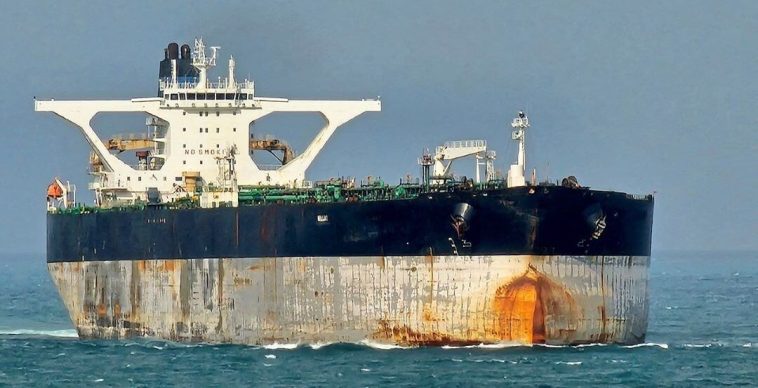
U.S. naval and Coast Guard forces allegedly tracked the tanker for weeks in what officials described as a dangerous and fast-moving pursuit across international waters. Reports suggest American ships shadowed the vessel as it attempted to outrun enforcement, with the situation escalating into a full-blown geopolitical standoff.

According to the Daily News, the seizure unfolded under tense conditions:
“The seizure, which could stoke tensions with Russia, came after the tanker Marinera, originally known as the Bella-1, slipped through a US maritime ‘blockade’ of sanctioned tankers and rebuffed US Coast Guard efforts to board it.”
The report further noted that the mission was carried out quietly but decisively:
“Officials, who were speaking on condition of anonymity, said the operation is being carried out by the Coast Guard and US military.”
Those details alone paint a picture of a carefully coordinated enforcement action—but what followed raised even more eyebrows.
Russian media reportedly published images showing a helicopter approaching the tanker during the operation. According to the same Daily News report:
“Pictures in Russian media purportedly showed a helicopter approaching the vessel today.”
The aircraft, observers claim, appeared to be American military hardware:
“The chopper appears to be an American MH-6 Little Bird.”
Even more alarming, U.S. officials reportedly confirmed that Russian military assets were nearby during the encounter:
“American officials added that Russian military vessels were in the general vicinity when the operation took place, including a Russian submarine.”
That revelation has set off alarm bells in Washington and beyond.
A U.S. interdiction operation unfolding in proximity to Russian naval forces—particularly a submarine—marks a dangerous escalation in already fragile U.S.-Russia relations. With tensions simmering over Ukraine, energy markets, and global influence, even a single miscalculation at sea could have triggered a serious international incident.
Conservative analysts argue this episode highlights the growing boldness of America’s adversaries—and the lengths they will go to evade accountability. Iran’s oil trade, long targeted by U.S. sanctions, has increasingly relied on shadow fleets, reflagged vessels, and deceptive shipping practices. Russia, for its part, has been accused of turning a blind eye—or worse—to sanction evasion that undermines Western enforcement.
Supporters of strong U.S. national security policy see the operation as a necessary show of force.
“This is exactly what sanctions enforcement is supposed to look like,” one former defense official noted privately. “If we don’t act, sanctions become meaningless.”
Critics of the Biden administration, however, are questioning why such high-risk encounters are becoming more common, and whether mixed signals from Washington have emboldened hostile actors to test American resolve.
For now, many details remain classified or unconfirmed. Officials have yet to release a full timeline of the pursuit, the precise legal basis for the seizure, or the current status of the tanker and its crew.
What is clear is that this was no routine maritime stop. It was a stark reminder that the world’s oceans are once again a frontline in global power struggles—and that enforcement of U.S. sanctions can carry real-world consequences.
This is a breaking story. More information is expected as officials release additional details in the coming hours and days. Stay tuned.

