
>> Continued From the Previous Page <<
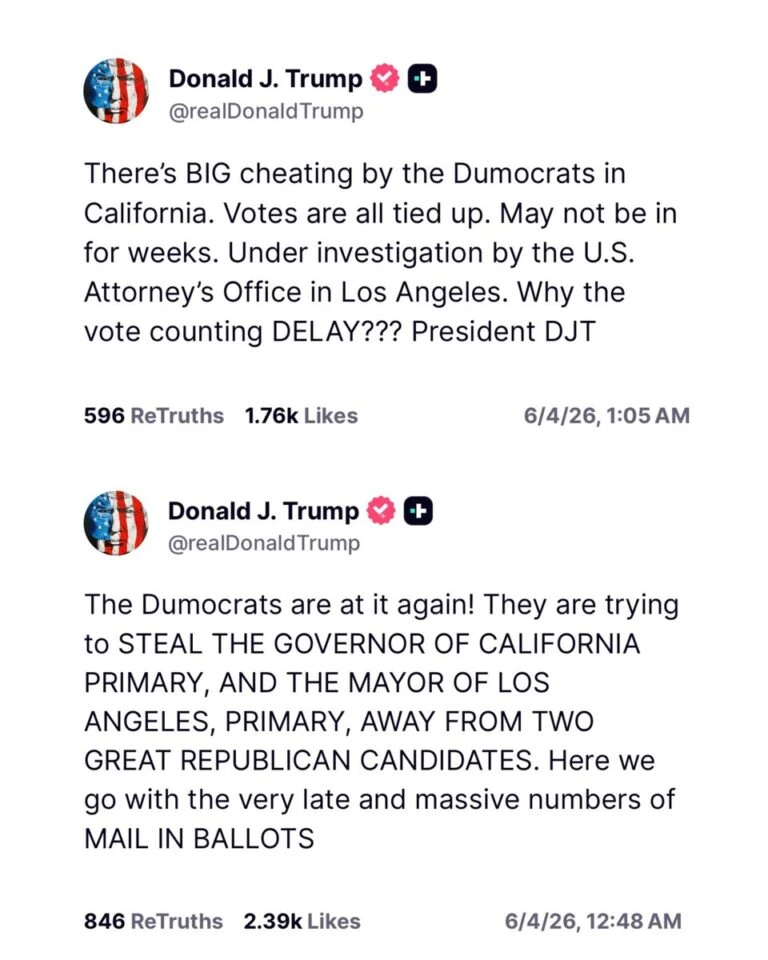
Trump escalated his criticism later, arguing that Democrats were trying to squeeze Republican contenders out of competitive races under California’s “jungle primary” system, where all candidates appear on a single ballot and only the top two vote-getters advance to the general election—regardless of party.
“They are trying to STEAL THE GOVERNOR OF CALIFORNIA PRIMARY, AND THE MAYOR OF LOS ANGELES, PRIMARY, AWAY FROM TWO GREAT REPUBLICAN CANDIDATES,” Trump wrote.

“Here we go with the very late and massive numbers of MAIL IN BALLOTS.”
According to The Associated Press, Republican candidate Steve Hilton and Democratic contender Xavier Becerra currently hold the top two positions in the race to replace Newsom. However, millions of ballots remain uncounted, leaving the final outcome far from certain.
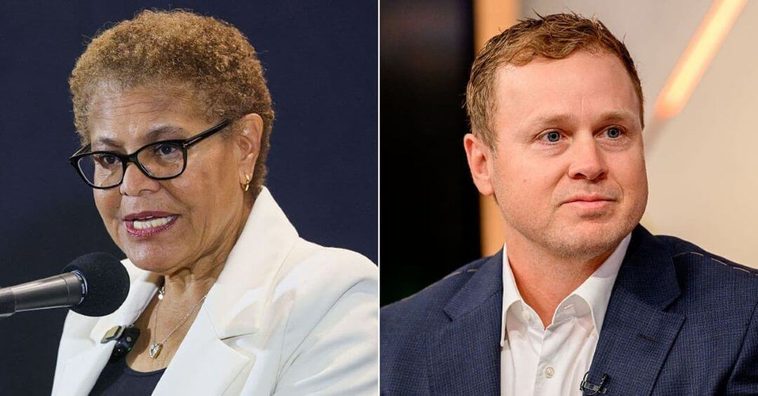
In the Los Angeles mayoral race, incumbent Mayor Karen Bass is leading the field and appears positioned for a runoff election. Behind her, registered Republican and television personality Spencer Pratt is holding second place, while progressive City Council member Nithya Raman remains within striking distance as additional ballots continue to be processed.
Meanwhile, former federal health official Xavier Becerra remains one of the leading contenders in the broader statewide race, underscoring how fluid the results remain as counting continues across California counties.
Those standings are still subject to change as election officials process late-arriving mail ballots, provisional ballots, and other outstanding votes.
The Newsom administration pushed back strongly against Trump’s accusations. In a statement posted on X, the governor’s office fired back: “Trump is lying about California again—time to take the phone away from grandpa and put him to sleep.”
California has long been recognized as one of the slowest states in the nation when it comes to reporting final election results. State officials argue the system is designed to maximize voter participation and ensure thorough ballot verification rather than prioritize speed.
However, the extended timeline—combined with shifting vote totals and fluctuating percentage estimates—has increasingly frustrated voters and political observers across the country.
Some analysts tracking the races have pointed out that publicly reported percentages of ballots counted do not always move in a straightforward, linear pattern. In some cases, totals appear to stall or even shift backward as counties update turnout estimates or incorporate newly processed batches of ballots.
Election experts note that these fluctuations are typically the result of routine adjustments, including reconciliation of ballot counts and the addition of previously unreported vote batches. Still, critics argue the lack of consistent updates creates confusion and fuels skepticism about the transparency of the process.
While there is no evidence on its own that these delays indicate wrongdoing, concerns about election integrity and public confidence continue to surface across both political parties. Many voters say they want clearer explanations for why major races can remain undecided for days or even weeks after Election Day.
California conducts universal mail-in voting, with ballots sent to every registered voter in the state. In recent elections, mail voting has become the dominant method, with nearly 90% of ballots in the 2024 presidential election submitted by mail.
Under state law, ballots postmarked by Election Day can still be counted if they arrive up to seven days later. For the June primary cycle, that deadline extends to June 9.
Additionally, California allows same-day voter registration, meaning some provisional ballots must be individually verified before they can be included in official totals. Election officials must also complete signature verification, review damaged ballots, and process provisional votes before final certification.
After all ballots are counted, counties are required to conduct audits and complete certification procedures, a process that can take up to 30 days.
As the counting continues, the combination of political tension, slow reporting timelines, and shifting vote totals ensures that California’s high-profile races will remain in the national spotlight until final certification is complete.


A bunch of evil people. They should be helping the American people instead of kissing each others rear ends. It’s so ignorant. The fact they even got elected has to be fraud. I do not believe the American people would actually vote for these incompetents. President Trump is right. No way these elections are the most secure. Late votes, illegal immigrants voting, voters with more than one address, dead people, used by a family member, or not a family member, dirty voter rolls. According to the NVRA by law supposed to clean voter rolls at least every two years. Believe they never clean them. Mainstream Media is in bed with the democrats. The First News, NewsMax, The Epoch Times, and IMPRIMIS and The Verdict Newsletters are fact based with evidence. Only Jesus died for all.