
>> Continued From the Previous Page <<
Now, however, the former president is signaling a possible opening for diplomacy—at least for the moment.
In a post on Truth Social, Donald Trump said the delay in military action came after urgent requests from several Gulf leaders, including top officials from Qatar, Saudi Arabia, and the United Arab Emirates.

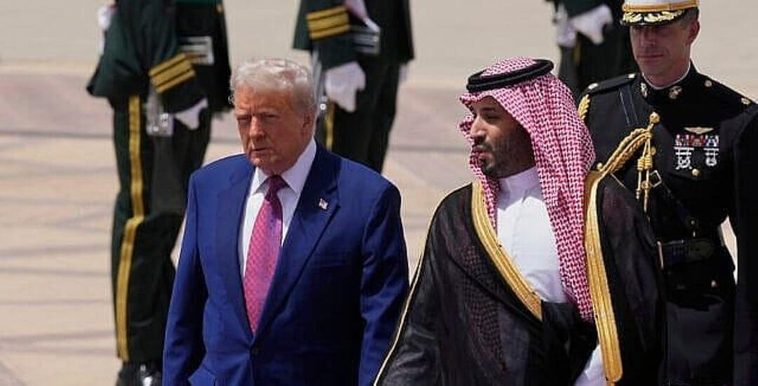
“I have been asked by the Emir of Qatar, Tamim bin Hamad Al Thani, the Crown Prince of Saudi Arabia, Mohammed bin Salman Al Saud, and the President of the United Arab Emirates, Mohamed bin Zayed Al Nahyan, to hold off on our planned Military attack of the Islamic Republic of Iran, which was scheduled for tomorrow,” Trump posted on Truth Social.
Those appeals reportedly came as regional governments pushed to avoid another surge in violence that could destabilize the broader Middle East. The leaders involved—Tamim bin Hamad Al Thani, Mohammed bin Salman, and Mohamed bin Zayed Al Nahyan—have all faced direct or indirect consequences from previous rounds of regional conflict, including Iranian-linked attacks and retaliatory strikes across multiple fronts.
Trump further stated that those same leaders expressed confidence that diplomatic channels were gaining traction and that a resolution could be within reach if given additional time.
He said the leaders told him that “serious negotiations are now taking place, and that, in their opinion, as Great Leaders and Allies, a Deal will be made, which will be very acceptable to the United States of America, as well as all Countries in the Middle East, and beyond.”
The message was repeated publicly, underscoring the belief among some regional powers that a negotiated settlement may still be possible if military escalation is avoided.
On Tuesday, Qatar’s foreign ministry reinforced that position, noting that mediation efforts—reportedly brokered by Pakistan—are still ongoing but require further discussion before any final breakthrough can be reached.
“We are supportive of the diplomatic effort by Pakistan that has shown seriousness in bringing parties together and finding a solution, and we do believe it needs more time,” said Qatari Foreign Ministry spokesman Majed al-Ansari.
Meanwhile, Trump struck a cautiously optimistic tone in remarks cited by The Times of Israel, suggesting that there may still be room for diplomacy before any further military action is taken.
“There seems to be a very good chance that they can work something out. If we can do that without bombing the hell out of them, I would be very happy,” Trump said.
Despite that optimism, Iranian officials have reportedly outlined a wide-ranging set of demands that would be required for any comprehensive agreement. Those conditions include ending all regional conflicts involving Iran, including fighting in Lebanon, lifting U.S. restrictions on Iran, releasing frozen Iranian funds, withdrawing American troops from the region, and providing compensation for damages Iran claims it has suffered.
Trump has previously dismissed similar proposals in blunt terms, reportedly calling one version of the demands “garbage.”
A Pakistani source familiar with the mediation effort said the proposals have been communicated to Washington, but warned that negotiations remain highly fluid and unpredictable.
The source noted that both sides continue to revise their positions, saying, “they keep changing their goalposts,” and adding, “We don’t have much time.”
For now, the situation remains in a delicate holding pattern—caught between the possibility of a diplomatic breakthrough and the looming threat of renewed military confrontation.

