
>> Continued From the Previous Page <<
The battle traces back to a February memo in which Homeland Security Secretary Kristi Noem officially ended Biden-era TPS protections, setting an April effective date. Her decision marked the first major rollback of Biden’s sprawling TPS expansions. For years, Biden’s DHS treated TPS like a catch-all protection rather than a temporary humanitarian tool.
Originally, Venezuela had been granted TPS on October 3, 2023, after the Biden administration argued that dangerous and unstable conditions prevented safe returns. But according to Noem’s review—conducted in coordination with multiple national-security agencies—those conditions no longer justify mass protections for Venezuelan nationals.

Her conclusion was blunt: allowing Venezuelan TPS holders to remain any longer was not aligned with U.S. national interests. As her memo declared, “Consequently, the 2023 TPS designation for Venezuela is being revoked.”
Biden’s DHS chief Alejandro Mayorkas, however, had repeatedly extended TPS designations. “On March 9, 2021, Secretary of Homeland Security Alejandro Mayorkas designated Venezuela for Temporary Protected Status (TPS) due to his assessment of ‘extraordinary and temporary conditions’ in Venezuela…” the memo recounted. Mayorkas then prolonged that designation again on September 8, 2022.
Then came another extension on October 3, 2023—plus a second overlapping TPS category that created two simultaneous tracks, one expiring in 2025 and another in 2026. By the end of Biden’s term, the TPS system for Venezuela had become so convoluted that even immigration attorneys struggled to keep up.

Mayorkas continued the extensions into January 2025, insisting the conditions still met TPS criteria. But notably, he did not clarify whether the 2021 designation was still active or not—creating even more confusion. The January update also allowed Venezuelan migrants under either designation to apply for protection through October 2, 2026.
On January 28, 2025, Secretary Noem reversed Mayorkas’s last-minute extension and restored the previous status. Almost immediately, progressive activists sued, and U.S. District Judge Edward Chen in California attempted to block Noem’s move. In his ruling, he accused DHS of relying on stereotypes and said the administration’s characterization of criminal activity among migrants was “unfounded and replete with racism.”
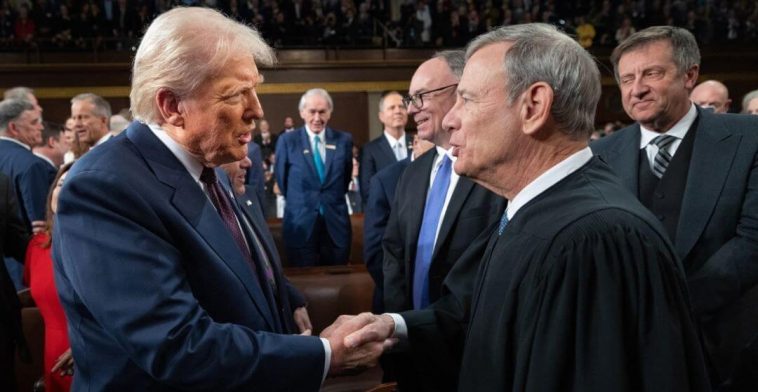
The Supreme Court has now erased his injunction, ruling that immigration discretion lies with the executive branch—not activist judges.
And the ruling comes at a time when Trump’s enforcement numbers are soaring. As of late October 2025, DHS reports that more than 527,000 individuals have been deported since Trump took office—along with 1.6 million voluntary departures, totaling about 2 million people who have left the country in less than a year. Officials say those numbers will rise sharply as more funding and resources come online.
With the Supreme Court’s backing, Trump now has the legal green light to pursue one of the strictest immigration agendas in modern history—a major political victory and a setback for Biden-era policies that attempted to open the floodgates.

