
>> Continued From the Previous Page <<
Thanks to protective gear, the wounded agent avoided life-threatening injuries. Fellow agents immediately responded, drawing their weapons and returning fire before taking the suspect into custody. He was later transported to a nearby hospital for treatment.
The dramatic sequence forced an immediate evacuation of the venue. High-profile attendees—including the president, senior administration officials, lawmakers from both parties, and members of the press—were ushered to safety as law enforcement secured the area. The dinner, a longstanding tradition meant to bridge the gap between media and government, was ultimately called off.

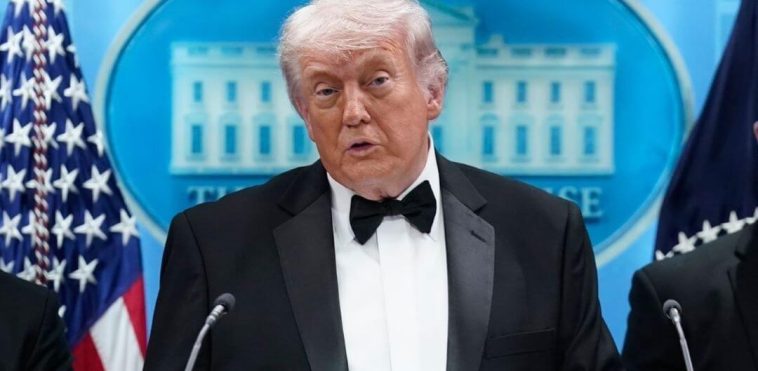
Despite the abrupt cancellation, Trump appeared determined not to let the event’s purpose fade. During a hastily arranged press briefing later that evening, he reflected on what the gathering was meant to represent—and what he believes it still accomplished, even amid the turmoil.
“This was an event dedicated to freedom of speech that was supposed to bring together members of both parties with members of the press, and in a certain way it did, because the fact that they just unified us through a room that was just totally unified. It was, in one way, very beautiful, a very beautiful thing to see,” the president said.
Trump went on to emphasize the rare moment of unity inside the room before the violence erupted, noting that individuals from across the political spectrum had come together under one roof. Republicans, Democrats, independents, conservatives, liberals, and progressives were all present—something the president pointed to as a reminder that differences can be resolved without hostility.
“We have to, we have to resolve our differences,” he added.
According to Karl, the president also reiterated during their call his commitment to rescheduling the dinner in the near future. Trump reportedly made it clear he wants the tradition restored, signaling that the event’s symbolic importance outweighs the disruption caused by the attack.
The personal phone call itself is drawing attention as well. In a deeply divided political climate, it is not often that a sitting president reaches out directly to a journalist—particularly one from a network frequently critical of his administration. Yet the gesture appears to underscore a moment where basic concern for safety cut through the usual partisan tension.
While investigations into the suspect’s motives and background continue, the incident has reignited concerns about security at high-profile political and media events. At the same time, Trump’s response—both publicly and privately—has added another layer to the story, blending crisis, politics, and an unexpected moment of outreach.
As Washington processes the fallout, one thing is clear: what began as a night meant for lighthearted exchange between the press and political elite quickly turned into a stark reminder of the risks surrounding public life—and, at least briefly, a moment where those divisions gave way to something else.

