
>> Continued From the Previous Page <<
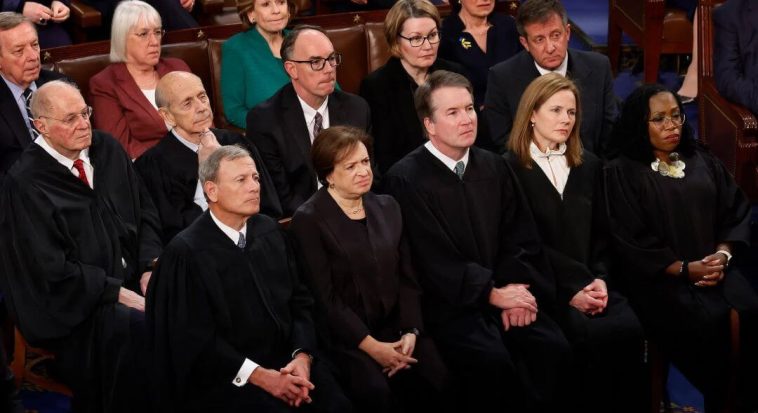
Justice Amy Coney Barrett, writing for the majority alongside Chief Justice John Roberts and Justices Sonia Sotomayor, Elena Kagan, Brett Kavanaugh, and Ketanji Brown Jackson, emphasized the plaintiffs’ failure to demonstrate an imminent risk of injury that could be directly linked to the actions of the government and remedied by a court injunction. Justices Neil Gorsuch, Clarence Thomas, and Samuel Alito dissented.
CNN highlighted that the administration has long been trying to persuade social media platforms to eliminate posts spreading misinformation on various topics, including vaccines and election integrity. Critics, particularly from Republican ranks in Missouri and Louisiana, accused the administration of using these persuasions as a covert means of stifling dissent, referring to the practice as ‘jawboning’.

Further controversy stems from the suppression of stories about Hunter Biden’s laptop during the 2020 elections, with internal documents from Twitter showing a divided stance among top officials regarding the decision to limit dissemination of the story—contrary to claims of unilateral action due to government pressure.
The plaintiffs argued that the FBI misused its influence over social media platforms to remove content created by Americans under the guise of it being foreign in origin.
This case highlights the evolving dynamics of public discourse and governmental interaction with the private sector in addressing broad social issues online—a modern shift from the traditional newspaper op-ed debates.
The government argued that the social media plaintiffs lacked legal standing due to prior moderation of their content before any government flags were raised. The Biden administration also contended that the states involved could not demonstrate direct harm linked to any specific governmental actions.
Carry 46 rounds concealed? (comfortably)
In the preceding year, a Louisiana federal judge issued a preliminary injunction preventing the White House and various federal agencies from coordinating with social media entities about content removal. However, this was later narrowed down by the 5th US Circuit Court of Appeals to include only a few agencies thought to be infringing on the First Amendment.
During the March oral arguments, conservative justices, including Roberts, Kavanaugh, and Barrett, expressed concerns about setting a precedent that might restrict governmental discussions with platforms about content deemed dangerous, potentially affecting public safety or national security.
This case is part of a larger discussion on the intersection of the First Amendment and social media regulation, mirrored by ongoing legal challenges in Florida and Texas where state officials seek to prevent platforms from censoring conservative viewpoints.

