
>> Continued From the Previous Page <<
Among its principals are attorney Jesse Binnall, known for representing President Donald Trump in several high-profile legal battles following the 2020 election, and Joseph Flynn, brother of former National Security Adviser Michael Flynn.
The project quickly became a focal point of geopolitical tension.

At the center of the dispute was Christian Schmidt, the German diplomat serving as Bosnia’s High Representative. Schmidt reportedly raised concerns regarding the pipeline initiative before unexpectedly stepping down from his position in May.
Following his resignation, Schmidt told Germany’s Augsburger Allgemeine that he faced “enormous and unexpected pressures from the United States.”
His departure sparked immediate speculation that Washington wanted a different approach in Bosnia, one more aligned with the Trump administration’s broader economic and energy objectives.
At roughly the same time, the State Department released a report signaling a major shift in American policy toward the Balkans.
According to the report, “the U.S.-led nation-building era has passed,” indicating that future American engagement would focus less on political engineering and more on strategic economic interests, infrastructure projects, and energy security.
For many observers, the message was unmistakable.
The era of endless diplomatic management is being replaced by an emphasis on American business interests and geopolitical competition.
Most Americans are unfamiliar with the position of High Representative for Bosnia and Herzegovina, despite the enormous authority attached to the office.
Created after the 1995 Dayton Peace Agreement that ended the Bosnian War, the role possesses extraordinary powers. The High Representative can remove elected officials, impose laws, and override decisions made by local political leaders in the name of preserving peace and stability.
For decades, the office has largely been managed with strong European influence.
The Trump administration appears determined to alter that dynamic.
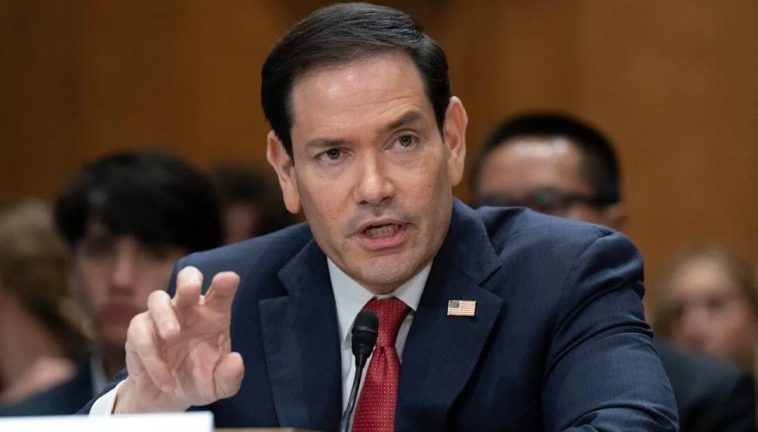
Speaking before lawmakers, Rubio announced that the United States supports veteran Italian diplomat Antonio Zanardi Landi to succeed Schmidt.
Rubio said Landi would bring “stability” to the position.
Landi is no newcomer to Balkan politics. He previously served as ambassador to both Serbia and Montenegro and has advocated for reducing the sweeping authority traditionally exercised by the High Representative’s office.
His approach contrasts sharply with that of Schmidt and aligns more closely with those who favor transferring greater responsibility back to Bosnia’s domestic institutions.
The appointment, however, remains unresolved.
Members of the Peace Implementation Council, the international body overseeing Bosnia’s postwar framework, met recently in Sarajevo to discuss the succession issue. Despite extensive discussions, no agreement was reached.
Several European governments reportedly rallied behind an alternative candidate, French diplomat René Troccaz.
The deadlock quickly drew a response from the United States.
Officials at the U.S. Embassy in Sarajevo signaled frustration with the delay and indicated that Washington expects movement on the issue sooner rather than later.
The disagreement reflects a broader divide between American and European priorities in the region.
While many European leaders remain focused on maintaining existing diplomatic structures, the Trump administration has increasingly emphasized energy independence, commercial partnerships, and countering Russian and Chinese influence.
That strategy has already become a central pillar of U.S. policy.
Energy Secretary Chris Wright recently identified Balkan energy security as a critical American national security interest, underscoring the administration’s commitment to expanding U.S. energy exports throughout the region.
Supporters argue the formula is straightforward.
American energy replaces Russian supply.
American investment expands.
American influence grows.
Whether critics view the Bosnia pipeline project as political favoritism or strategic statecraft, the administration appears committed to moving forward.
As Europe continues debating leadership appointments and diplomatic procedures, Washington is pursuing a far more practical objective: reshaping the region’s energy map while strengthening America’s economic footprint abroad.
The battle over Bosnia’s next High Representative may seem obscure to most Americans.
But behind the diplomatic headlines lies a larger struggle over energy, influence, and the future direction of U.S. foreign policy under President Trump.

