
>> Continued From the Previous Page <<
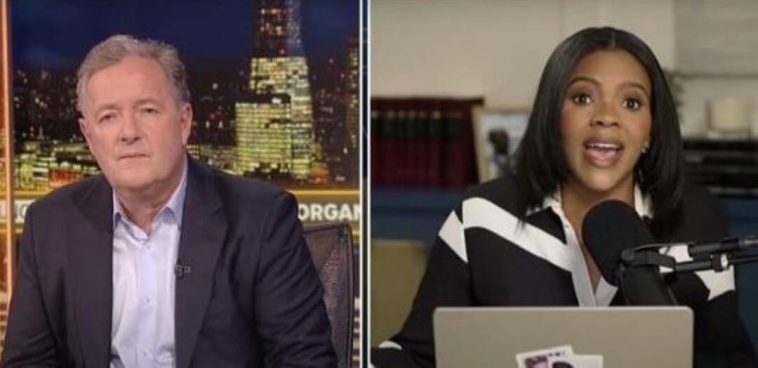
At several points, Morgan interrupted Owens mid-explanation, asserting that she had explicitly accused Turning Point personnel of direct involvement in the killing. Owens repeatedly clarified that this was not what she said, nor what she believed. Instead, she emphasized that her remarks centered on the possibility of a cover-up following the incident—not on allegations that anyone at the organization pulled the trigger.
To illustrate her point, Owens invoked a historical analogy, referencing the assassination of President John F. Kennedy. She argued that large-scale conspiracies, when they do occur, often involve layers of individuals playing different roles over time—some active, others passive, and many involved only in suppressing or obscuring information after the fact. That comparison only seemed to further inflame Morgan, who accused her of escalating speculation without proof.

As the exchange intensified, Morgan pressed Owens on whether she believed anyone at Turning Point USA had prior knowledge of Kirk’s death. Owens acknowledged that she had privately identified two individuals she believed warranted further scrutiny, but she made clear—repeatedly—that she lacked concrete evidence and therefore refused to name them publicly. That restraint did little to satisfy Morgan, who accused her of irresponsibly alarming Kirk’s widow without substantiation.
WATCH:
Owens rejected that accusation outright, explaining that privately flagging concerns for further investigation is not the same as making public allegations. She emphasized that asking questions in the absence of clear answers is not reckless—it is the foundation of investigative journalism. Morgan, however, continued to frame her caution as dangerous speculation, at one point bluntly suggesting that Owens herself might be the one misleading the public.
The discussion then broadened beyond Turning Point USA, veering into a sweeping critique of modern media culture. Owens accused corporate outlets of discouraging inquiry unless a pre-approved conclusion is already in hand, arguing that this mindset trains the public to accept official narratives without scrutiny. She warned that history shows exactly where that road leads, citing documented examples of media figures later revealed to have been aligned with government interests.
Morgan dismissed her concerns as unfounded theorizing, but Owens was unmoved. She argued that unanswered questions surrounding the events of that day remain unanswered precisely because too few journalists are willing to risk reputational backlash by pressing for clarity. According to Owens, that vacuum is why so many Americans are tuning out establishment voices and seeking information elsewhere.
The exchange ended as explosively as it began, with Owens delivering a pointed parting shot. She reminded Morgan that he has reversed his stance on major issues before—only after public opinion shifted—and suggested that history would repeat itself once more information comes to light. In her view, the difference between them is simple: she is willing to ask unpopular questions early, while he waits until it is safe.
Whether viewers sided with Morgan’s demand for evidentiary restraint or Owens’ insistence on relentless inquiry, one thing was unmistakable. The clash laid bare a growing tension between independent commentators and a media establishment increasingly hostile to challenges of its authority. And judging by the reaction online, this confrontation is far from the last time those two worlds will collide.


I don’t think he was crushed at all.