
>> Continued From the Previous Page <<
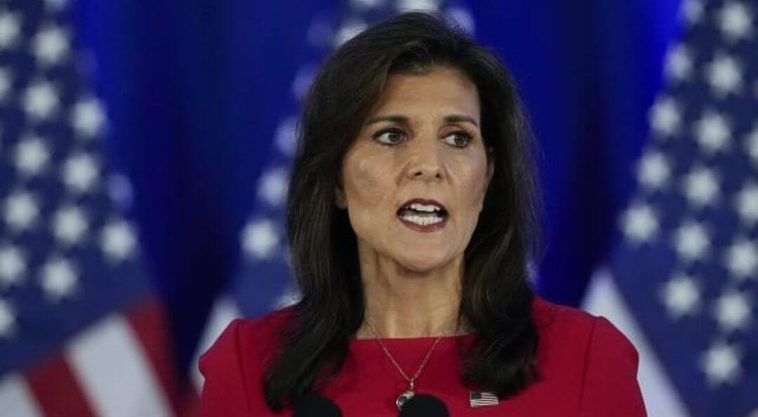
Moments later came the question many had been waiting for: would Haley herself consider another White House run?
Her answer was blunt and unmistakable.

“I will not.”
WATCH:
That firm declaration effectively removes Haley from what is shaping up to be an increasingly competitive and closely watched Republican field, leaving others to battle for the party’s future direction.
Behind the scenes, attention has already shifted to former President Donald Trump and his ongoing influence over the GOP’s next chapter. Reports indicate Trump has begun privately weighing potential successors, sparking speculation among insiders and donors alike.
According to those familiar with internal conversations, Trump has repeatedly floated a central question: who is better positioned to carry the movement forward—Vice President Vance or Secretary of State Marco Rubio?
At least for now, Vance appears to hold the inside track. As Trump’s chosen running mate, he already benefits from a national platform and a growing political network that could quickly transform into a full-scale presidential campaign operation.
Rubio, on the other hand, has taken a different approach. While he has not built out a campaign apparatus of his own, he has signaled a willingness to back Vance should the vice president decide to run—an indication of both party unity and political calculation.
Still, Rubio’s stock may be rising in ways that are harder to measure. Serving in key national security roles, he has gained visibility both at home and abroad, earning praise from Trump in both public remarks and private discussions. Observers note that Trump has at times contrasted the two men’s styles—casting Rubio as measured and diplomatic, while describing Vance as more aggressive and combative in his approach.
Importantly, insiders caution that Trump’s comparisons should not be mistaken for a shift away from Vance. If anything, they say, the former president is exploring how both figures could fit into a winning formula.
One adviser summed up the thinking this way: “Vance-Rubio is the president’s dream ticket” for 2028 — “and to be clear, that’s Vance on top.” The same source added that Trump would also be satisfied with the reverse arrangement, underscoring the flexibility being discussed behind closed doors.
As Republicans gear up for the 2026 midterms, these early conversations are only intensifying. Vance is expected to play a key role in fundraising efforts, giving him another opportunity to strengthen ties with donors and grassroots activists alike.
Meanwhile, Rubio’s continued presence on the global stage keeps him firmly in the spotlight—something aides believe could elevate his standing as voters begin paying closer attention to potential contenders.
Despite all the chatter, Trump has stopped short of publicly endorsing a successor, keeping his options open while encouraging debate within the party.
For his part, Rubio has not hesitated to praise Vance’s prospects. “If JD Vance runs for president, he’s going to be our nominee, and I’ll be one of the first people to support him,” Rubio told Vanity Fair last year.
Their relationship, forged during their time together in the Senate, remains strong—something allies say could play a crucial role in shaping the GOP’s future ticket.
Even Republican donors are beginning to weigh in. During a gathering at Mar-a-Lago earlier this year, Trump reportedly asked attendees for their impressions of both men. According to reports, Rubio received a louder round of applause—an early, if informal, signal of where some influential voices may be leaning.
With Haley officially stepping aside, the road to 2028 is beginning to take shape. But if one thing is clear, it’s this: the battle for the Republican Party’s future is already underway—and it’s far from settled.

