
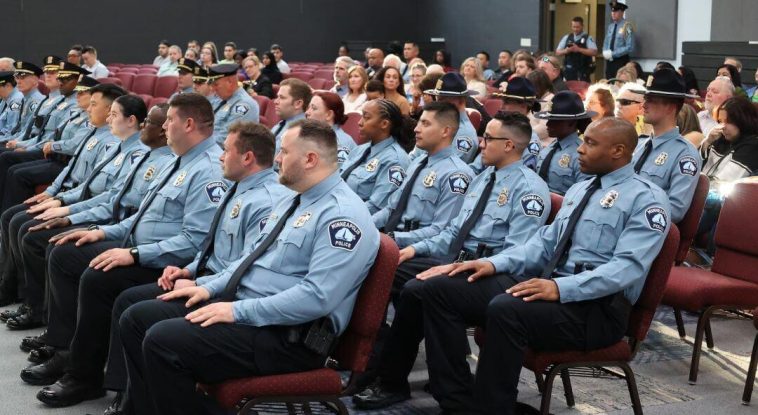
>> Continued From the Previous Page <<
“There may be people who question it, but that’s completely ridiculous,” said MPD Chief Brian O’Hara in defense of the new policy. “There’s like I mentioned, there is a history in this country of people immediately on arrival to the country, enlisting in the military and serving.”
Chief O’Hara’s comparison of Vera’s situation to historical instances where immigrants served in the U.S. military soon after arriving has been met with criticism. Detractors of the policy argue that the circumstances between past immigrants and modern-day permanent residents differ drastically. Many believe that the role of law enforcement, which requires a deep understanding of the community and the Constitution, should be held by individuals who have gone through the formal process of becoming citizens.

Conservatives have voiced concerns that this move sets a dangerous precedent. Many argue that law enforcement roles, similar to those in the military, require not just legal residency but a proven commitment to the country through citizenship. Critics assert that citizenship is not just a legal status but a marker of one’s loyalty and understanding of American values, which they believe is crucial for maintaining public trust in the police force.
Moreover, detractors point out that non-citizens serving in positions of power within U.S. law enforcement could raise serious questions about accountability. “Law enforcement and military roles should be strictly reserved for U.S. citizens,” some critics argue, adding that such positions demand individuals who have fully integrated into American society, both legally and culturally.
The controversy highlights a growing divide between those who support more inclusive policies in public service and those who argue for stricter guidelines based on citizenship. For those who are concerned, the issue isn’t about Vera’s personal qualifications or intentions but about the broader message being sent to the public. They contend that when non-citizens are given the power to enforce laws, it could undermine the integrity and trust that the community places in its police officers.

On the other hand, supporters of the policy, including many within the MPD, argue that Vera and others like her who have lived in the U.S. for the majority of their lives, deserve the opportunity to serve the community they call home. They argue that diversity within law enforcement can strengthen community relations and improve the effectiveness of the police force.
TRUMP LOVES IT: Get the Presidential Blanket FREE Today! Supplies Running Out – Grab Yours NOW! 🕒👇
This debate is likely to continue as more states and municipalities reconsider who is eligible to serve in law enforcement. With a growing push for more inclusive policies across the nation, the Minneapolis Police Department’s decision may well set a precedent for other cities. However, for now, the swearing-in of Lesly Vera as the MPD’s first non-citizen officer remains a contentious and divisive issue.
As this story unfolds, it serves as a reminder of the broader debates happening across the country about the balance between inclusion and accountability in public service. While Chief O’Hara and others argue that opening law enforcement roles to permanent residents is a step in the right direction, those opposed believe it raises serious concerns about the long-term consequences for the integrity of public institutions like the police force.

