
>> Continued From the Previous Page <<
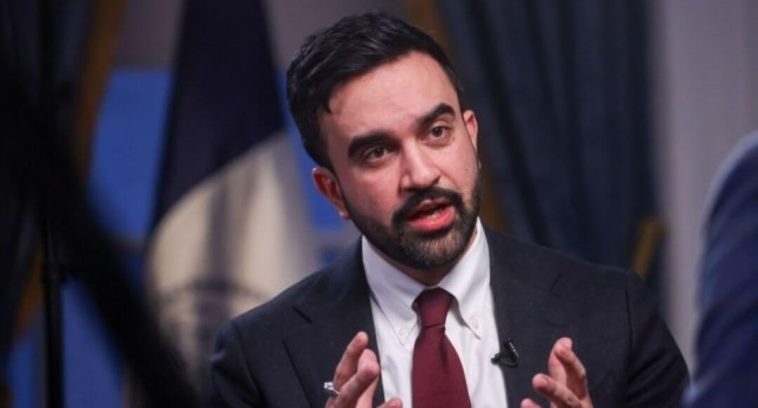
“I do not want to raise property taxes,” Mamdani said while presenting the budget. “When faced with this crisis, the question is who should pay these taxes? I believe that it should be the wealthiest New Yorkers, the most profitable corporations.”
City officials acknowledge that the proposed property tax increase—estimated at 9.5% citywide—would still not fully erase the deficit. Even so, it would hit hard. Roughly 3 million residential units and 100,000 commercial properties would be affected, generating an estimated $3.7 billion in new revenue.

The spending blueprint dramatically expands funding across multiple agencies. The city’s Department of Education would receive $38 billion, a $3 billion increase, while the New York City Police Department would see its budget rise by $100 million, reaching $6.38 billion. The Law Department is also slated for expansion, with $38 million earmarked to hire 200 new attorneys and 100 support staff.
In addition to higher taxes, Mamdani proposes tapping more than $3.25 billion from city reserves and other savings accounts to help balance the books—moves critics warn could weaken the city’s financial cushion just as economic uncertainty grows.
Homeowners could feel the impact immediately. Under the proposal, small residential properties with three or fewer units could see tax hikes nearing 22%, while larger apartment buildings could face increases of more than 13%. Commercial properties would not be spared, with projected hikes close to 12%.
City officials offered specific examples to illustrate the impact. A single-family home in Park Slope with a market value of about $3.2 million, currently paying roughly $8,700 in annual property taxes, could see that bill rise to around $9,500. An Upper West Side condominium assessed at $120,000 could see its tax bill jump from $14,926 to $16,345.
Property taxes have not been raised across the city since shortly after the September 11, 2001 attacks, a fact that has only intensified opposition. Governor Hochul moved quickly to distance herself from the idea. “I’m not supportive of a property tax increase. I don’t know that that’s necessary,” she told reporters during an unrelated appearance.
Because state approval is required for any income tax increase, property taxes remain the only major revenue lever the mayor can pull without Albany’s consent. That reality has fueled a growing standoff between City Hall and state leaders as both budgets inch toward their deadlines.
Warnings have also come from fiscal watchdogs. City Comptroller Mark Levine cautioned that a property tax hike would have “dire consequences,” calling the system “profoundly unfair and inconsistent” and labeling an across-the-board increase regressive. Citizens Budget Commission Executive Director Andrew Rein echoed that concern, arguing the city should prioritize efficiency and accountability before asking taxpayers for more.
Even within Democratic ranks, skepticism is reportedly growing. Insiders say some left-leaning City Council members privately question the strategy, noting Hochul’s repeated resistance to tax hikes as she eyes reelection.
Albany’s budget is technically due April 1, though delays are common. New York City’s final budget must be approved by June 5 and takes effect July 1. With the largest spending plan in city history on the table and taxpayers caught in the middle, Mamdani appears to be gambling that state leaders will fold first—before homeowners do.

