
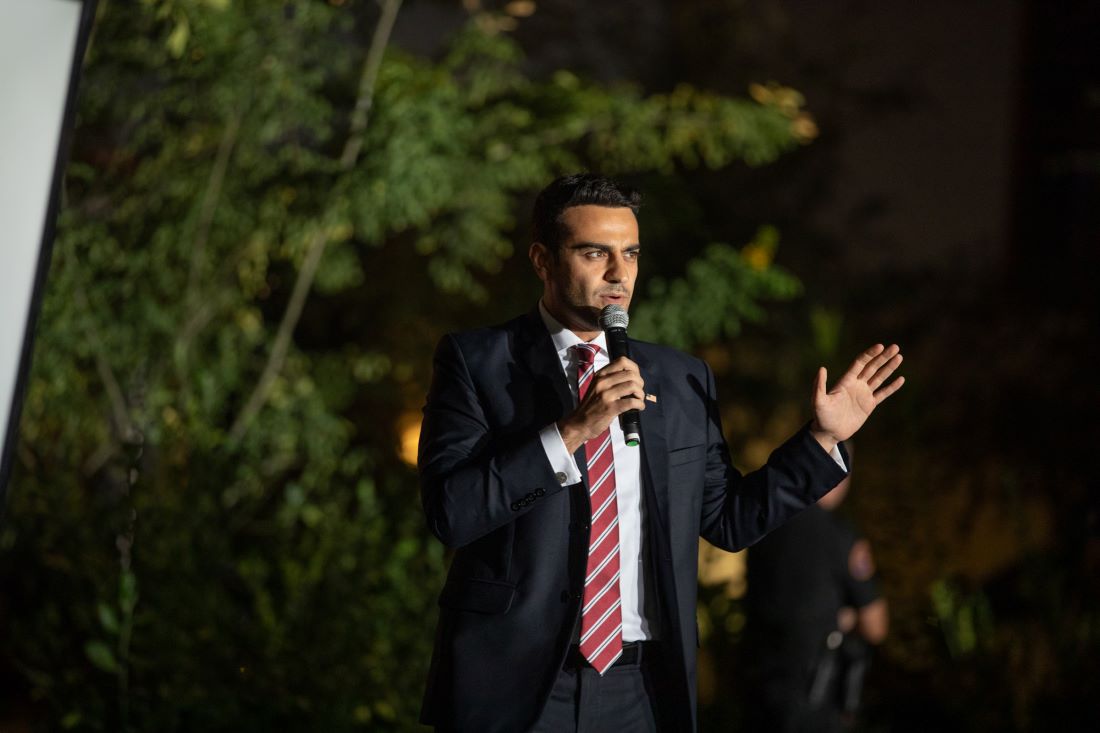
The current Attorney General of Arizona, Kris Mayes, is the target of a quo warranto lawsuit filed by Republican candidate Abe Hamadeh. Hamadeh stressed the significance of justice for the people of Arizona in his announcement on X, formerly known as Twitter.
Concerns about usurpation and the illegitimate use of power have led to a lawsuit challenging Kris Mayes’ attorney generalship. Hamadeh and Mayes have been engaged in a complicated legal battle concerning the 2022 Arizona Attorney General election.
Don’t miss this! Carry faith with you everywhere with the Exclusive National Prayer Coin!

By a mere 280 votes, Democrat Mayes defeated Hamadeh in the election.
“Kris Mayes has usurped, intruded into, or unlawfully holds or exercises the public office of Arizona’s Attorney General,” the lawsuit states.
A strong legal tool for challenging the validity of a public official’s authority is the writ of quo warranto.
Hamadeh and the Republican National Committee are suing to contest the outcome, hoping to make sure all the votes were counted correctly. They even requested a new trial by filing a special motion with the state supreme court. Regretfully, a judge denied their initial request in July.
Hamadeh’s lawyer formally requested during a hearing in May that all ballots be thoroughly examined to find any undervotes or possible misreads in the attorney general race.
Mohave County Superior Court Judge Lee Jantzen considered the arguments from both sides before rendering a decision, which took some time. With the exception of the costs related to ballot inspection, Mayes chose to withdraw her request for costs during this cooperative process. Hamadeh was consequently mandated to pay about $5,200.
There were allegations of evidence withholding and tabulation issues in the case. Hamadeh’s team found 75,000 undervote ballots in total, and during a sample they also found uncounted votes. These findings cast doubt on the results of the election, especially given the narrow victory margin.
ALERT! Major Water Restrictions In Effect!
Furthermore, there were accusations against Governor Katie Hobbs, the secretary of state at the time, that she had concealed important information about Pinal County tabulation problems from the court. These problems had a big impact on Hamadeh’s first election challenge and ultimately resulted in his court case being dismissed back in December.
Judge Jantzen’s April decision, which permits Hamadeh’s challenge to proceed and raises the prospect of a new trial, represents a major legal win. After successfully arguing that defective voting processes and systems caused voters to be unfairly disenfranchised, Hamadeh’s legal team is now demanding that the votes that were inadvertently thrown out be counted.
There have been tabulation errors in the Pinal County attorney general race that were found during a recount. Remarkably, Mayes’s lead in the official count was significantly narrowed by the discovery of this evidence subsequent to the initial court ruling.

