
>> Continued From the Previous Page <<
Some counties, during that same hand recount, discovered additional ballots that had been missing from the original count. For instance, Douglas County found 293 extra ballots, Fayette County found 2,755, Floyd County discovered 2,600, and Walton County uncovered 284. While some officials blamed the discrepancy on a “found” memory card, journalist Heather Mullins, reporting on the ground from Floyd County, pressed election officials, who admitted it was likely due to something other than a misplaced card.
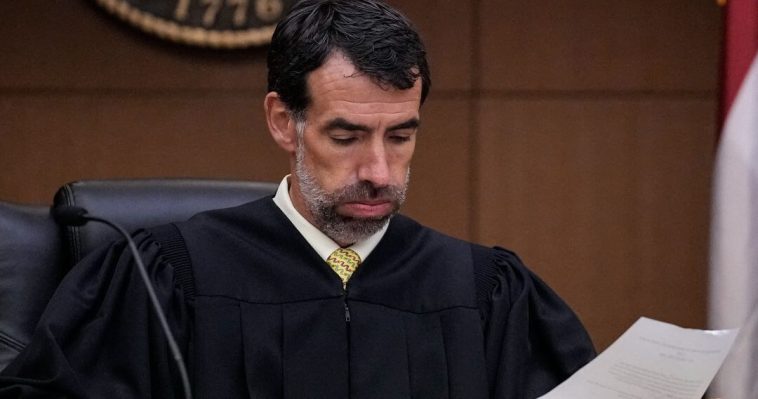
Despite these revelations, just as the hand-counting rule was set to take effect on October 22, Judge McBurney intervened. In his ruling, he argued that enforcing the rule would create “administrative chaos” and “add uncertainty and disorder to the electoral process.” He cited a lack of training, protocols for handling write-in ballots, and inadequate county budgets for the additional personnel and costs as reasons for his decision.

“No training has been administered (let alone developed), no protocols for handling write-in ballots… have been issued, and no allowances have been made in any county’s election budget for additional personnel and other expenses required to implement the Hand Count Rule,” McBurney wrote in his order. He continued, “The administrative chaos that will – not may – ensue is entirely inconsistent with the obligations of our boards of elections (and the SEB) to ensure that our elections are fair, legal, and orderly.”
But many have been left scratching their heads, wondering how verifying the number of ballots could possibly cause chaos. In fact, ensuring that the number of ballots matches the count from the machines would bring more transparency and accountability, avoiding a repeat of the discrepancies witnessed in 2020.
Judge McBurney’s decision also addressed the timing of the rule’s implementation, stating that the last-minute nature of the rule meant poll workers were unprepared, and election boards were inadequately funded. According to the judge, introducing such a significant rule just weeks before the election would create confusion rather than confidence.

In his ruling, McBurney wrote, “Finally, the public interest is not disserved by pressing pause here. This election season is fraught; memories of January 6 have not faded away, regardless of one’s view of that date’s fame or infamy. Anything that adds uncertainty and disorder to the electoral process disserves the public.”
Supporters of the hand-counting measure argue that McBurney’s concerns are overblown and that delaying the rule ultimately benefits those who prefer less scrutiny and transparency. Janelle King, a Republican board member, expressed her disappointment, saying, “The victory lies in the public knowing that the State Election Board is paying close attention to our election process.”
Bold, Durable, and Patriotic: Trump Yard Signs Selling Out!
Even more concerning is Georgia Secretary of State Brad Raffensperger’s position on the matter. Instead of defending the hand-count rule as a necessary safeguard, Raffensperger echoed McBurney’s concerns, warning that it could delay election results and spread misinformation, a position he shared with CNN. However, many argue that the real source of misinformation stems from inaccuracies in the ballot counts—exactly what this rule was designed to fix.
As The Gateway Pundit’s Brian Lupo pointed out, “Judge McBurney has ruled precincts cannot hand-count ballots. Not hand-count votes, but simply the NUMBER of ballots to ensure it matches the number of voters who checked in. This process would add about 15-20 minutes to the process. The necessary training? Being able to count.”
This ruling marks yet another setback for those seeking transparency in Georgia’s electoral process, with many now questioning the motives behind McBurney’s decision. As the state gears up for another election season, the battle over how ballots are counted—and by whom—continues to rage on.

