
>> Continued From the Previous Page <<
Phase Two saw the deployment of vehicle-based strike systems. Israeli operatives had rigged ordinary-looking civilian vehicles with missile launchers hidden in plain sight. When the green light came, these mobile units unleashed a second wave of destruction on Iranian air defenses—making sure Israeli aircraft could enter unchallenged.
Phase Three was the thunderclap. Over 200 aircraft—primarily state-of-the-art F-35 “Adirs”—launched a sweeping conventional attack, hitting nuclear enrichment facilities, military command centers, missile depots, and IRGC strongholds. With Iranian command systems jammed and their radar blind, Israel’s Air Force flew in nearly unopposed.

A senior Israeli security official revealed the level of infiltration behind the scenes:
“The Mossad worked with a huge number of people, a mass of agents deep inside Iran, operating at the highest level of penetration imaginable. Some of these agents were retrained as commando fighters to carry out mission-critical operations.”
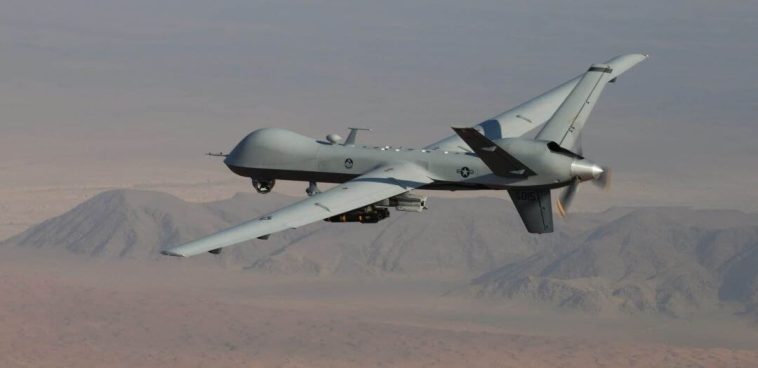
Perhaps the most astonishing revelation? Mossad didn’t just operate near Iran—they had built actual launch facilities inside Iranian territory. These bases, which housed autonomous drone and missile systems, were strategically positioned near critical infrastructure. One such covert base near Tehran reportedly struck Iranian missile launchers before Israel’s Air Force even lifted off.
This internal sabotage allowed Israel to take out high-value targets before the main operation even began—effectively giving them a head start and total battlefield control. Israeli officials now regard this covert capability as one of the most daring and successful tactics Mossad has ever employed.
The operation’s success came at a heavy price for Iran. Among the casualties were several high-profile military figures:
- IRGC Commander Hossein Salami
- Armed Forces Chief of Staff Major General Mohammad Bagheri
- IRGC Aerospace Commander Amir Ali Hajizadeh
- Nuclear scientists Fereydoon Abbasi and Mohammad Mehdi Tehranchi
These leaders were reportedly killed inside a subterranean command facility—effectively cutting the head off Iran’s IRGC Air Force leadership in one blow.
Massive strikes devastated nuclear sites in Natanz, Fordow, and Khondab. Attacks also hit Tehran, Kermanshah, Tabriz, Esfahan, and Hamadan. Prime Minister Netanyahu boldly stated that the operation “set Iran’s nuclear program back by years,” although independent verification is still pending.
Israel also went after Iran’s economic lifelines—crippling key energy targets like the South Pars gas field and Fajr Jam refinery. It was a clear message: no asset is off-limits when Israel strikes back.
Operation Rising Lion was no spontaneous act. It followed years of aggressive and inventive Mossad actions. From the legendary Operation Bayonet in the 1970s, which tracked and killed Black September terrorists responsible for the Munich massacre, to the 2024 sabotage of Hezbollah’s communication gear that exploded in the hands of militants—Mossad has long been a global leader in high-stakes, high-reward espionage.
Following Hamas’s bloody October 7, 2023 attack, Mossad responded with increasing firepower.
On January 2, 2024, a drone strike in Beirut took out Hamas deputy leader Saleh al-Arouri and his senior military aides. Just three months later, an Israeli airstrike on Iran’s consulate annex in Damascus eliminated Quds Force General Mohammad Reza Zahedi—a blow that decimated Iran’s influence in Syria.
Operation Rising Lion may be remembered as a turning point in military history. It combined stealth technology, human intelligence, and autonomous weapons in a coordinated, devastating assault.
Defense analysts now say this campaign rewrote the rules of engagement, likening it to the era of WWII’s “ungentlemanly warfare”—but with 21st-century tools.
Israel just redefined what modern warfare looks like—and Tehran never saw it coming.

