
>> Continued From the Previous Page <<
Among his first moves, Trump signed 11 executive orders addressing the ongoing crisis at the southern border. These included declaring a national emergency at the U.S.-Mexico border, revoking birthright citizenship for children of illegal immigrants, reinstating the Remain in Mexico policy, and ending catch and release.
Beyond immigration, Trump took sweeping action against left-wing policies implemented under the Biden administration. Orders were issued to dismantle diversity, equity, and inclusion (DEI) initiatives, mandate federal agencies to recognize only two biological sexes, and withdraw from the Paris Climate Accord, as reported by the Daily Wire.

WATCH:
One of his most controversial moves was the creation of the Department of Government Efficiency (DOGE), aimed at cutting wasteful spending in federal agencies. This newly established department has already reported significant cost savings, including the elimination of $55 million in wasteful expenditures. Additionally, DOGE oversaw the dismantling of the U.S. Agency for International Development (USAID), which was accused of funneling taxpayer money into left-wing initiatives. The department also uncovered that officials at the Federal Employment Management Agency had used $59 million in taxpayer funds to house illegal immigrants in luxury hotels, leading to their termination.
Another executive order, signed on February 5, put an end to men competing in women’s sports, rolling back Biden-era changes to Title IX that attempted to redefine gender-based protections.

Despite Trump’s rapid progress, left-wing groups have launched legal battles to obstruct his policies. These challenges have seen varying degrees of success, frustrating the administration. Federal courts have blocked Trump’s efforts to eliminate birthright citizenship, freeze certain federal grants, and overhaul bureaucratic agencies.
Vice President JD Vance has been vocal in his criticism of these judicial oversteps, warning “rogue” judges not to interfere with executive authority. “If a judge tried to tell a general how to conduct a military operation, that would be illegal. If a judge tried to command the attorney general in how to use her discretion as a prosecutor, that’s also illegal. Judges aren’t allowed to control the executive’s legitimate power,” Vance said in a statement reported by ABC News.
The administration suffered another legal setback last week when a federal judge temporarily blocked DOGE from accessing Treasury Department records containing vast amounts of financial data. This ruling infuriated Elon Musk, who has been overseeing DOGE’s operations. Musk accused the judge of corruption and called for his impeachment.
Trump himself weighed in on these judicial hurdles, condemning activist judges for interfering with his efforts to reform the federal government. “When a president can’t look for fraud and waste and abuse, we don’t have a country anymore,” Trump told reporters. “So, we’re very disappointed, but with the judges that would make such a ruling. But we have a long way to go.”
KICK OUT The Cold and Say Hello to The Handyheater! Warming Any Spot INSTANTLY!
He went further, saying, “No judge should, frankly, be allowed to make that kind of a decision. It’s a disgrace.”
Republicans have rallied behind the president, with Sen. Tom Cotton calling the judge who blocked DOGE’s access to Treasury data an “outlaw.” Meanwhile, House Judiciary Committee Chairman Rep. Jim Jordan defended Musk’s efforts, stating that he was “carrying out the will” of the president who appointed him.
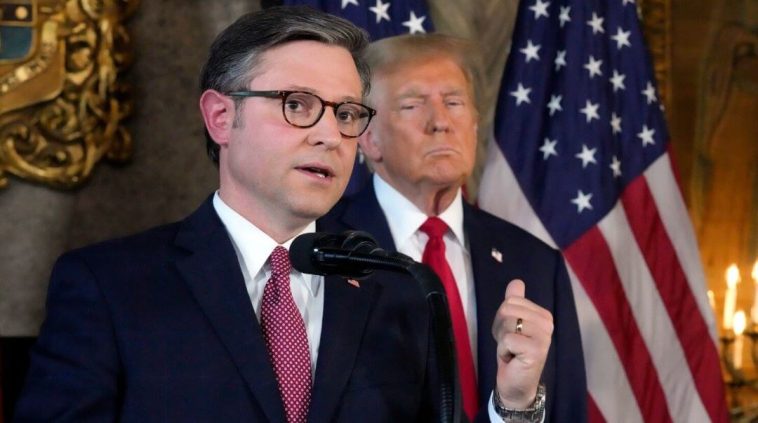
With Trump’s executive orders facing mounting legal challenges, Republicans are preparing to act swiftly to lock his policies into law—ensuring they cannot be easily overturned by a future Democratic administration. Johnson’s announcement signals a serious push to cement Trump’s legacy, setting the stage for a major legislative battle in the coming months.

