
>> Continued From the Previous Page <<
“Frankly not only unchecked, they never fully corrected it or dealt with it,” Hannity said, referring to the controversies. “Others at the Vatican have totally lost the true meaning of the Bible and its teachings.”
His remarks come at a time of escalating tensions between former President Donald Trump and Pope Leo XIV, a clash that has captured attention across both political and religious communities. The disagreement intensified following comments from the pope regarding global conflicts, particularly involving Iran.

President Trump fired back publicly, accusing the pope of weakness and poor judgment on key issues.
“Pope Leo is WEAK on Crime, and terrible for Foreign Policy,” Trump wrote in a Truth Social post. He also criticized religious institutions more broadly, arguing they failed to stand firm during pandemic-era restrictions.
“He talks about ‘fear’ of the Trump Administration, but doesn’t mention the FEAR that the Catholic Church, and all other Christian Organizations, had during COVID,” Trump wrote. “They were arresting priests, ministers, and everybody else, for holding Church Services,” he added.
The pope did not remain silent. Responding to the criticism, Pope Leo XIV pushed back and defended his role as a moral voice.
“I have no fear of the Trump administration or speaking out loudly of the message of the Gospel, which is what I believe I am here to do,” the pope told reporters.
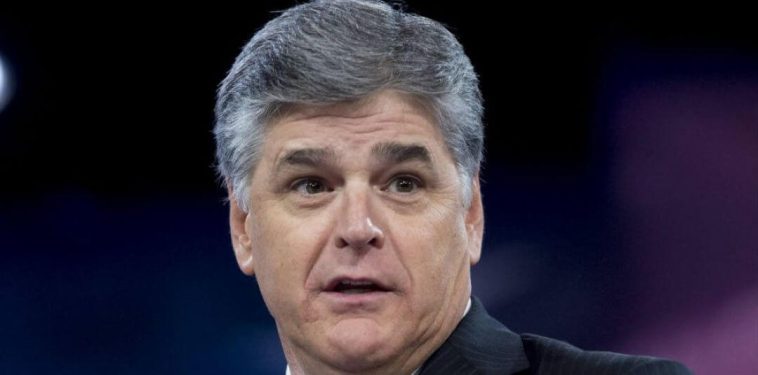
Amid the political crossfire, Hannity turned the focus inward, reflecting on his own spiritual journey. He described a childhood steeped in Catholic tradition, including years of formal religious education and even time spent in seminary training.
“Like millions of Americans, I was raised Catholic. I went to Catholic school for 12 years,” Hannity said. “I even attended a seminary in high school, studied theology, Latin, went to Mass daily. I got a lot out of it,” he added.
Despite his strong criticism of Church leadership, Hannity acknowledged that his upbringing left a lasting imprint on his character and values. He made clear that his departure from the institution does not equate to a rejection of faith itself.
“My parents were devout Catholics, and while I wasn’t particularly engaged at the time in the teachings of the Catholic church, as a young person, it certainly entered my consciousness,” he said. “[It] made me a better person and has been a positive force in my life in so many ways,” he added.
Still, Hannity suggested that today’s Church leadership has drifted from its foundational principles, though he stopped short of going into specifics. He also took aim at what he described as a growing willingness among religious leaders to engage in political disputes.
The comments underscore a broader and increasingly visible divide between institutional religion and individual belief. For Hannity, the message was clear: faith remains central, but trust must be earned.
As debates over religion, leadership, and accountability continue to unfold on the global stage, voices like Hannity’s are adding fuel to an already intense conversation about where the Church stands—and where it may be headed next.

