
>> Continued From the Previous Page <<
The announcement marks a dramatic reversal for a company that spent the last two years insisting electric muscle was the future.
Customers never bought the pitch.

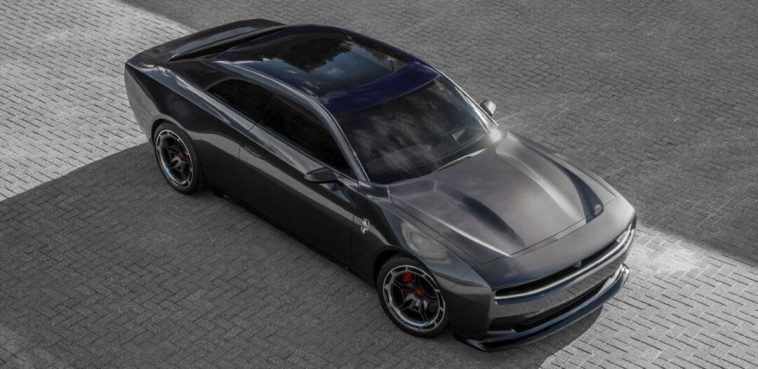
The all-electric Charger Daytona may have posted impressive numbers on paper, but enthusiasts wanted sound, vibration, and raw emotion. When Dodge followed up with the 2026 Charger Sixpack powered by a twin-turbo inline-six producing up to 550 horsepower, fans still asked the same question.
Where is the V-8?
The answer is now clear.
Proof Was Already Under the Hood
Dodge quietly demonstrated what was possible before making the official announcement.
The company debuted a Charger Drag Pak race car for the 2025 season using a supercharged Hemi V-8. That move proved the engine could physically fit within the new Charger platform.
Once the drag car appeared, industry insiders knew street versions were inevitable.
Hemi production has already resumed at the Dundee Engine Plant in Michigan, signaling that Dodge was preparing for more than a limited run. Dealers are now expecting the 2027 Charger Hellcat to arrive in showrooms by late 2026 or early 2027.
For buyers who refused to spend money on electric muscle cars, the wait is finally over.
EV Spending Fueled Massive Losses
The reversal did not happen in a vacuum.
Stellantis poured roughly $27 billion into electric vehicle development while American buyers continued purchasing gas-powered trucks and performance cars. The results were brutal.
Ford burned through more than $32 billion chasing EV demand that never materialized. General Motors wrote off $1.6 billion in electric vehicle assets it could not sell.
Dealer lots filled with unsold EVs as customers walked past them to buy traditional vehicles.
The Biden administration pushed regulators to force automakers toward a future the market rejected. The EPA attempted to mandate that more than half of new vehicles be fully electric by 2032.
Sales never supported the plan.
When President Trump ended the $7,500 electric vehicle tax credit at the close of fiscal year 2025, the illusion vanished overnight. Without subsidies masking weak demand, EV sales slowed even further.
The message was unmistakable.
Americans were not interested.
Performance Without Sound Was Never Enough
Stellantis executives have since acknowledged the reality.
CEO Antonio Filosa told investors that Ram profits would improve by returning to engines customers actually want. Muscle car buyers were not chasing silent speed. They wanted the experience.
Horsepower alone was not the issue.
A muscle car without a V-8 soundtrack felt empty. Numbers on a screen could not replace the visceral connection between driver and machine.
As one executive put it privately, performance figures mean nothing if the car has no soul.
Trump’s Policies Cleared the Path
The Hellcat return also reflects a regulatory shift.
Trump’s rollback of fuel economy mandates gave automakers breathing room to build vehicles based on demand rather than political pressure. That freedom is already reshaping product decisions across the industry.
Ram recently confirmed the return of the Hellcat-powered TRX pickup for 2027 with an upgraded 777 horsepower output. When asked whether regulatory changes made the move possible, Ram boss Tim Kuniskis delivered a blunt response.
“I was gonna do it anyway.”
That attitude now defines Dodge’s strategy.
A Muscle Market With Little Competition Left
The 2027 Charger lineup is expected to offer all three traditional Hemi options.
A 5.7-liter V-8 producing 370 horsepower will anchor the lineup. The 6.4-liter V-8 delivers 485 horsepower. The supercharged Hellcat tops the range at 717 horsepower.
Pricing has not been announced, but analysts expect the base V-8 to start near $53,000, with the Hellcat approaching $80,000.
Competition is thin.
Chevrolet discontinued the Camaro ZL1. Ford killed the Shelby GT500. That leaves the Mustang GT as the only remaining V-8 rival.
Dodge is not chasing nostalgia alone.
It is filling a void left by competitors who abandoned muscle cars in favor of electric crossovers.
Muscle Car Fans Finally Get Vindicated
The return of the Hellcat marks more than a product announcement.
It represents a course correction after years of costly missteps driven by ideology rather than consumer choice. Thousands of layoffs, abandoned factories, and wasted investments followed the EV obsession.
Now the industry is recalibrating.
For muscle car fans who refused to compromise, the message is clear.
The V-8 is not dead.
And Dodge just proved it.

