>> Continued From the Previous Page <<
The document stated: “[Redacted] Chinese intelligence officials analyzed multiple U.S. states’ [Redacted] election voter registration data, [Redacted] to conduct public opinion analysis on the 2020 US general election.”
While portions remain classified, the implication is clear: Beijing was not merely observing from afar—it was actively studying American voter data during a critical election year.

The memo itself, titled “Cyber Operations Enabling Expansive Authoritarianism,” was quietly declassified in 2022. Yet despite its significance, it received little to no public attention from the administration of Joe Biden or major media outlets.
Critics argue that silence is part of the problem.
Investigators noted that years later, the intelligence community still has not fully briefed Congress or the American public on the scope of China’s activities, how the data was accessed, or what Beijing ultimately intended to do with it.
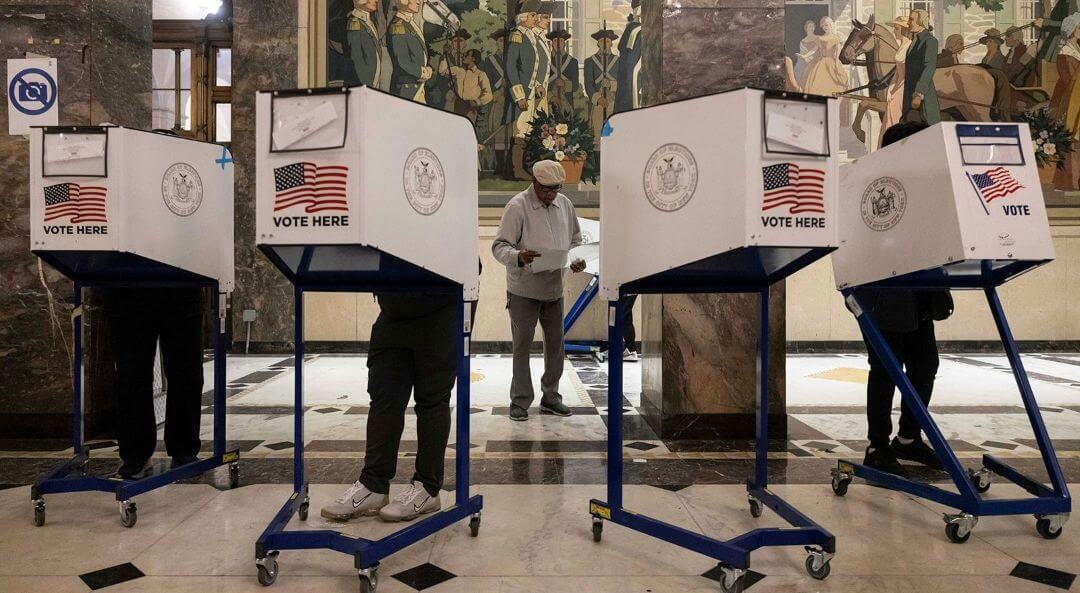
To be clear, the compromised data reportedly involved voter registration information—not actual ballots or voting machines. However, experts caution that such data is far from harmless. It often includes highly sensitive personal details such as driver’s license numbers and partial Social Security information.
In fact, this type of data is considered so sensitive that several Democrat-led states have resisted efforts—even from the federal government—to access it, citing privacy concerns.
One of the few officials who sounded alarms at the time was John Ratcliffe, who served as Director of National Intelligence under Donald Trump. Ratcliffe had repeatedly warned about growing Chinese cyber capabilities and their potential impact on U.S. institutions.
What makes the situation more striking is how aggressively the Biden administration has responded to similar incidents abroad. In 2024, for example, the U.S. government imposed sanctions and filed criminal charges against alleged Chinese hackers tied to cyber intrusions in the United Kingdom.
British officials revealed that attackers had accessed voter registration data belonging to tens of millions of citizens. The breach, which targeted systems overseen by the UK Electoral Commission, went undetected for over a year.
U.S. officials condemned the attack strongly, with Treasury representatives warning of “dangerous and irresponsible actions” and pledging continued efforts to counter cyber threats.
That raises an obvious question: if Washington was willing to call out Chinese cyber activity in the U.K., why the apparent reluctance to address similar concerns at home?
Some argue that national security considerations may have played a role—that revealing too much could expose intelligence methods. But others see a more political explanation.
A less charitable interpretation is that acknowledging Chinese interference in 2020 would have disrupted a carefully constructed narrative: that the election was beyond reproach and that prior concerns about foreign meddling—particularly involving Russia in 2016—remained the dominant storyline.
Back then, Democrats frequently claimed that Moscow’s actions helped secure victory for Trump over Hillary Clinton. Yet critics point out that the scale of alleged Russian activity pales in comparison to what this new intelligence suggests about China’s capabilities and reach.
Unlike isolated misinformation campaigns, the intelligence memo points to something far more sophisticated: a coordinated effort by a major global power to analyze and potentially influence American political behavior using real voter data.
That’s not a minor issue—it’s a national security concern.
For four years, however, there was little public discussion from the Biden administration about these findings. During that time, relations with Chinese President Xi Jinping remained tense, with ongoing disputes over trade, military posture, and cyber operations.
Which makes the silence even more puzzling.
President Biden has often framed himself as a defender of democracy, warning of authoritarian threats abroad. But critics argue that leadership also requires transparency at home—especially when foreign adversaries may have targeted American systems.
This is where the SAVE America Act comes back into focus. While it may not have prevented past cyber activity, supporters argue it represents a meaningful step toward strengthening election safeguards and restoring public confidence.
Opponents, however, have pushed back against the legislation—raising yet another political divide over how best to secure U.S. elections.
For many conservatives, the takeaway is simple: if election integrity were truly a top priority across the board, there would be far more urgency—and far less silence—when credible threats come to light.
Instead, they argue, Americans are left to piece together the story themselves—long after the fact.