
>> Continued From the Previous Page <<
Republican Representative Nicole Malliotakis brought the emergency request after a state judge ruled that her district boundaries must be redrawn. That lower court decision argued the map diluted the voting strength of Black and Latino residents and violated constitutional standards.
The Supreme Court’s intervention effectively froze that ruling, at least for now, allowing the district to remain unchanged while the legal fight moves forward.

A Second Major Case Could Redefine Election Law
While the New York dispute grabbed immediate attention, another case looming before the court could have even larger consequences for future elections.
The justices are expected to issue a ruling in Louisiana v. Callais, a case that centers on how race may be used when drawing congressional districts and how the Voting Rights Act of 1965 should be interpreted.
The dispute stems from a congressional map adopted by Louisiana lawmakers that created a second majority-Black district following earlier court challenges.
At the heart of the legal fight is Section 2 of the Voting Rights Act, a provision that allows private individuals and organizations to challenge election rules or district maps they believe dilute the voting power of minority communities.
For decades, Section 2 has served as one of the most powerful legal tools used to challenge redistricting plans across the country.
Its importance grew even more after the Shelby County v. Holder ruling in 2013. That decision eliminated the law’s preclearance requirement, which had previously forced certain states to obtain federal approval before changing election laws.
Since then, Section 2 lawsuits have become the primary vehicle for contesting congressional maps in federal court.
Justices Signal Possible Shift
During oral arguments in the Louisiana case, several justices raised questions about whether the current use of race in drawing districts could conflict with the Equal Protection Clause of the Fourteenth Amendment.
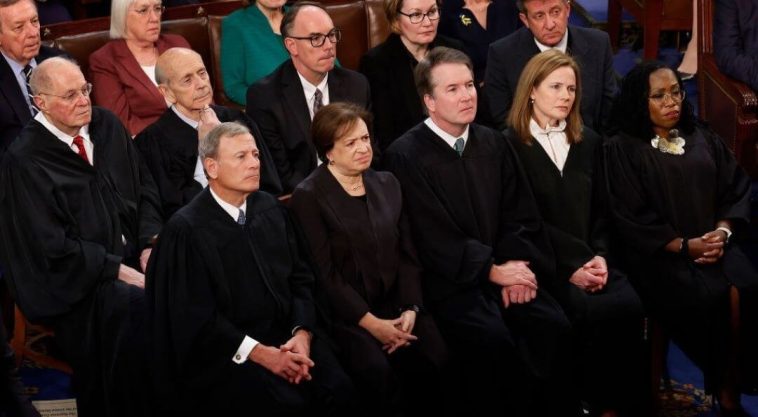
Chief Justice John Roberts appeared to focus on whether existing frameworks remain consistent with previous rulings such as Allen v. Milligan and the long-standing Thornburg v. Gingles test.
Under that test, plaintiffs must demonstrate that a minority population is sufficiently large and politically cohesive, and that majority voting patterns consistently defeat the candidates preferred by that group.
Rather than calling for a dramatic overhaul, Roberts appeared to be examining how the legal framework could align with previous court decisions.
Justice Brett Kavanaugh, who played a key role in the Allen decision alongside Roberts and the court’s liberal bloc, also floated a new idea during arguments.
Kavanaugh raised the possibility of adding a “sunset” provision to Section 2 remedies. Such an approach could limit how long race-based districting solutions remain in place, echoing past court rulings that have treated race-conscious policies as temporary measures.
Political Fallout Could Be Massive
Voting-rights groups aligned with Democrats are already warning that any significant change to Section 2 could dramatically alter the political map.
Organizations such as Fair Fight Action and Black Voters Matter Fund argue that limiting Section 2 challenges could open the door for Republican-controlled legislatures to redraw numerous congressional districts.
Some analysts estimate that as many as 27 House seats nationwide could eventually be reshaped in ways that favor Republicans if current legal restrictions disappear.
Nineteen of those potential changes are directly tied to whether Section 2 protections remain intact.
If those shifts occur, the balance of power in Washington could tilt dramatically.
States Already Preparing for the Next Fight
As the country waits for the Supreme Court to rule, lawmakers in some states are already preparing for potential fallout.
Democratic legislators in Mississippi, including Representative Zakiya Summers and State Senator Johnny DuPree, have introduced legislation that would create a state-level version of the Voting Rights Act.
The proposal aims to establish local protections if federal rules are weakened or overturned.
Whether those efforts succeed remains to be seen.
What is clear is that the Supreme Court’s upcoming decisions could reshape the legal landscape governing elections across the country. And in a nation where a handful of congressional seats can determine control of the House, even subtle changes to redistricting rules could carry enormous political consequences in the coming midterms.

